WebSocket vs Event Stream: Enterprise Comparison
WebSocket enables two-way data flow; Event Stream is one-way from server to client. Our guide helps you choose the right tech for your enterprise.


Many modern enterprise applications depend on receiving data the moment it's available. To achieve this, engineers often turn to two popular technologies for real-time communication: WebSockets and Server-Sent Events, also known as Event Streams.
While both technologies deliver data from a server to a client in real time, their underlying mechanics and ideal applications are quite different. Understanding these distinctions is important for choosing the right tool for your company's specific technical and business requirements.
What is WebSocket?
WebSocket is a communication protocol that creates a persistent, two-way communication channel over a single TCP connection. Unlike the traditional request-response model of the web, where the client must always ask for information, WebSocket keeps the line open. This allows both the client and the server to send data to each other at any time, enabling genuine real-time interaction.
- Full-duplex communication: Data can be sent and received simultaneously by both the client and the server, much like a phone call.
- Single, persistent connection: The connection is established once through an initial handshake and then stays open, which reduces latency and network overhead.
- Low-overhead data framing: After the connection is set up, data is exchanged using minimal framing, making it efficient for frequent, small messages.
What is Event Stream?
Event Stream, more formally known as Server-Sent Events (SSE), is a technology that enables a server to push data to a client automatically once an initial connection is made. It establishes a one-way communication channel where the server can send a continuous stream of updates without the client needing to request them repeatedly.
- Unidirectional communication: Data flows in one direction only—from the server to the client. The client can listen for updates but cannot send data back to the server over the same connection.
- Standard HTTP protocol: It operates over a regular HTTP connection, which often simplifies implementation and compatibility with existing firewalls and network infrastructure.
- Built-in reconnection: The client-side API for Event Streams automatically handles reconnection if the connection is dropped, providing a degree of resilience.
WebSocket vs Event Stream: Key Differences
While both technologies deliver real-time data, their fundamental designs create important distinctions for IT and operations teams to consider.
1. Communication Direction
The most significant difference lies in how data flows. WebSocket provides a full-duplex, or two-way, communication channel where both the client and server can send messages to each other independently.
Event Stream, on the other hand, is unidirectional. Only the server can send data to the client, making it suitable for broadcasting updates rather than interactive conversations.
2. Data Type Support
The type of data each technology can handle also varies. WebSocket is flexible, supporting both binary data and UTF-8 text formats.
In contrast, Event Streams are limited to sending messages in plain UTF-8 text format. This simplicity works well for notifications and text-based updates but is not suitable for transmitting binary files or complex data structures without encoding.
3. Protocol and Network Compatibility
Event Streams operate over the standard HTTP protocol, which means they generally work without issue through existing firewalls and network proxies.
WebSocket initiates with an HTTP request but then "upgrades" the connection to its own distinct protocol. This upgrade can sometimes be blocked by older or misconfigured network hardware, requiring specific configuration to allow traffic.
4. Built-in Features
The Event Stream standard comes with useful features built directly into the browser API, such as automatic reconnection if the connection drops and event IDs to track missed messages.
With WebSocket, these features are not part of the core protocol. Developers must implement their own logic for handling reconnections and ensuring message delivery, which adds to development overhead.
Use Cases for WebSocket
Because of its two-way communication capabilities, WebSocket is the ideal choice for applications where the client and server need to have an ongoing, interactive conversation. Its ability to handle both text and binary data makes it highly versatile for complex systems that require genuine real-time data exchange.
- Collaborative Editing Tools: Applications like shared documents, whiteboards, or design platforms rely on WebSocket to instantly sync changes made by multiple users. When one person types or draws, the data is sent to the server and immediately pushed to all other connected clients.
- Real-Time Messaging and Chat: From internal team chat to customer support applications, WebSocket provides the low-latency, bidirectional communication needed for instant messaging. Users can send and receive messages without the delay of traditional polling.
- Live Financial Data Feeds: Trading platforms and financial dashboards use WebSocket to stream real-time stock prices and market data to users. At the same time, it allows traders to send buy or sell orders back to the server with minimal delay.
- IoT Device Control and Monitoring: In an Internet of Things (IoT) ecosystem, WebSocket can be used to send commands to devices, such as adjusting a sensor setting, and receive continuous status updates or data back from them.
Use Cases for Event Stream
Given its one-way data flow, Event Stream is best suited for scenarios where a server needs to push updates to clients without requiring any input back from them. It's a simple yet effective solution for broadcasting information to a wide audience.
- Live Activity Feeds: Applications that display live feeds, such as breaking news headlines, social media timelines, or sports score updates, are a perfect fit. The server can continuously stream new events to all connected users as they happen.
- System Notifications: Pushing notifications to users is a classic use case. This includes system status alerts from a monitoring dashboard, new message indicators in an email client, or updates from a project management tool.
- Order and Status Tracking: When a user needs to track the progress of a process, like a food delivery or a data processing job, Event Streams can send updates as the status changes from "processing" to "shipped" to "delivered."
- Real-Time Dashboards: For business intelligence or operational dashboards that display information like live sales data or website traffic, Event Streams can push metrics from the server to keep the display current without client interaction.
Choosing the Right Technology for Your Enterprise
When deciding between WebSocket and Event Stream, the best choice depends entirely on your specific project requirements and existing infrastructure. Answering a few key questions can quickly point you in the right direction.
1. Evaluate Your Application’s Interactivity
The most important question is whether your application needs two-way communication. If users must send data back to the server in real time, such as in a chat application or collaborative platform, WebSocket is the necessary choice.
If the goal is simply to push updates from the server to the client without receiving a response, Event Stream is the more straightforward and efficient solution.
2. Consider Your Network and Infrastructure
Think about your current network environment. Because Event Streams operate over standard HTTP, they are generally compatible with existing firewalls and proxies with no extra work.
WebSocket connections are "upgraded" from HTTP, a process that can sometimes be blocked by older or stricter network hardware. This may require additional configuration from your IT team to ensure traffic is allowed.
3. Assess Development and Maintenance Overhead
Consider the resources required for implementation. The Event Stream API has built-in features like automatic reconnection, which can reduce development time and complexity.
With WebSocket, developers are responsible for building their own logic to handle connection drops and message retries. This adds to the initial development effort and long-term maintenance of the application.
Final Thoughts on WebSocket and Event Stream
Both WebSocket and Event Stream are powerful technologies for building real-time applications, but they are not interchangeable. The right choice depends entirely on the specific problem you need to solve.
WebSocket is the clear winner for applications that require genuine two-way interaction, where the client and server must constantly exchange information.
In contrast, Event Stream is a simpler, more direct solution for scenarios where the server just needs to push updates to the client, like broadcasting notifications or live data feeds.
Ultimately, by analyzing your application’s communication needs, data format requirements, and existing infrastructure, your team can confidently select the protocol that offers the right balance of functionality and efficiency for your enterprise.
Need Help Managing Your Network? Lightyear Can Help
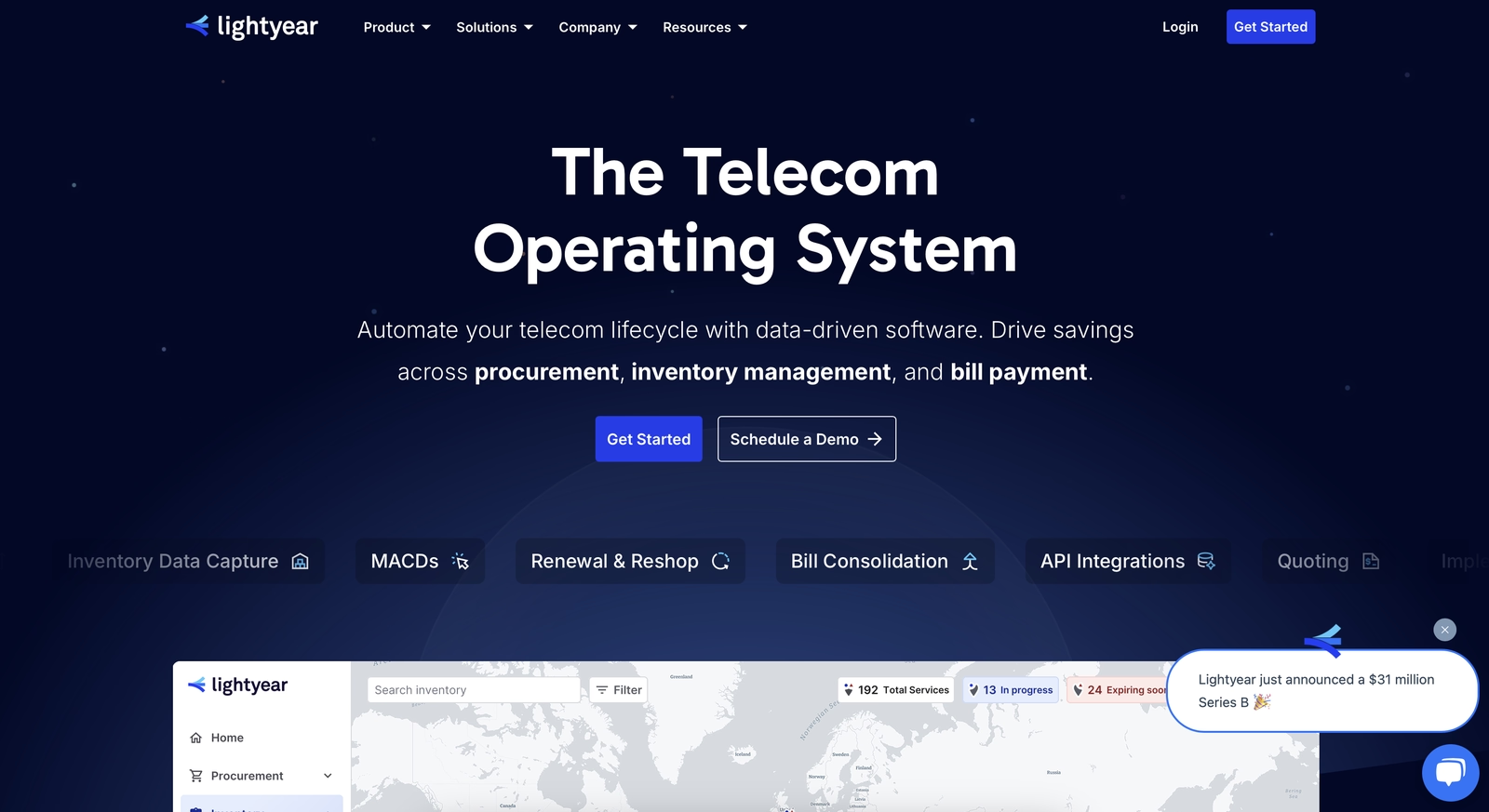
Whether your applications use WebSocket or Event Stream, they all rely on a solid network foundation. By automating network service procurement, inventory management, and bill consolidation, Lightyear takes the pain out of managing that telecom infrastructure.
The hundreds of enterprises who trust Lightyear achieve over 70% in time savings and 20% in cost savings on their network services.
Schedule a demo or get started with our questionnaire today.
Frequently Asked Questions about WebSocket vs Event Stream
Can I use both WebSocket and Event Stream in the same application?
Absolutely. Many complex applications use a hybrid approach. For example, you might use Event Stream for broadcasting general notifications and WebSocket for a specific real-time chat feature within the same platform, playing to each technology's strengths.
Which technology is better for mobile applications?
It depends on the function. For simple server-to-client updates, Event Stream can be more battery-friendly. For interactive features requiring client input, WebSocket is necessary, though it may consume slightly more resources to maintain the open connection.
Is one protocol more secure than the other?
Both can be equally secure. WebSocket uses the `wss://` protocol and Event Streams run over `https://`, both of which encrypt data. Security is less about the protocol choice and more about proper implementation of standard security practices.
How do they scale for a large number of users?
Both can scale, but differently. Event Streams can leverage standard HTTP load balancers and scaling infrastructure. WebSockets require specialized server setups to manage a large number of persistent connections, which can be more complex to architect.
Let us show you the product and discuss specifics on how it might be helpful.
Schedule a Demo




Revolutionize Your Telecom Experience
Learn how you can get one step closer to optimal business efficiency for all your telecom services.