WebSocket vs GraphQL: Enterprise Communication Comparison
WebSocket vs. GraphQL: A clear comparison for IT leaders. Understand how each handles data communication to make the right choice for your network.


Modern applications depend on efficient communication between a client and a server. Two popular technologies for this are WebSocket and GraphQL, but they solve different parts of the data exchange problem.
WebSocket is a communication protocol that establishes a persistent, two-way connection, ideal for applications needing continuous data streams like live chat or financial tickers. In contrast, GraphQL is a query language for APIs that allows applications to request precisely the data they need, which can make data retrieval more efficient.
What is WebSocket?
At its core, WebSocket is a communication protocol that establishes a persistent, two-way data channel over a single TCP connection. Once this connection is made, it stays open, allowing the client and server to send data to each other at any time without needing a new request for every message.
- Persistent Connection: Unlike the standard HTTP model where a connection is closed after each request, a WebSocket connection remains active. This eliminates the overhead of repeatedly establishing new connections.
- Full-Duplex Communication: Data can flow in both directions simultaneously. This means the server can push information to the client proactively, without waiting for the client to ask for it first.
- Low Latency: By keeping the connection open, WebSocket significantly reduces the delay in data transmission, which is essential for applications requiring instant updates.
What is GraphQL?
GraphQL is a query language for APIs and a server-side runtime for executing those queries with your existing data. It gives clients the power to ask for exactly what they need—nothing more, nothing less—which makes applications faster and more stable.
- Precise Data Fetching: A client can specify the exact fields it requires. This prevents the common problem of over-fetching, where an application downloads unnecessary data, and under-fetching, which requires multiple API calls to get all the needed information.
- Single Endpoint: Unlike traditional REST APIs that have many endpoints, GraphQL typically exposes a single endpoint, simplifying how clients interact with the server.
- Strongly Typed Schema: The API's capabilities are defined in a schema, which acts as a clear contract between the client and the server. This describes all the data that can be queried and makes the API easier to explore and understand.
WebSocket vs GraphQL: Key Differences
While both technologies improve how applications communicate, they operate at different layers and address distinct challenges. Here’s a direct comparison of their core differences.
1. Protocol vs. Query Language
The most fundamental distinction lies in their function. WebSocket is a low-level communication protocol, operating at the transport layer to create a persistent data pipe between a client and server.
In contrast, GraphQL is an application-layer query language. It doesn't manage the connection itself but defines a more efficient way for a client to request data over an existing connection, which is typically HTTP.
2. Communication Style
WebSocket enables a stateful, full-duplex communication model. Once the connection is open, both the client and server can send data independently at any time, making it ideal for server-initiated updates.
GraphQL operates on a stateless, client-driven request-response model. The client sends a query and the server responds with the requested data; the server cannot push data without a client request.
3. Data Payload
WebSocket is agnostic about the data it transports. It can send any type of payload, including plain text, JSON, or binary data, without any inherent structure.
GraphQL, however, is strictly structured. All communication is bound by a schema that defines the data types and relationships. This ensures that clients receive data in a predictable format every time.
Use Cases for WebSocket
Because WebSocket maintains an open connection for two-way data flow, it excels in applications where the server needs to push updates to the client instantly. Its low-latency, full-duplex nature makes it a strong fit for any scenario requiring real-time information exchange.
- Live Monitoring Dashboards: For IT and operations teams, WebSocket can power dashboards that display real-time network status, server health, or application performance metrics. The server pushes new data as it becomes available, ensuring the monitoring view is always current without constant page refreshes.
- Collaborative Applications: Tools like shared document editors or internal chat platforms rely on WebSocket to sync changes across all users immediately. When one person makes an edit, the update is broadcast to everyone else in the session, creating a fluid experience.
- IoT Device Communication: In environments with numerous connected devices, such as sensors in a data center or warehouse, WebSocket provides a reliable channel for devices to send status updates and for a central system to push commands back to them.
- Real-Time Notifications: Any system that needs to alert users instantly—such as fraud detection alerts in a financial system or critical infrastructure warnings—can use WebSocket to deliver those notifications without delay.
Use Cases for GraphQL
GraphQL is the right tool when applications need to pull specific information from complex systems efficiently. Its strength lies in letting the client ask for exactly what it needs, which is particularly useful in scenarios where data sources are varied and front-end requirements change frequently.
- Applications with Multiple Front-Ends: When you have a web portal, a mobile app, and internal tools all accessing the same data, GraphQL allows each one to request a different data payload from a single endpoint. This improves performance, especially for mobile users on slower networks.
- Aggregating Data from Microservices: For companies managing telecom, data might be spread across different systems for inventory, billing, and support tickets. GraphQL can act as a unified layer, allowing a dashboard to fetch data from all these sources in one network request.
- Complex Dashboards and UIs: An IT management dashboard might need to display network performance, active service contracts, and open support issues on one screen. GraphQL avoids the need for multiple API calls, simplifying front-end logic and making the application more responsive.
- APIs for Third-Party Developers: Providing a GraphQL API to partners or customers gives them the flexibility to build their own integrations. They can explore the available data through the schema and pull only the information they need, without requiring you to build custom endpoints for them.
Choosing Between WebSocket and GraphQL
The decision between WebSocket and GraphQL isn’t about which technology is superior, but which one is the right tool for the job at hand. Your choice depends entirely on the problem you need to solve.
When to Prioritize WebSocket
Choose WebSocket when your primary need is a persistent connection for instant, two-way communication. It is the ideal solution for applications where the server must push information to the client without waiting for a request.
If your project involves live monitoring dashboards, real-time alerts, or collaborative tools, WebSocket provides the necessary low-latency, stateful connection.
When to Prioritize GraphQL
Opt for GraphQL when your main challenge is fetching specific data from complex or multiple sources efficiently. It excels when a client application, like a management portal or mobile app, needs to control exactly what data it receives to improve performance.
If you are building a dashboard that pulls information from separate inventory, billing, and ticketing systems, GraphQL can aggregate that data in a single, clean network call.
They Can Work Together
It is important to know that these technologies are not mutually exclusive. In fact, they can be combined to handle more complex requirements.
A common pattern is to run GraphQL subscriptions over a WebSocket connection. This setup gives you both GraphQL’s precise data querying and WebSocket’s real-time transport layer.
This allows a client to subscribe to specific data events, and the server can then push targeted updates through the open WebSocket connection as they happen.
Final Thoughts on WebSocket and GraphQL
Ultimately, the choice between WebSocket and GraphQL comes down to your specific technical needs. They are not competing technologies but rather tools designed for different jobs.
If your application requires a constant, two-way data stream—like a live network monitoring dashboard—WebSocket is the correct protocol. It establishes a persistent connection for the server to push updates instantly.
If your goal is to efficiently pull data from multiple systems into a single interface, GraphQL provides the necessary query language. It lets your application request only the data it needs, reducing waste.
In many modern systems, they can even be used together. Running GraphQL over a WebSocket connection combines precise data queries with a real-time transport layer, offering a powerful solution for complex, interactive applications.
Need Help Managing Your Network? Lightyear Can Help
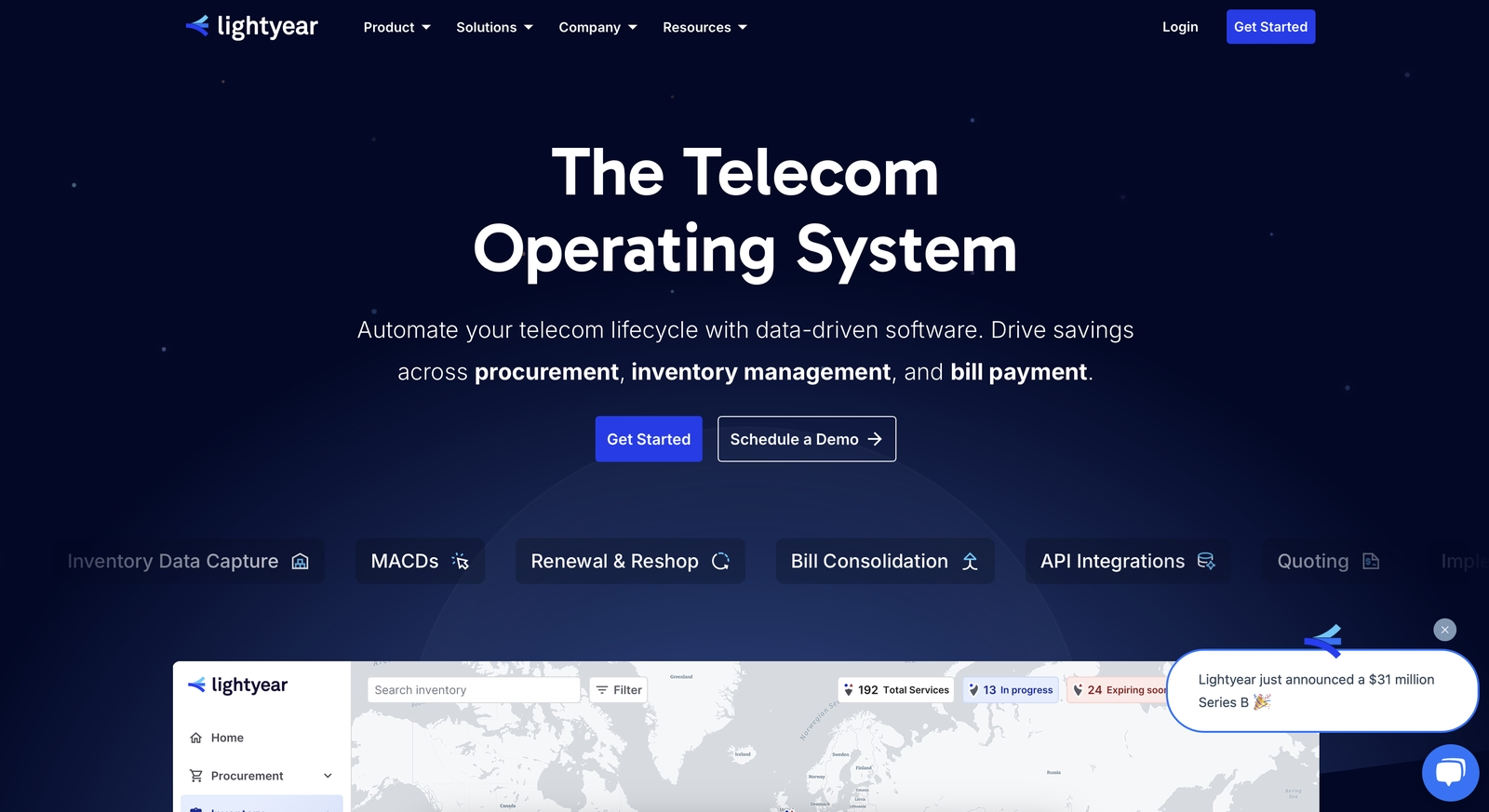
Whether your applications rely on WebSocket or GraphQL, they all depend on a solid telecom foundation. Lightyear helps you manage that underlying infrastructure by automating network service procurement, inventory management, and bill consolidation.
Our platform helps enterprises save over 70% in time and 20% in costs on their network services. Schedule a demo or get started with our questionare today.
Frequently Asked Questions about WebSocket vs GraphQL
Can GraphQL replace WebSocket?
No, because they solve different problems. GraphQL is a language for requesting data, while WebSocket is a protocol for creating a persistent communication channel. They are not interchangeable, but they can be used together to combine precise data queries with real-time updates.
Which one is better for performance?
It depends on the goal. WebSocket offers lower latency for real-time updates by maintaining an open connection. GraphQL improves performance by letting clients request only the data they need, which reduces the size of data payloads and prevents wasted bandwidth on each request.
Do I need a special server to use them?
Yes, both require specific server-side support. A WebSocket server must be configured to handle persistent, two-way connections. A GraphQL server needs a runtime environment that can process queries against a defined schema and return the corresponding data from your backend systems.
Let us show you the product and discuss specifics on how it might be helpful.
Schedule a Demo



Revolutionize Your Telecom Experience
Learn how you can get one step closer to optimal business efficiency for all your telecom services.