WebSocket vs Push Notification: Enterprise Communication
WebSockets vs. Push Notifications. Learn when to use each for real-time enterprise communication, from live data to background user alerts.


Modern applications often need to deliver information to users instantly, without waiting for them to refresh a page. Two common technologies that make this real-time communication possible are WebSockets and Push Notifications.
Although both technologies deliver real-time data, they operate in fundamentally different ways and are suited for different tasks. Understanding their specific strengths and limitations is key for any IT or network decision-maker looking to build responsive and efficient applications.
What is WebSocket?
A WebSocket is a communication protocol that creates a persistent, two-way communication channel between a client (like a user's web browser) and a server. Unlike traditional web requests that open and close a connection for every piece of information, a WebSocket connection stays open. This allows data to be sent back and forth instantly without the overhead of re-establishing a connection each time, making it highly efficient for applications that require a constant stream of information.
- Full-Duplex Communication: Data can flow in both directions simultaneously. The client can send information to the server, and the server can push information to the client at any time.
- Single TCP Connection: The entire exchange happens over a single, long-lived TCP connection, which significantly reduces latency.
- Stateful Protocol: The connection is stateful, meaning the server maintains awareness of each client's connection state throughout the session.
What is Push Notification?
A Push Notification is a one-way message sent from a server to a client device, appearing as an alert even when the application isn't actively running. It’s a mechanism designed to deliver short, timely updates to grab a user's attention, such as a news alert or a calendar reminder. The server initiates the communication, "pushing" information to the user without a direct request. This process relies on platform-specific services, like Apple's APNS or Google's FCM, to handle the final delivery to the device.
- One-Way Communication: Information flows in a single direction, from the server to the client. The client cannot reply through the same channel.
- Platform-Dependent: Delivery is managed by the operating system’s push notification service, not directly by the application.
- No Persistent Connection: The system is designed for brief, infrequent messages and does not maintain an open connection.
WebSocket vs Push Notification: Key Differences
While both technologies deliver real-time updates, they differ significantly in how they manage connections, deliver data, and require the application to be running.
1. Communication Direction and Interactivity
The most fundamental difference lies in the flow of information. A WebSocket is a two-way street, allowing for a continuous conversation where both the client and server can send data back and forth at any time.
Push Notifications, however, are a one-way broadcast from the server to the client. The user receives the alert but cannot respond or send data back through that same channel.
2. Connection Persistence and Resource Use
A WebSocket maintains a constant, open connection, which consumes server resources to keep the line active for every user. This is necessary for its instant, low-latency communication.
Push Notifications are connectionless from the application server's point of view. They are far more resource-efficient, as the delivery infrastructure is managed by platform services like Apple's APNS or Google's FCM, preserving server capacity and device battery life.
3. Application State Requirement
For a WebSocket to function, the user must have the application or web page open and active. The connection is live only during an active session and terminates when the user closes the app.
Conversely, the primary strength of a Push Notification is its ability to reach a user even when the application is closed or running in the background, making it perfect for re-engaging users.
Use Cases for WebSocket
Because of its ability to maintain an open, two-way dialogue, WebSocket is the ideal choice for applications where data must flow back and forth without delay. Its strengths are most apparent in scenarios that demand immediate user interaction or live data streams.
- Live Chat and Support Systems: For customer support chats or internal messaging platforms, WebSockets allow messages to be sent and received instantly, creating a fluid conversational experience.
- Real-Time Data Dashboards: Financial tickers, IoT sensor monitoring, and network performance dashboards rely on WebSockets to push live data to the user's screen as soon as it's available. This eliminates the need for manual refreshes.
- Collaborative Workspaces: Applications that allow multiple users to edit a document or design a project at the same time use WebSockets to sync everyone's changes instantly, ensuring all participants see the same version.
- Multiplayer Online Gaming: In gaming, every millisecond counts. WebSockets provide the low-latency connection needed to transmit player movements and actions to the server and back to other players in near real-time.
Use Cases for Push Notification
Push Notifications are best suited for delivering concise, one-way alerts that grab a user's attention, particularly when the application is closed. Their strength lies in re-engaging users and providing timely information that doesn't require an immediate, in-app response.
- Marketing and Promotions: Companies use push notifications to send special offers, product announcements, or company news directly to a user's device, encouraging them to reopen the app.
- Transactional Alerts: These are essential for communicating time-sensitive updates like order confirmations, shipping status changes, or appointment reminders. They provide value without needing the user to be actively engaged.
- Critical System and Security Updates: For enterprise applications, push notifications can deliver important security alerts, such as warnings about suspicious login activity, or notify IT staff of system-wide service outages.
- News and Social Media Updates: Media outlets use them to send breaking news headlines, while social platforms alert users to new messages or interactions, keeping them connected.
Choosing the Right Technology for Your Business
Making the right choice comes down to analyzing your specific application requirements against what each technology offers. The decision often hinges on three key factors: interactivity, application state, and resource impact.
1. Evaluate Your Interactivity Needs
The first question to ask is whether your application needs a two-way conversation. If you require a constant, back-and-forth data exchange, such as for a live chat or a collaborative tool, WebSocket is the correct choice.
If your goal is simply to send one-way alerts or updates to the user without expecting an immediate reply through the same channel, Push Notifications are far more suitable and efficient.
2. Consider the Application's Active State
Think about when the user needs to receive the information. A WebSocket connection is only active while the user has your application or website open.
If you must deliver messages when the app is closed or running in the background—like for transactional alerts or marketing messages—Push Notifications are the only technology designed for that purpose.
3. Assess Infrastructure and Resource Costs
From an IT perspective, resource management is critical. WebSockets require maintaining an open connection for each active user, which consumes more server memory and CPU resources.
Push Notifications are much lighter on your infrastructure. They delegate the final delivery to robust, third-party services (like Apple's or Google's), which reduces the load on your servers and helps preserve the user's device battery life.
Final Thoughts on WebSocket and Push Notification
It's helpful to view WebSocket and Push Notification not as rivals, but as specialized tools for different communication jobs. Neither is inherently better; their value is determined by the specific problem you need to solve for your application.
Choose WebSocket when your application requires a live, interactive dialogue. This is the technology for real-time data streams, collaborative tools, or instant messaging where information must flow back and forth without interruption inside an active session.
In contrast, Push Notifications are designed for sending timely, one-way messages to users, regardless of whether the app is open. They are ideal for transactional alerts, important announcements, or marketing updates that need to grab attention.
Ultimately, the decision comes down to your use case. By matching the technology to the communication need—interactive conversation versus outbound alert—you can build more efficient and effective applications for your organization.
Need Help Managing Your Network? Lightyear Can Help
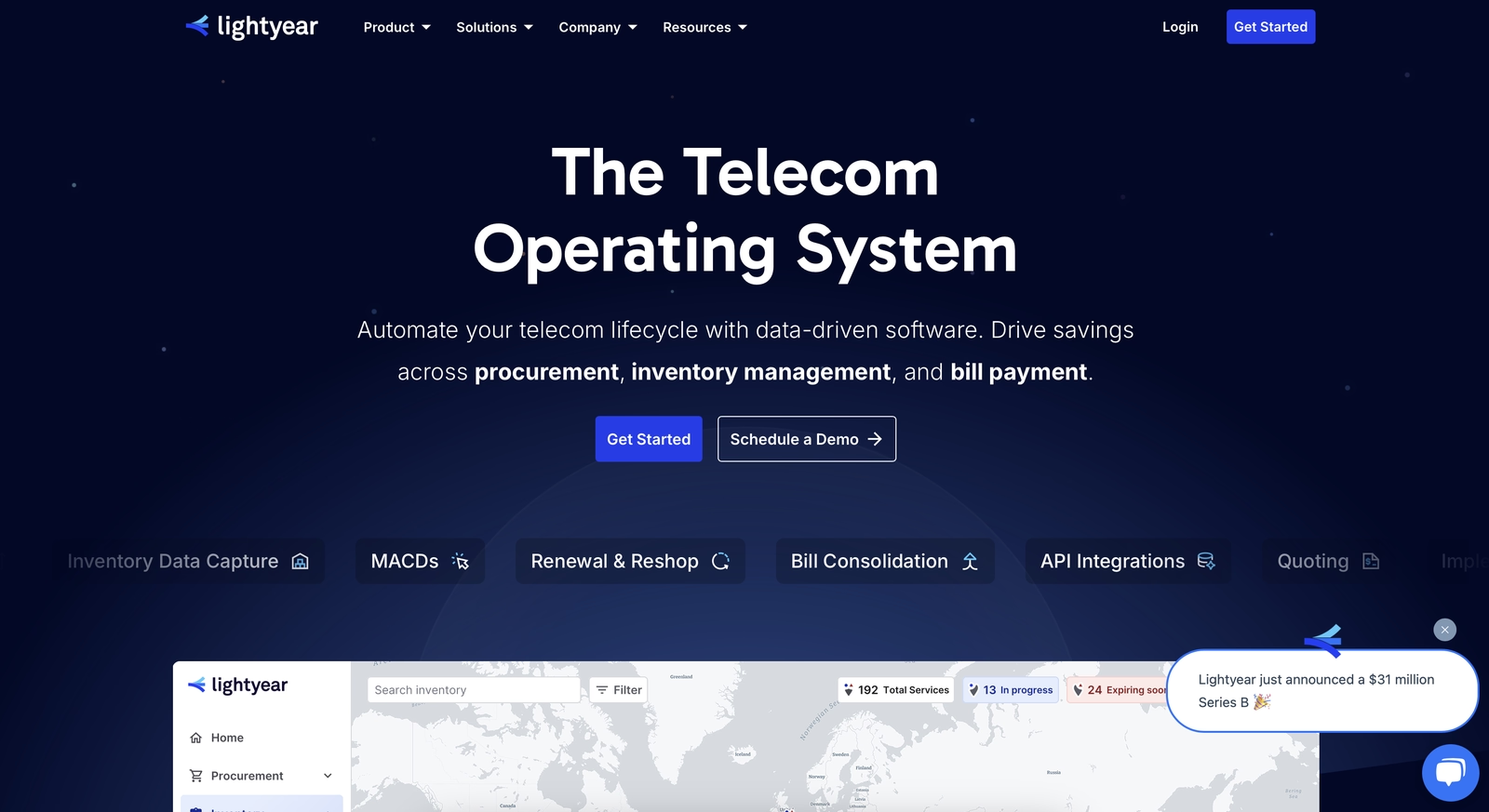
Just as the right technology keeps your users informed, the right platform keeps your network optimized. By automating network service procurement, inventory management, and bill consolidation, Lightyear takes the pain out of telecom infrastructure management.
The hundreds of enterprises who trust Lightyear achieve 70%+ time savings and 20%+ cost savings on their network services. Schedule a demo or get started with our questionnaire today.
Frequently Asked Questions about WebSocket vs Push Notification
Can you use both WebSockets and Push Notifications in the same application?
Absolutely. Many apps use a hybrid approach. A push notification can bring a user back into the app, at which point a WebSocket connection is established for real-time, in-app activity like a chat session. They complement each other well.
Which technology is more secure?
Both can be highly secure. WebSockets use the wss:// protocol for encryption, just like HTTPS. Push notification security is handled by robust platform services from Apple and Google. Proper implementation is key to securing either channel.
Is there a limit to the amount of data you can send?
Yes, there's a significant difference. Push notifications are designed for very small payloads, typically just a few kilobytes. WebSockets are built for continuous data streams and can handle much larger and more frequent messages, making them suitable for live data feeds.
Let us show you the product and discuss specifics on how it might be helpful.
Schedule a Demo




Revolutionize Your Telecom Experience
Learn how you can get one step closer to optimal business efficiency for all your telecom services.