Wi-Fi 6 vs Wi-Fi 5: Enterprise Router Comparison
Wi-Fi 6 vs. Wi-Fi 5 for your business. Learn the key differences in speed, capacity, and security to choose the right router for your enterprise network.


When upgrading your enterprise network, a key decision is whether to stick with Wi-Fi 5 (802.11ac) routers or invest in the newer Wi-Fi 6 (802.11ax) standard. While both provide reliable wireless connectivity, they are built for different levels of network demand.
This guide offers a direct comparison of Wi-Fi 6 and Wi-Fi 5, focusing on the practical differences in speed, capacity, and device handling that matter to IT and operations leaders.
What is Wi-Fi 6?
Wi-Fi 6, technically known as 802.11ax, is the current generation of Wi-Fi technology. It was developed specifically to address the growing number of devices on modern networks. While it is faster, its primary focus is on improving network efficiency and capacity, especially in dense environments like offices or public venues.
Its core improvements are built on several key technologies:
- OFDMA (Orthogonal Frequency Division Multiple Access): This feature allows a Wi-Fi 6 router to communicate with multiple devices at once within a single channel. It divides the channel into smaller sub-channels, allocating them to different devices to reduce wait times and congestion.
- MU-MIMO (Multi-User, Multiple-Input, Multiple-Output): While available in Wi-Fi 5, this technology is enhanced in Wi-Fi 6 to support more simultaneous data streams for both uploads and downloads, increasing network capacity.
- Target Wake Time (TWT): This feature improves battery life for connected devices, particularly smartphones and IoT sensors. It allows the router to schedule when devices wake up to send or receive data, letting them sleep for longer and conserve power.
What is Wi-Fi 5?
Wi-Fi 5, also known as 802.11ac, was the standard for wireless networking before Wi-Fi 6 and remains widely deployed in many business environments. Released in 2014, it delivered a major performance boost over its predecessors and is still a very capable technology for networks with moderate device density.
It operates differently from Wi-Fi 6, relying on its own set of established technologies:
- OFDM (Orthogonal Frequency Division Multiplexing): Unlike the more advanced OFDMA in Wi-Fi 6, Wi-Fi 5 uses OFDM. This technology transmits data to one device at a time on a given channel, which can lead to congestion if many devices are active simultaneously.
- MU-MIMO (Multi-User, Multiple-Input, Multiple-Output): Wi-Fi 5 was the first standard to introduce MU-MIMO, but it was limited to handling simultaneous downloads to multiple devices. It did not support simultaneous uploads in the same way.
- 5 GHz Band Focus: It primarily operates on the less crowded 5 GHz frequency band. This was a key feature that helped reduce interference and increase speeds compared to older standards that relied heavily on the 2.4 GHz band.
Key Differences Between Wi-Fi 6 and Wi-Fi 5
While the underlying technologies dictate how each standard works, the practical impact on network performance is what truly matters for business operations. Here’s a direct comparison of how they stack up in key areas.
Speed and Throughput
On paper, Wi-Fi 6 boasts a theoretical maximum speed of 9.6 Gbps, compared to Wi-Fi 5’s 3.5 Gbps. This is a notable increase, but the real-world advantage is less about hitting that peak speed and more about maintaining higher speeds across a crowded network.
For an enterprise, this means Wi-Fi 6 provides more consistent and reliable performance when many employees are simultaneously using bandwidth-intensive applications.
Frequency Band Operation
Wi-Fi 5 primarily operates on the 5 GHz band, which was a strategy to avoid the heavy interference common on the 2.4 GHz band. This approach works well but limits its flexibility.
Wi-Fi 6, on the other hand, operates on both the 2.4 GHz and 5 GHz bands. This dual-band capability improves performance and range for all types of devices. Furthermore, its extension, Wi-Fi 6E, introduces access to the new 6 GHz band, offering a massive increase in available channels and capacity.
Security Standards
Security is a critical point of difference. Wi-Fi 6 mandates the use of WPA3, the latest and most secure wireless protocol. WPA3 provides stronger encryption and better protection against brute-force attacks, making it much harder for unauthorized users to access the network.
Most Wi-Fi 5 devices rely on the older WPA2 standard, which is more vulnerable to certain types of cyberattacks.
Benefits of Upgrading to Wi-Fi 6
For businesses managing a growing number of connected devices, moving to Wi-Fi 6 offers several practical advantages that go beyond raw speed. The upgrade is an investment in network stability and future readiness.
- Greater Device Capacity: Wi-Fi 6 is designed for high-density environments. It uses OFDMA technology to communicate with numerous devices simultaneously, preventing the slowdowns that occur when many users connect at once in a busy office.
- Reduced Network Congestion: By dividing wireless channels into smaller sub-channels, the network can serve multiple clients at the same time. This results in less waiting, fewer interruptions during video calls, and a smoother experience for everyone.
- Improved Battery Life for Devices: The Target Wake Time (TWT) feature allows the network to schedule communication with devices like smartphones and IoT sensors. This lets them conserve power, extending battery life and reducing maintenance needs.
- Future-Ready Infrastructure: Adopting Wi-Fi 6 prepares your network for the next generation of applications and the continued growth of connected devices, ensuring your infrastructure remains capable for years to come.
Potential Drawbacks of Wi-Fi 6
While Wi-Fi 6 is a powerful upgrade, it comes with a few practical considerations. The most significant is that to experience its full benefits, your devices must also be Wi-Fi 6 compatible. Laptops, smartphones, and other endpoints running on older standards like Wi-Fi 5 will connect to a Wi-Fi 6 network, but they won't be able to use key features like OFDMA.
This means you may not see a dramatic performance improvement for your existing hardware. The network is backward-compatible, but the advanced efficiency and speed gains are only available to devices built for the new standard.
Cost Considerations for Enterprises
When it comes to budget, Wi-Fi 6 access points and routers carry a higher upfront price tag than their Wi-Fi 5 counterparts. This initial investment is a primary consideration for any network upgrade project.
However, it's important to look at the total cost of ownership. Because Wi-Fi 6 handles device density so effectively, you may be able to deploy fewer access points to cover the same physical area, potentially offsetting the higher per-unit cost.
You must also factor in your existing network infrastructure. While Wi-Fi 6 is backward-compatible, achieving its top multi-gigabit speeds may require upgrading network switches and cabling, which adds to the overall expense. Wi-Fi 5 hardware is generally more affordable and less likely to require costly infrastructure changes.
Making the Right Choice for Your Business
Deciding between Wi-Fi 6 and Wi-Fi 5 comes down to your specific operational needs, budget, and long-term goals. The right choice depends on balancing immediate costs with future network demands.
- Consider Wi-Fi 6 if: Your workplace has a high density of connected devices, or you expect significant growth. It’s the better option when teams rely on bandwidth-heavy applications and network security is a top priority, as it mandates the stronger WPA3 protocol. This is the choice for future-proofing your infrastructure.
- Stick with Wi-Fi 5 if: Your network supports a moderate number of devices with standard usage. It remains a cost-effective and capable solution when budget is a primary constraint. If most of your client devices are not Wi-Fi 6 compatible, or your existing cabling isn't ready for multi-gigabit speeds, Wi-Fi 5 provides a practical upgrade without requiring a complete overhaul.
Need Help Managing Your Network? Lightyear Can Help
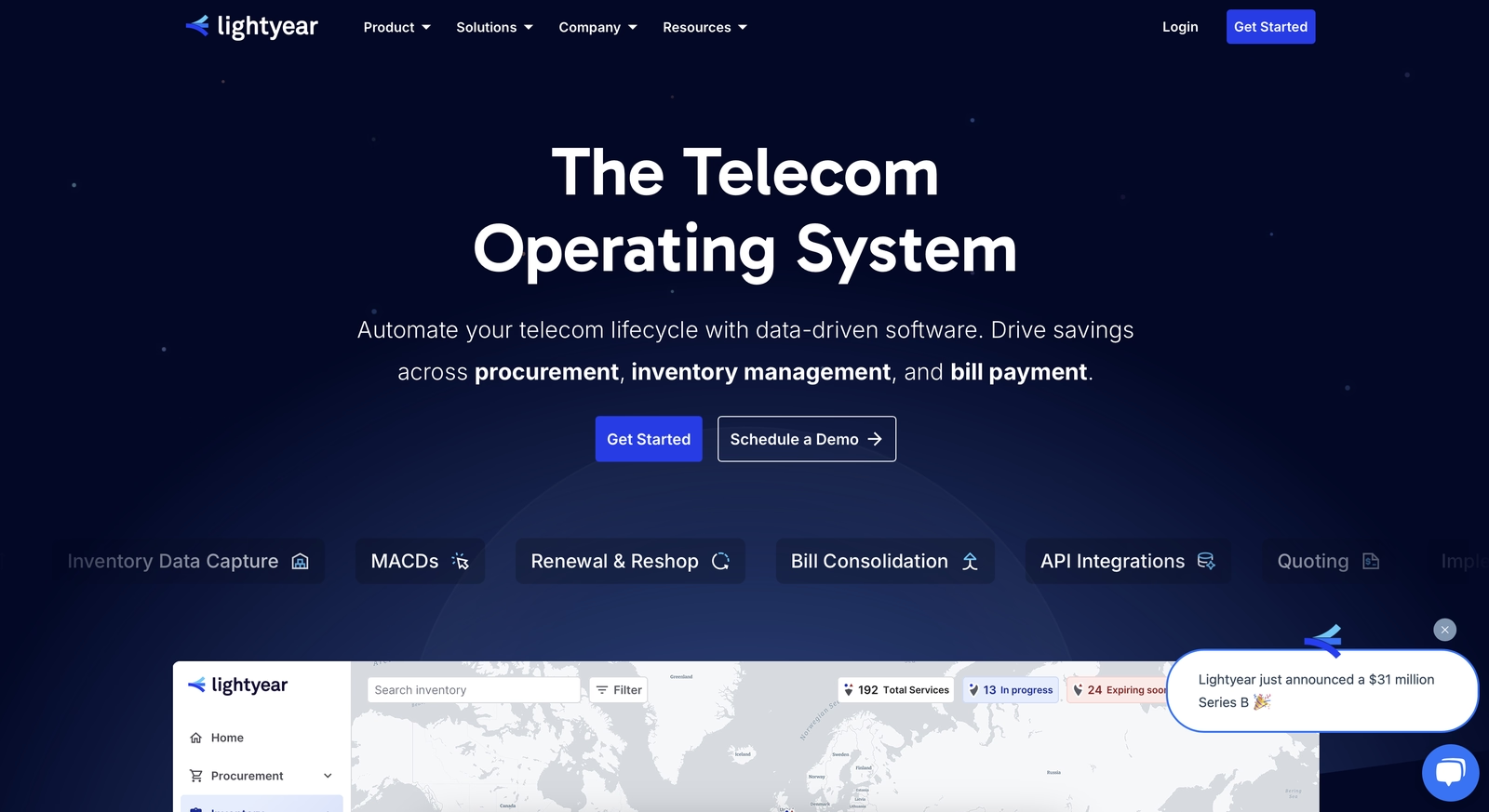
Whether you choose Wi-Fi 5 or upgrade to Wi-Fi 6, managing the underlying network services is just as critical for performance. Lightyear helps you procure and manage the right connectivity for your new hardware.
By automating network service procurement, inventory management, and bill consolidation, we take the pain out of telecom. Enterprises using Lightyear achieve over 70% time savings and 20% cost savings.
Schedule a demo or get started with our questionnaire today.
Frequently Asked Questions about Wi-Fi 6 Router vs Wi-Fi 5
Will Wi-Fi 6 provide better range than Wi-Fi 5?
Not necessarily. While Wi-Fi 6 is more efficient, its range is comparable to Wi-Fi 5. The key improvement is not distance, but how well it performs within that range, especially with many devices connected. Better coverage still relies on proper access point placement.
Do I need new cables for a Wi-Fi 6 upgrade?
To achieve the fastest multi-gigabit speeds that Wi-Fi 6 offers, you may need to upgrade your Ethernet cabling to Cat6a. However, for more moderate performance gains, your existing Cat5e or Cat6 cabling might be sufficient, depending on your network switches.
Is Wi-Fi 6E the same as Wi-Fi 6?
No, Wi-Fi 6E is an extension of the Wi-Fi 6 standard. It includes all the features of Wi-Fi 6 but adds access to the new 6 GHz frequency band. This provides more channels and less interference for compatible devices.
Can my old Wi-Fi 5 devices connect to a new Wi-Fi 6 network?
Yes, Wi-Fi 6 is fully backward-compatible. Your Wi-Fi 5 and older devices will connect without issue. However, they won't be able to use the advanced efficiency features like OFDMA, so their performance will be similar to that on a Wi-Fi 5 network.
Let us show you the product and discuss specifics on how it might be helpful.
Schedule a Demo





Revolutionize Your Telecom Experience
Learn how you can get one step closer to optimal business efficiency for all your telecom services.