Wi-Fi 6 vs Wi-Fi 7: Router Comparison
Wi-Fi 6 vs. Wi-Fi 7: Which router is right for your business? Learn the key differences in speed, latency, and capacity to make an informed choice.

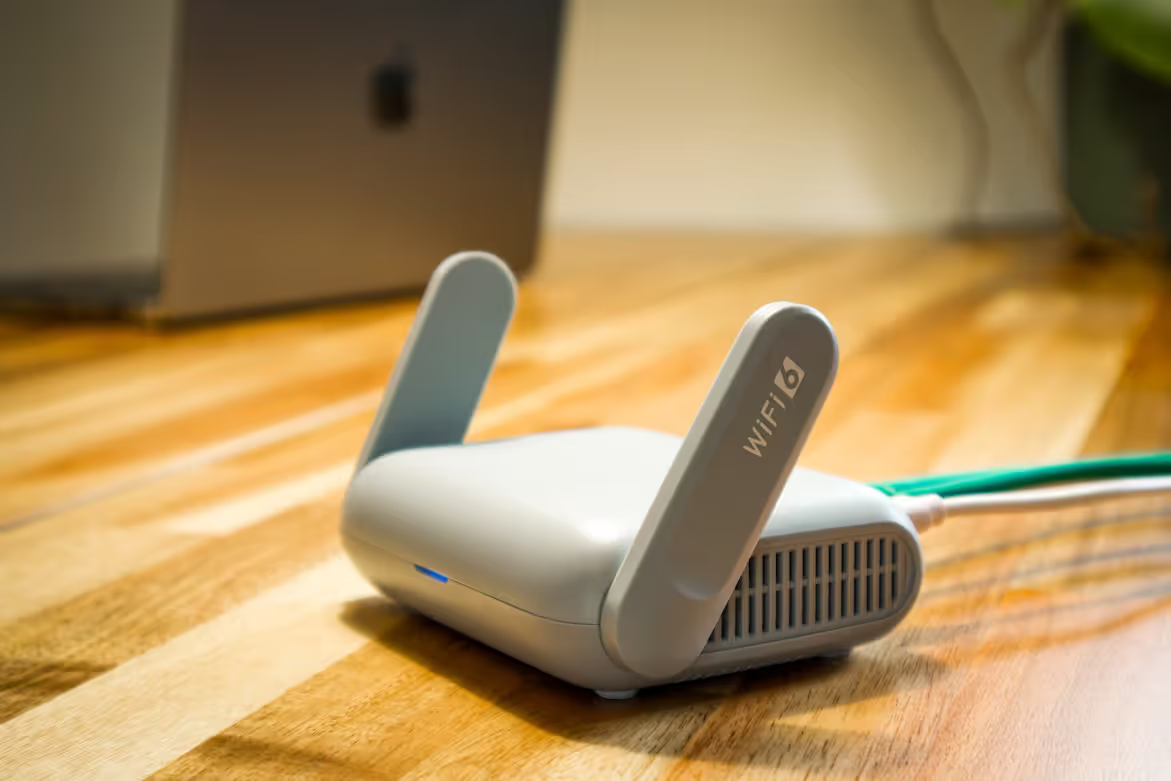
For IT and network managers, selecting the right Wi-Fi standard is a foundational choice that impacts everything from daily operations to future growth.
With Wi-Fi 7 now on the market, many are weighing its advancements against the proven capabilities of Wi-Fi 6.
This article provides a direct comparison, examining the key differences in speed, capacity, and performance to help you determine which technology is the right fit for your enterprise network.
What is a Wi-Fi 6 Router?
A Wi-Fi 6 router is a network device built on the IEEE 802.11ax standard. Introduced in 2019, its primary goal was to boost network efficiency and performance, especially in environments with many connected devices. While it offers faster speeds than its predecessor (Wi-Fi 5), its main advancements focus on reducing congestion and latency.
Key technologies that define Wi-Fi 6 include:
- OFDMA (Orthogonal Frequency Division Multiple Access): This allows a single transmission to deliver data to multiple devices at once, which significantly improves efficiency and reduces wait times on busy networks.
- MU-MIMO (Multi-User, Multiple-Input, Multiple-Output): Wi-Fi 6 expands on this feature, enabling routers to communicate with up to eight devices simultaneously for both downloads and uploads.
- Target Wake Time (TWT): This feature helps conserve battery life for connected devices, particularly IoT hardware, by scheduling specific times for them to wake up and transmit data.
- 1024-QAM: By packing more data into each signal, this modulation scheme increases raw throughput by about 25% compared to Wi-Fi 5.
What is a Wi-Fi 7 Router?
A Wi-Fi 7 router is based on the IEEE 802.11be standard, also known as Extremely High Throughput (EHT). Officially launched in 2024, it was developed to deliver major increases in speed, capacity, and responsiveness. The technology is engineered to support next-generation applications like AR/VR, 8K video streaming, and industrial IoT that require exceptionally low latency and high data rates.
Wi-Fi 7 builds upon its predecessor with several new core technologies:
- 320 MHz Channels: It doubles the maximum channel width from 160 MHz in Wi-Fi 6, allowing for a much larger pipeline for data to travel through.
- Multi-Link Operation (MLO): This feature lets devices connect and transmit data across multiple frequency bands (e.g., 5 GHz and 6 GHz) simultaneously, which boosts throughput and improves connection reliability.
- 4096-QAM: An upgrade from 1024-QAM, this modulation scheme packs more data into each signal, increasing raw data rates by 20%.
- Preamble Puncturing: This allows the router to carve out and use parts of a channel even if there is interference on another part, leading to more efficient use of the available spectrum.
Key Differences Between Wi-Fi 6 and Wi-Fi 7
While both standards improve on their predecessors, the core differences lie in how they handle data speed, connection stability, and spectrum efficiency.
1. Speed and Throughput
The most significant difference is raw speed. Wi-Fi 7 offers a theoretical maximum speed of nearly 46 Gbps, a substantial leap from Wi-Fi 6's 9.6 Gbps.
This jump is achieved by combining wider 320 MHz channels with 4096-QAM modulation, which packs 20% more data into each transmission than Wi-Fi 6's 1024-QAM.
2. Latency and Reliability
Wi-Fi 7 introduces Multi-Link Operation (MLO), a feature that fundamentally changes how devices connect. With Wi-Fi 6, a device connects to a single band at a time, such as 5 GHz or 6 GHz.
MLO allows a single device to connect and exchange data across multiple bands simultaneously. This not only boosts speed but also creates a more resilient connection with lower latency, as data can take the most efficient path available.
3. Channel Width and Capacity
Wi-Fi 7 doubles the maximum channel width available in Wi-Fi 6, moving from 160 MHz to 320 MHz.
This increased capacity allows for higher performance and is essential for supporting multiple high-bandwidth applications like 8K streaming and AR/VR without causing network bottlenecks.
4. Efficient Spectrum Use
In congested wireless environments, Wi-Fi 7 uses the available spectrum more intelligently than Wi-Fi 6.
Thanks to Preamble Puncturing, a Wi-Fi 7 router can carve out and use a portion of a channel even if another part is occupied by interference. Wi-Fi 6, in contrast, would have to abandon that entire channel, making Wi-Fi 7 more robust in crowded office buildings or multi-tenant spaces.
Benefits of Upgrading to Wi-Fi 7
For businesses considering the investment, upgrading to Wi-Fi 7 offers tangible advantages that go beyond just faster speeds. The new standard is built to handle the demands of modern and future enterprise environments, translating its technical advancements into direct operational benefits.
- Future-Proofs Your Infrastructure: Adopting Wi-Fi 7 prepares your network for the next wave of technology. It provides the necessary bandwidth and low latency for emerging applications in augmented reality (AR), virtual reality (VR), and advanced industrial IoT.
- Greater Reliability in Crowded Spaces: Features like Multi-Link Operation (MLO) and Preamble Puncturing create more stable connections. This is especially valuable in dense environments like open offices, conference halls, or warehouses, reducing dropped connections and slowdowns.
- Superior Support for Data-Intensive Tasks: The significant increase in throughput allows your team to run multiple high-bandwidth applications simultaneously. This means smooth 8K video streaming, faster large file transfers, and more responsive cloud-based platforms without network strain.
- Extremely Low Latency for Critical Operations: Wi-Fi 7 is engineered for near-instantaneous data transmission. This is essential for real-time operations where any delay can be disruptive, such as interactive collaboration tools or remote equipment control.
Potential Challenges with Wi-Fi 7 Adoption
While the performance gains are compelling, adopting Wi-Fi 7 comes with a few practical considerations. The transition requires careful planning, as the technology is still in its early stages.
- Higher Initial Cost: Wi-Fi 7-certified routers and access points carry a premium price tag compared to their mature Wi-Fi 6 counterparts. This initial investment can be substantial for large-scale deployments.
- Client Device Availability: To realize the full benefits of Wi-Fi 7, your endpoints—laptops, smartphones, and other devices—must also support the standard. The ecosystem of Wi-Fi 7-enabled devices is still growing.
- Infrastructure Demands: The multi-gigabit speeds of Wi-Fi 7 may require upgrades to your wired network. To avoid bottlenecks, you may need to invest in new multi-gigabit Ethernet switches and cabling (e.g., Cat6a or higher).
- Standard Maturity: As with any new technology, early hardware releases may lack certain features or have firmware that is less refined than more established standards.
Use Cases for Wi-Fi 6 and Wi-Fi 7 in Enterprises
The right choice depends entirely on your organization's specific operational needs and future goals.
When Wi-Fi 6 Makes Sense
Wi-Fi 6 is a powerful and practical solution for most modern enterprise environments. It excels in typical office settings where employees rely on cloud applications, video conferencing, and consistent connectivity across many devices.
It is also well-suited for retail, logistics, and educational institutions that need reliable performance for point-of-sale systems, inventory scanners, and classroom learning tools without requiring the extreme throughput of Wi-Fi 7.
When to Consider Wi-Fi 7
Wi-Fi 7 is designed for organizations operating at the technological forefront or with exceptionally demanding network requirements. Think of environments that depend on real-time, high-bandwidth applications.
This includes creative studios streaming and editing 8K video or engineering firms using AR/VR for collaborative design. It is also ideal for advanced manufacturing facilities with automated robotics and healthcare centers transmitting large medical imaging files, where its ultra-low latency and high capacity are critical.
Making the Right Choice for Your Business
Choosing between Wi-Fi 6 and Wi-Fi 7 comes down to balancing your current operational requirements against your future technological ambitions.
Wi-Fi 6 is a mature and highly capable standard that meets the demands of most businesses today. It provides reliable connectivity for daily activities like video conferencing and cloud-based work at a more accessible price point.
In contrast, Wi-Fi 7 is a strategic investment in future performance. Its significant gains in speed and capacity are built for organizations adopting data-heavy applications like 8K video, AR/VR, or advanced automation.
The right choice depends on your specific roadmap. If your current network performs well, Wi-Fi 6 is a solid, cost-effective solution. If you are planning for next-generation technologies and require the lowest possible latency, investing in Wi-Fi 7 will prepare your infrastructure for what comes next.
Need Help Managing Your Network? Lightyear Can Help
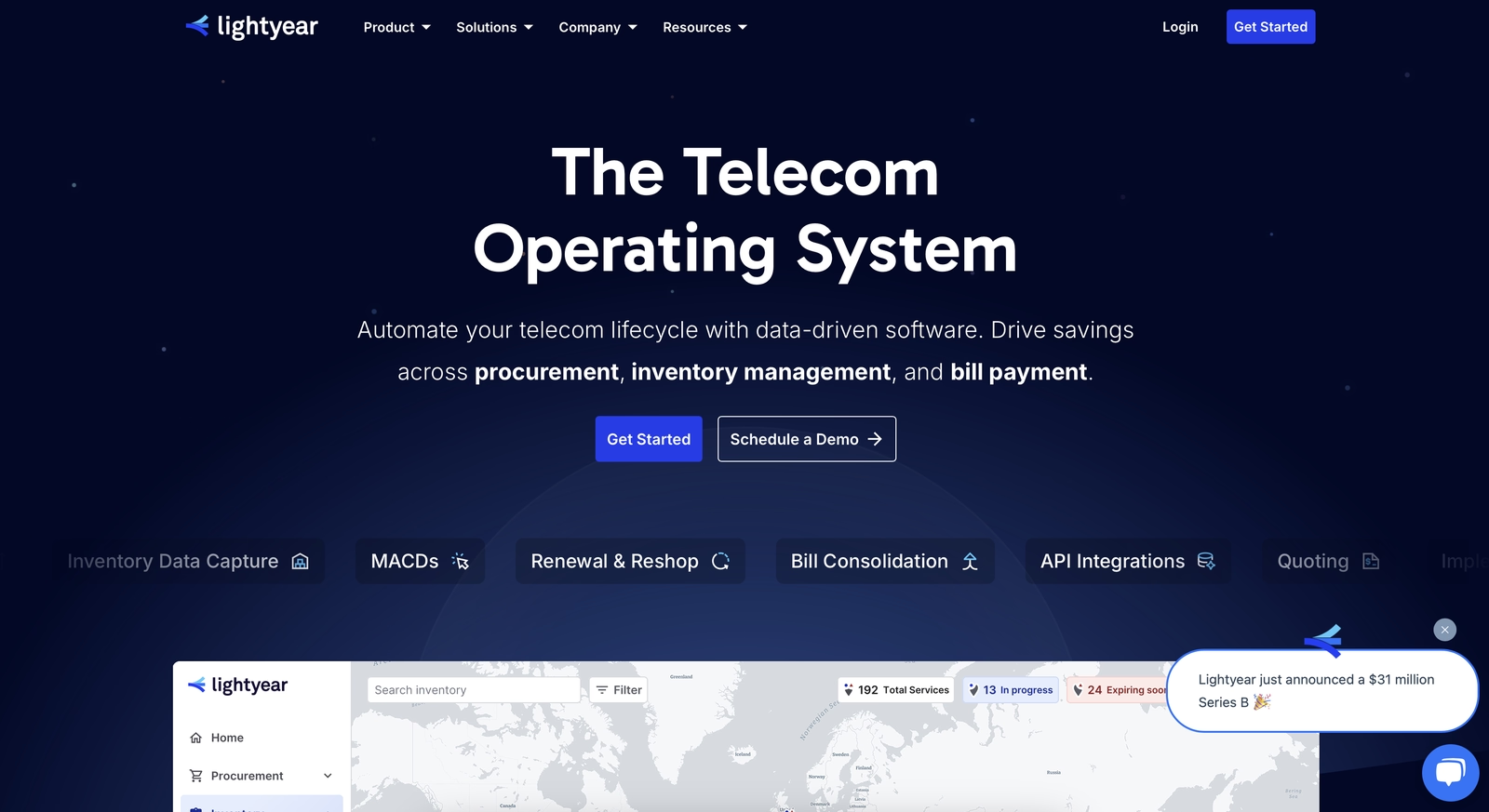
Choosing the right router is just one piece of the puzzle. Lightyear helps manage the rest, from procuring the best internet circuits for your new hardware to tracking your entire telecom inventory in one place.
By automating network service procurement, inventory management, and bill consolidation, Lightyear removes the complexity from telecom management. Enterprises using our platform save over 70% in time and reduce costs by up to 20%.
Schedule a demo or get started with our questionnaire today.
Frequently Asked Questions about Wi-Fi 6 Router vs Wi-Fi 7 Router
Is a Wi-Fi 7 router backward compatible with my existing Wi-Fi 6 devices?
Yes, absolutely. Wi-Fi 7 is fully backward compatible. Your existing Wi-Fi 6 and older devices will connect to a Wi-Fi 7 router without any issues, though they won't be able to access the new Wi-Fi 7-specific features like MLO or 320 MHz channels.
Is there a difference in security between Wi-Fi 6 and Wi-Fi 7?
Not fundamentally. Both standards mandate the use of WPA3, the latest security protocol, which provides more robust encryption and authentication. Wi-Fi 7 builds on this secure foundation but does not introduce a brand-new security protocol over what Wi-Fi 6 already offers.
Does Wi-Fi 7 offer better range than Wi-Fi 6?
Not necessarily. While Wi-Fi 7's higher frequencies have a shorter physical range, features like Multi-Link Operation can improve connection stability at the edge of your network. Overall coverage is comparable, but the reliability at that range is where Wi-Fi 7 can have an advantage.
Let us show you the product and discuss specifics on how it might be helpful.
Schedule a Demo





Revolutionize Your Telecom Experience
Learn how you can get one step closer to optimal business efficiency for all your telecom services.