Wi-Fi 7 vs 6E: Enterprise Router Comparison
Wi-Fi 7 vs. 6E: Which is right for your enterprise? Learn the key differences in speed, latency, and capacity to make an informed network decision.

The world of wireless networking moves quickly. Just as businesses began adopting Wi-Fi 6E for its access to the uncongested 6 GHz band, the next standard, Wi-Fi 7, has arrived with promises of even greater speeds and efficiency.
For IT and network managers, this raises an important question: is it time to invest in Wi-Fi 7, or does Wi-Fi 6E provide enough performance for your enterprise needs? This article offers a direct comparison to help you make an informed decision for your organization's infrastructure.
What is Wi-Fi 7?
Officially known as IEEE 802.11be, Wi-Fi 7 is the latest generation of wireless technology designed for what the industry calls Extremely High Throughput (EHT). It builds on the foundation of Wi-Fi 6E by also operating across the 2.4 GHz, 5 GHz, and 6 GHz bands, but it introduces several significant technical improvements. These changes are aimed at boosting speed, reducing latency, and increasing network capacity to support demanding applications like AR/VR, 8K video streaming, and large-scale IoT deployments.
Key technical advancements of Wi-Fi 7 include:
- Multi-Link Operation (MLO): This is a core feature that allows a single device to connect and exchange data across multiple frequency bands and channels at the same time. This creates a more stable, faster, and lower-latency connection.
- 320 MHz Channel Widths: Wi-Fi 7 doubles the maximum channel width to 320 MHz in the 6 GHz band. Think of these wider channels as bigger highways for data, allowing for much faster transfer speeds.
- 4096-QAM: This advanced data encoding method packs more data into each transmission compared to previous standards, contributing to higher peak data rates and greater network efficiency.
What is Wi-Fi 6E?
Wi-Fi 6E, also designated as IEEE 802.11ax, is an extension of the Wi-Fi 6 standard. Its defining feature is that it opens up the 6 GHz frequency band for Wi-Fi use, a significant move to address network congestion. By providing access to this previously unavailable spectrum, Wi-Fi 6E offers more available channels, which leads to less interference from other devices and older Wi-Fi networks.
This standard was designed to improve performance in crowded wireless environments. Its core capabilities are built upon the foundation of Wi-Fi 6, including:
- Exclusive 6 GHz Band Operation: This provides access to a large block of clean spectrum, which can significantly boost speeds and reduce latency for compatible devices by avoiding the crowded 2.4 GHz and 5 GHz bands.
- OFDMA and MU-MIMO: These technologies allow routers to communicate with multiple devices at once, improving efficiency and capacity, especially in environments with many connected clients like offices or public venues.
- 160 MHz Channel Width: Wi-Fi 6E supports wider data channels of up to 160 MHz, allowing for higher throughput for bandwidth-intensive tasks.
- WPA3 Security: It mandates the latest security protocol, WPA3, which provides stronger encryption and authentication to protect enterprise network traffic.
Key Differences Between Wi-Fi 7 and Wi-Fi 6E
While both standards represent a major step up from older Wi-Fi, their technical differences have significant implications for network performance. Here’s a direct comparison of the core upgrades that set them apart.
1. Speed and Throughput
Wi-Fi 7 offers a substantial leap in theoretical speed, aiming for a maximum data rate of nearly 46 Gbps, compared to Wi-Fi 6E's 9.6 Gbps. It achieves this primarily by doubling the maximum channel width to 320 MHz in the 6 GHz band, a direct increase over the 160 MHz channels in Wi-Fi 6E.
Additionally, Wi-Fi 7 uses a more advanced data encoding method, 4096-QAM. This packs more data into each signal than Wi-Fi 6E's 1024-QAM, contributing to higher peak data rates and greater overall network efficiency.
2. Latency and Connection Stability
This is where Wi-Fi 7 introduces its most significant architectural change with Multi-Link Operation (MLO). MLO allows a single device to connect, send, and receive data across multiple frequency bands (e.g., 5 GHz and 6 GHz) simultaneously.
Wi-Fi 6E devices, in contrast, connect to one band at a time. By aggregating bands, MLO creates a more resilient connection with much lower, more predictable latency, which is critical for real-time applications like video conferencing and industrial automation.
3. Spectrum and Channel Management
Both standards operate in the 6 GHz band, but Wi-Fi 7 uses the available spectrum more intelligently. It introduces a feature called Preamble Puncturing.
This allows a Wi-Fi 7 access point to carve out and use a wide channel even if a small portion of it is occupied by another device. A Wi-Fi 6E network cannot do this and must fall back to a narrower, completely clear channel, which can limit its performance in congested areas.
Benefits of Upgrading to Wi-Fi 7
For enterprises weighing the upgrade, the technical advancements in Wi-Fi 7 translate into tangible operational advantages. Moving to this new standard can directly address performance bottlenecks and support next-generation business applications.
- Support for Demanding Applications: The significant increase in speed and throughput makes Wi-Fi 7 ideal for data-heavy tasks like 8K video streaming, AR/VR training simulations, and rapid transfers of large design files. This ensures smooth performance where Wi-Fi 6E might struggle.
- Lower Latency for Real-Time Services: With Multi-Link Operation (MLO), Wi-Fi 7 delivers the ultra-low and consistent latency required for critical real-time applications. This is a major benefit for flawless video conferencing, cloud desktop experiences, and industrial automation.
- Increased Capacity in Dense Environments: Wi-Fi 7 is built to handle more connected devices without a drop in performance. This is crucial for busy offices, conference halls, and public venues where hundreds of users need reliable connectivity at the same time.
- More Resilient Wireless Connections: By using multiple bands at once, MLO creates a more robust and stable connection. If one band experiences interference, the device maintains its connection through the other, preventing interruptions during important tasks.
Challenges and Considerations for Wi-Fi 6E
While Wi-Fi 6E offers significant improvements over older standards, it comes with its own set of limitations for decision-makers to consider. Its most notable drawback is the single-band connection architecture. Unlike Wi-Fi 7, a 6E device connects to only one band at a time, which can result in less predictable latency for real-time applications.
Wi-Fi 6E is also less efficient in its use of the 6 GHz spectrum. If a small portion of a wide channel is busy, the network must fall back to a narrower, slower channel, limiting performance in congested environments.
Finally, device compatibility is a practical hurdle. To realize the benefits of the 6 GHz band, an organization's fleet of client devices—from laptops to smartphones—must also be Wi-Fi 6E compatible. As a result, while it solves many of today's congestion problems, it may not be fully equipped for the next generation of high-bandwidth business tools.
Future-Proofing Your Network with Wi-Fi 7
Adopting Wi-Fi 7 is not just about meeting current demands; it's a strategic move to prepare your infrastructure for what comes next. This standard is designed with the future of enterprise technology in mind, providing a more durable foundation than Wi-Fi 6E.
1. Alignment with Future Device Cycles
As manufacturers release new laptops, tablets, and IoT sensors, they will increasingly feature Wi-Fi 7 chipsets as standard. Investing in a Wi-Fi 7 network means you can fully capitalize on the capabilities of this new hardware from day one, rather than being limited by your infrastructure.
2. Preparing for Next-Generation Workloads
The technical foundation of Wi-Fi 7 is built for applications that are still on the horizon for many businesses. This includes immersive collaboration tools, advanced industrial robotics, and AI-driven analytics that require instantaneous data processing and extremely low latency.
3. Long-Term Infrastructure Viability
While Wi-Fi 6E is a capable standard, its lifecycle will likely be shorter as technology demands grow. Choosing Wi-Fi 7 can extend the lifespan of your wireless infrastructure, offering a better return on investment by postponing the need for another costly upgrade cycle in just a few years.
Making the Right Choice for Your Enterprise
The decision between Wi-Fi 7 and Wi-Fi 6E ultimately comes down to your organization's specific needs and long-term technology roadmap. There isn't a single right answer for every business.
Wi-Fi 6E is a powerful solution for overcoming current network congestion by opening up the 6 GHz band. If your primary goal is to improve performance in a crowded office and your application demands are not yet pushing the limits, Wi-Fi 6E offers a significant and immediate upgrade.
On the other hand, Wi-Fi 7 is the clear choice for future-proofing your network. Its superior speed, lower latency from Multi-Link Operation (MLO), and greater capacity are designed for the next generation of business tools, from AR/VR to industrial IoT.
Consider your budget, upcoming device refresh cycles, and application requirements. For long-term value and to support future growth, Wi-Fi 7 provides a more durable foundation.
Need Help Managing Your Network? Lightyear Can Help
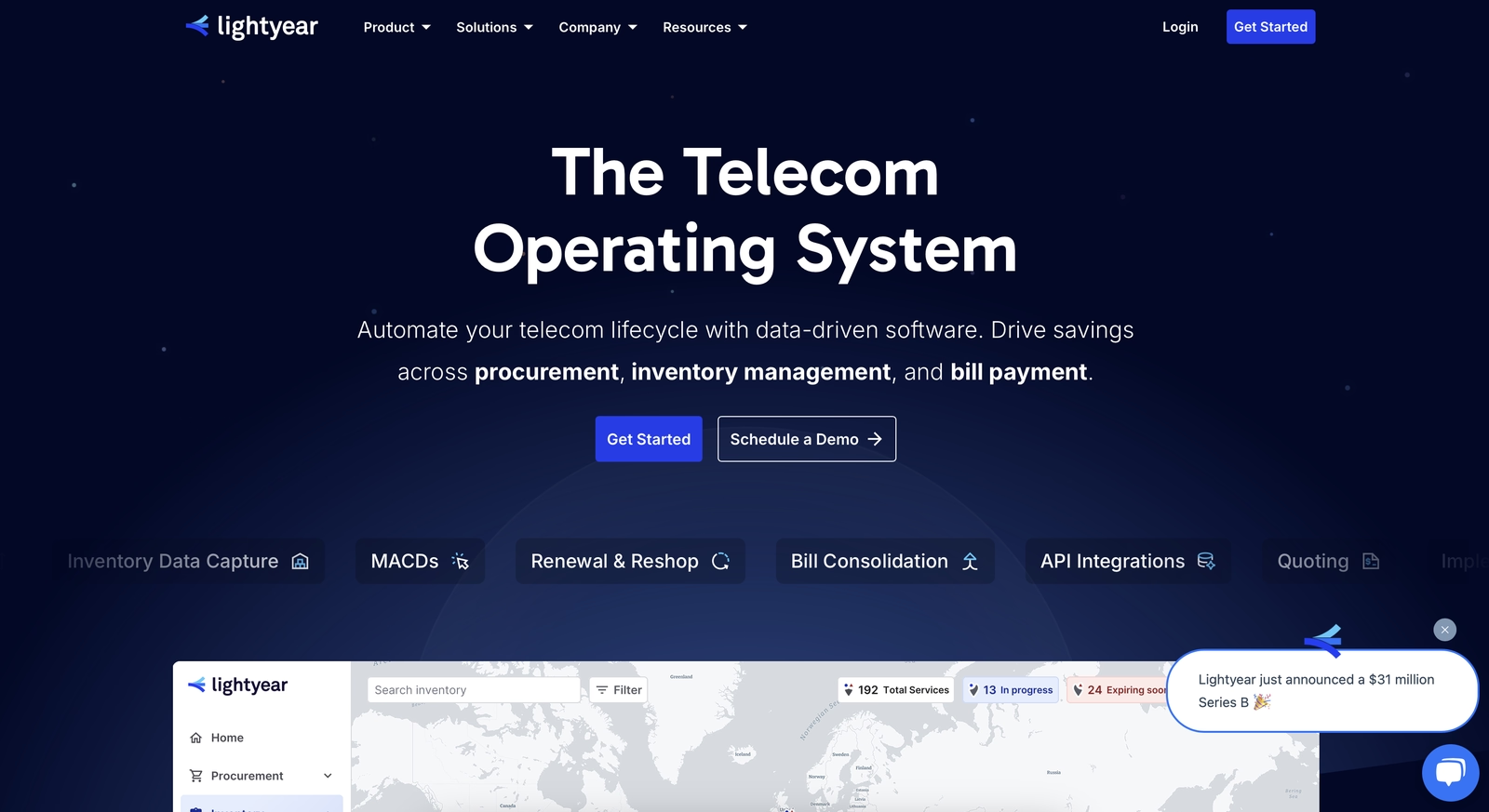
Whether you choose Wi-Fi 6E or 7, managing the upgrade and ongoing services can be complex. By automating network service procurement, inventory management, and bill consolidation, Lightyear simplifies your entire telecom infrastructure.
The hundreds of enterprises who trust Lightyear achieve over 70% time savings and 20% cost savings on their network services. Schedule a demo or get started with our questionnaire today.
Frequently Asked Questions about Wi-Fi 7 Router vs 6E
Do I need new devices to use Wi-Fi 7?
Yes, to access the full benefits like Multi-Link Operation and 320 MHz channels, you need Wi-Fi 7 compatible devices. However, Wi-Fi 7 routers are backward compatible, so your existing Wi-Fi 6E, 6, and 5 devices will still connect and function.
Is Wi-Fi 7 hardware much more expensive than Wi-Fi 6E?
Currently, Wi-Fi 7 access points and routers carry a premium price as the newer technology. Wi-Fi 6E hardware is more widely available and generally more affordable, making it a cost-effective option for businesses needing an immediate performance boost without the latest features.
Does Wi-Fi 7 have a better range than Wi-Fi 6E?
Not necessarily. Signal range is more dependent on transmit power and physical obstructions. Both standards use the 6 GHz band, which has a shorter range than 5 GHz or 2.4 GHz. Wi-Fi 7's primary advantages are speed, latency, and efficiency, not a longer reach.
Can I mix Wi-Fi 7 and Wi-Fi 6E access points in my network?
Absolutely. You can operate both types of access points in the same network. This allows for a phased upgrade, letting you deploy Wi-Fi 7 in high-density or performance-critical areas while keeping Wi-Fi 6E hardware elsewhere to manage costs.
Let us show you the product and discuss specifics on how it might be helpful.
Schedule a Demo





Revolutionize Your Telecom Experience
Learn how you can get one step closer to optimal business efficiency for all your telecom services.