WiFi Router vs Hotspot: Enterprise Network Solutions
WiFi router vs. hotspot: which is right for your business? Learn the key differences in security, scale, and use cases for enterprise networks.


When it comes to getting your business online, the terms “WiFi router” and “hotspot” are often used as if they mean the same thing. While both provide internet access, they serve different purposes and have distinct features, especially in a business setting.
Understanding the difference is key for IT and operations teams looking to build a reliable and secure network for their organization. This article will compare WiFi routers and hotspots, explaining what each one is, how they work, and which situations are best for each.
What is a WiFi Router?
A WiFi router is a physical device that connects to a modem to create a local network. Think of it as the central hub for internet connectivity within a fixed location, such as an office or a building. It takes the wired internet connection from your provider (via the modem) and converts it into a wireless signal, allowing multiple devices to get online without being plugged in.
A router’s primary functions go beyond just providing a wireless signal. Here are its core responsibilities:
- Creates a Local Area Network (LAN): It establishes a private network for all your devices, enabling them to communicate with each other (e.g., sending a document from a computer to a printer).
- Manages Data Traffic: It directs incoming and outgoing internet traffic, ensuring that data packets are sent to and from the correct devices on the network efficiently.
- Assigns IP Addresses: Every device on the network is assigned a unique internal IP address by the router, which is how it keeps track of where to send information.
- Provides Security: Routers act as the first line of defense for your network, typically including a built-in firewall and requiring password protection to prevent unauthorized access.
What is a Hotspot?
A hotspot provides wireless internet access by sharing a cellular data connection. Unlike a router that relies on a fixed, wired internet line, a hotspot is all about portability, creating a WiFi network you can take with you. This is often accomplished either through a smartphone’s built-in tethering feature or a dedicated, pocket-sized mobile hotspot device.
Here’s a breakdown of what defines a hotspot:
- Cellular-Based Connectivity: Its internet connection comes from a mobile carrier’s 4G or 5G network. The hotspot converts this cellular signal into a WiFi signal that nearby devices can connect to.
- Designed for Mobility: The primary function of a hotspot is to provide internet access on the go—in a vehicle, at a temporary job site, or during a network outage.
- Connection Sharing: It takes a single cellular data plan and shares it among a small number of devices, such as laptops, tablets, or payment terminals.
- Limited Range and Capacity: Hotspots are typically designed to support fewer simultaneous connections and cover a much smaller physical area than a standard business-grade router.
WiFi Router vs Hotspot: Key Differences
While both get you online, their core mechanics and capabilities are fundamentally different. For any IT team, understanding these distinctions is crucial for building a network that meets business needs.
1. Internet Source and Stability
A WiFi router draws its internet from a dedicated, wired connection provided by an ISP, such as fiber or cable. This physical link offers a highly stable and consistent connection, which is critical for business operations.
In contrast, a hotspot uses a cellular data plan from a mobile carrier. Its connection quality is entirely dependent on cellular signal strength, which can vary significantly based on location and network traffic.
2. Performance and Capacity
Routers, especially enterprise-grade models, are engineered for high performance and scale. They can manage heavy data loads and support a large number of simultaneous device connections without a drop in speed.
Hotspots are designed for a much smaller scale, typically supporting fewer than 10-15 devices. Their bandwidth is limited by the cellular connection, making them unsuitable for data-intensive tasks across a whole office.
3. Portability
The most defining difference is mobility. A router is a fixed piece of hardware, installed in one location to create a permanent Local Area Network (LAN).
A hotspot is inherently portable. It creates a temporary wireless network that moves with you, perfect for field teams, travel, or temporary sites.
4. Security Features
Business routers provide a strong security foundation for your network. They include features like built-in firewalls, VPN support, and the ability to create separate, secure guest networks.
Hotspots offer basic WPA2/WPA3 password encryption but generally lack the advanced security controls of a router. Connecting to a hotspot can introduce security risks if not properly managed.
Use Cases for WiFi Routers in Enterprises
Given their stability and capacity, WiFi routers are the backbone of nearly all permanent business locations. They are built to handle the demands of a modern office environment.
Their primary role is to establish the main office network, providing reliable internet for all day-to-day activities. This includes connecting employee workstations, servers, printers, and other essential hardware to the local network and the internet.
Enterprise-grade routers also allow for the creation of secure guest WiFi networks. This is a critical function that keeps visitor traffic separate from the internal corporate network, protecting sensitive company data.
Furthermore, they are essential for supporting high-bandwidth operations common in a business setting. This includes activities like video conferencing, VoIP phone systems, and large data transfers, all of which demand a consistent, high-speed connection to function properly.
Use Cases for Hotspots in Enterprises
While routers handle the heavy lifting in the office, hotspots shine in scenarios where flexibility and mobility are paramount. They are ideal for empowering employees who work outside the main office, such as field technicians or sales teams who need reliable internet on the road.
Hotspots are also perfect for providing connectivity at temporary locations like event booths or construction sites where a wired connection isn't feasible. They allow you to get a network up and running in minutes.
Additionally, they play a crucial role in business continuity plans. A cellular hotspot can act as a failover connection, ensuring critical operations remain online during a primary internet outage.
Cost Considerations for WiFi Routers and Hotspots
When budgeting for network infrastructure, the cost models for routers and hotspots are quite different. The financial breakdown generally involves both an initial hardware purchase and recurring service fees, which can influence a purchasing decision.
- WiFi Routers: The main cost is the one-time purchase of the router itself, which can be a significant capital expense for enterprise-grade equipment. After that, you have a predictable, fixed monthly fee for your wired internet service from your ISP.
- Hotspots: The initial hardware cost for a dedicated mobile hotspot is typically lower. However, the ongoing expense is a cellular data plan. These plans often come with data caps, and exceeding them can result in high overage fees or slowed speeds, making monthly costs less predictable, especially with heavy use.
For businesses, this means a router's cost is front-loaded with predictable operational expenses, while a hotspot's cost is tied to variable data consumption.
Making the Right Choice for Your Enterprise
Ultimately, the decision between a WiFi router and a hotspot isn't about choosing one over the other. For most businesses, the right approach involves using both technologies strategically to meet different operational needs.
A WiFi router is the foundation of your office connectivity. It provides the stable, high-capacity, and secure network required for day-to-day work, supporting everything from employee workstations to critical server infrastructure.
Hotspots, on the other hand, provide essential flexibility. They are the ideal solution for equipping mobile employees, setting up temporary work sites, or as a vital part of your business continuity plan for internet failover.
By viewing them as complementary tools, IT teams can build a comprehensive and resilient network architecture. This ensures reliable connectivity for all business activities, whether they happen inside the office walls or out in the field.
Need Help Managing Your Network? Lightyear Can Help
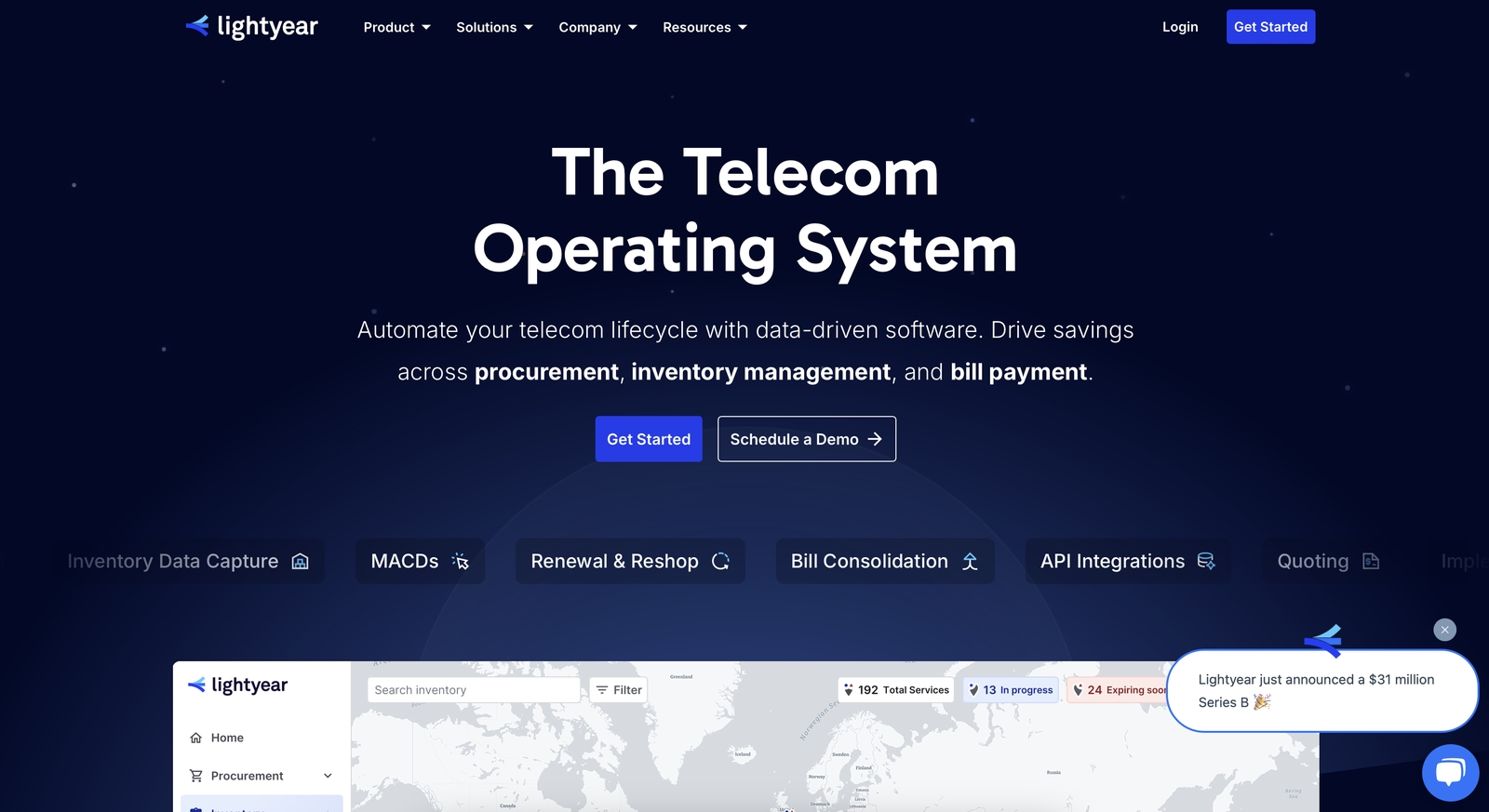
Whether you're deploying routers across multiple offices or managing hotspot data plans for a mobile workforce, overseeing your network infrastructure can be complex. Lightyear simplifies this by automating network service procurement, inventory management, and bill consolidation.
Enterprises using our platform save over 70% on time and reduce costs by more than 20% on their network services. Schedule a demo or get started with our questionnaire today.
Frequently Asked Questions about WiFi Router vs Hotspot
Can a 5G hotspot replace my office router?
For most businesses, a wired router connection offers greater reliability, security, and capacity for a primary office network. A 5G hotspot is better suited for smaller teams, temporary sites, or as a failover internet solution.
Do routers have data limits like hotspots?
Typically, no. Routers use wired internet plans from an ISP, which usually offer unlimited data. Hotspots rely on cellular plans that often come with data caps, leading to potential overage fees or slowed speeds if you exceed them.
Is a public WiFi hotspot the same as a personal hotspot?
No. A personal hotspot is a private network you create using your own device and data plan. Public WiFi hotspots, found in places like cafes, are shared networks that pose significantly higher security risks for business use.
Can a router work without a modem?
In most cases, no. A modem is required to translate the internet signal from your ISP. The router then takes that signal to create your local wireless network. Some devices combine both functions into a single modem-router gateway unit.
Let us show you the product and discuss specifics on how it might be helpful.
Schedule a Demo





Revolutionize Your Telecom Experience
Learn how you can get one step closer to optimal business efficiency for all your telecom services.