Wireless Ethernet vs WiFi: Enterprise Network Differences
Confused by Wireless Ethernet vs. WiFi? Learn the key differences in speed, range, and use cases to find the right fit for your enterprise network.

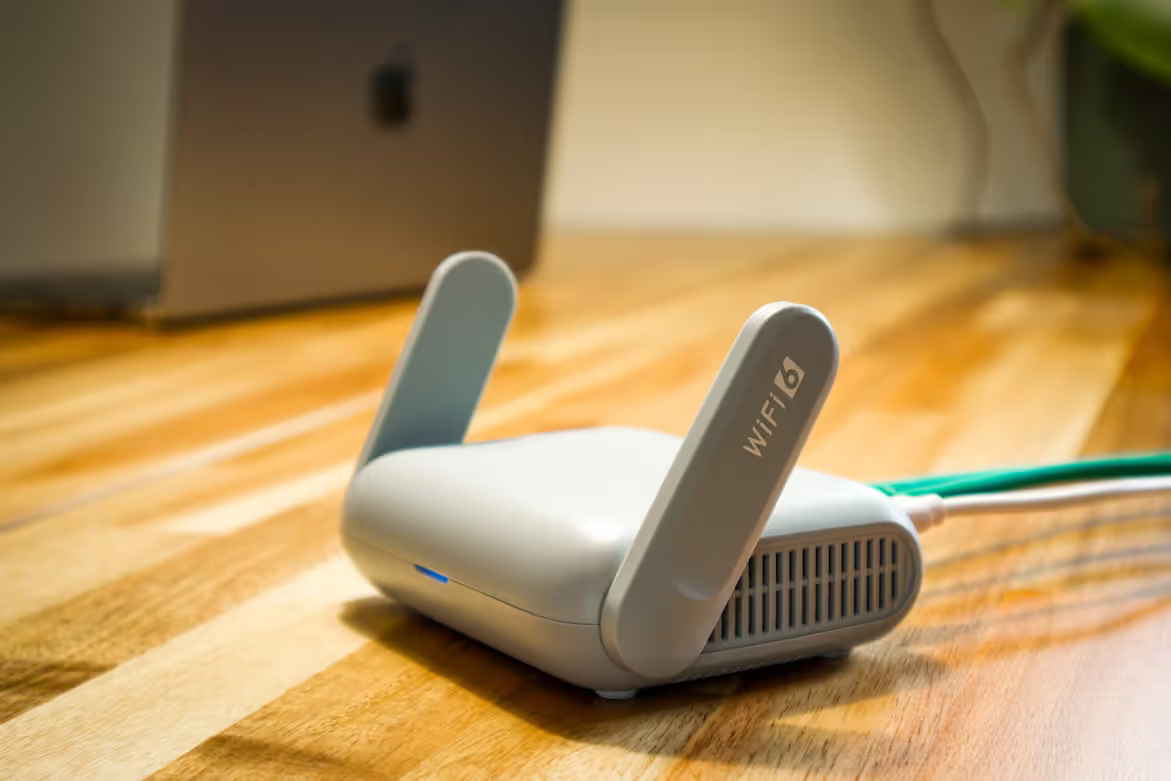
When discussing wireless networks, the terms “WiFi” and “Wireless Ethernet” are often used as if they mean the same thing.
While both technologies deliver wireless connectivity, they have important differences, particularly when it comes to enterprise-level network design and performance.
This article will break down the key distinctions between them to help you understand which solution best fits your business needs.
Understanding Wireless Ethernet
Think of Wireless Ethernet as a way to create a high-speed, fixed link between two or more locations without running physical cables. It uses dedicated radio frequencies to establish a direct connection, essentially acting as a long, invisible Ethernet cord. This technology is primarily used to extend a corporate LAN or as a primary internet connection.
Here are its core characteristics:
- Fixed Connections: It’s designed for stationary, point-to-point or point-to-multipoint links, such as connecting two buildings across a campus or linking a remote office back to headquarters.
- High Capacity: Wireless Ethernet is engineered for high throughput and reliability, often delivering speeds comparable to fiber optic connections.
- Directional Signals: The technology uses highly focused, directional antennas. This minimizes interference and enhances security, as the signal is not broadcast openly in all directions.
Defining WiFi
WiFi, on the other hand, is the technology most of us use daily to connect personal devices to the internet. It’s designed to create a Wireless Local Area Network (WLAN), providing internet access to multiple devices within a defined area, such as an office floor or a public cafe.
Its main characteristics include:
- Local Area Access: WiFi’s primary job is to offer connectivity within a limited space. An access point (AP) broadcasts a signal, allowing nearby devices like laptops, smartphones, and tablets to connect to the network.
- Omnidirectional Signals: Unlike the focused beam of Wireless Ethernet, WiFi access points radiate signals in all directions. This is great for covering an entire room but can make the network more susceptible to interference from other signals.
- User Mobility: The technology is built to support mobile users, allowing employees to move freely around an office with their devices without losing their network connection.
Wireless Ethernet vs WiFi: Key Differences
While both provide wireless access, their intended use cases and technical foundations are fundamentally different. Here’s a direct comparison of the most important factors for any IT decision-maker.
1. Application and Range
The most significant difference lies in their intended application and operational distance.
Wireless Ethernet is built for long-distance, fixed wireless links, connecting buildings across a campus or extending a network over several miles. WiFi, in contrast, provides wireless coverage within a confined area, like an office floor, for end-user devices.
2. Performance and Reliability
Wireless Ethernet typically offers superior performance with higher throughput and lower latency.
Because it uses a dedicated, point-to-point connection, it is far less susceptible to interference. WiFi operates on shared, often crowded frequency bands, meaning performance can be affected by other nearby networks and electronic devices.
3. Hardware and Deployment
The physical hardware for each is distinct and serves a different purpose.
Wireless Ethernet requires outdoor antennas that must be precisely aligned to establish a strong link. WiFi relies on indoor access points that are simpler to install and manage for broad coverage within a space.
4. Security Approach
Their security models also differ based on how their signals are transmitted.
The narrow, directional beam of a Wireless Ethernet link is inherently secure and difficult to intercept. WiFi signals are broadcast openly, requiring robust encryption protocols to protect data from anyone within range.
Benefits of Wireless Ethernet for Enterprises
For businesses managing multiple locations, Wireless Ethernet offers several distinct advantages that address common operational and financial challenges.
- Cost Savings: It eliminates the high costs and logistical headaches of laying physical fiber optic cables between buildings. This is especially valuable when connecting sites separated by public roads, rivers, or other obstacles.
- Quick Implementation: Deploying a Wireless Ethernet link is much faster than trenching for cables. Your business can establish high-speed connectivity between locations in a fraction of the time, accelerating new site rollouts.
- Fiber-Like Performance: The technology delivers high-capacity, low-latency connectivity that rivals traditional fiber. This ensures smooth operation for bandwidth-intensive applications like large data transfers and real-time communications.
- Built-in Redundancy: It can serve as a reliable backup internet connection. If your primary wired service fails, the wireless link provides immediate failover, preventing costly downtime and maintaining business continuity.
Advantages of WiFi in Business Environments
While Wireless Ethernet excels at connecting separate locations, WiFi is essential for providing flexible, user-centric access within a building. It offers distinct benefits that support the productivity and connectivity needs of a modern workforce.
- Fosters Employee Mobility: WiFi is fundamental to the modern office, giving employees the freedom to work and collaborate from anywhere on-site—be it a conference room, a common area, or their desk—without being tied to a physical network port.
- Enables Guest and BYOD Access: It allows you to easily create a separate, secure network for visitors, clients, and vendors. This is also ideal for supporting Bring Your Own Device (BYOD) policies, providing connectivity for personal devices without compromising the core network.
- Scalable and Flexible Coverage: Expanding network access to accommodate a growing team or a redesigned office space is straightforward. New coverage areas can be added by simply installing more access points with minimal disruption.
- Universal Device Compatibility: Nearly every business device, from laptops to printers to smartphones, is equipped with WiFi capability. This universal standard simplifies device onboarding and ensures broad compatibility across your technology stack.
Challenges and Limitations of Both Technologies
Of course, no solution is without its potential drawbacks. Understanding the limitations of each technology is key to planning a robust network infrastructure that can stand up to real-world conditions.
- Wireless Ethernet Challenges: The biggest hurdle is its strict requirement for a clear, unobstructed line of sight between antennas. Any new construction or even dense tree growth can block the signal. Performance can also be degraded by severe weather, a phenomenon known as “rain fade,” where heavy rain or fog absorbs the radio frequency signals.
- WiFi Challenges: In a crowded office, WiFi is prone to signal congestion from other networks and devices operating on the same frequencies. While scaling coverage by adding access points is simple in theory, it requires careful network planning to manage channels and power levels to prevent the APs from interfering with one another.
Making the Right Choice for Your Enterprise
The decision between Wireless Ethernet and WiFi isn't about choosing one over the other. Instead, it’s about understanding their distinct roles, as most modern enterprise networks use both technologies in tandem.
Wireless Ethernet is the solution for fixed, high-capacity links between separate locations. If you need to connect buildings across a campus or establish a primary or backup link over a distance, this is your tool.
WiFi provides access within those locations. It’s designed for user mobility, supporting laptops, phones, and other devices inside an office.
Ultimately, a well-designed network uses Wireless Ethernet for its backbone infrastructure and WiFi for its local access points. Together, they create a complete and robust connectivity solution for your business.
Need Help Managing Your Network? Lightyear Can Help
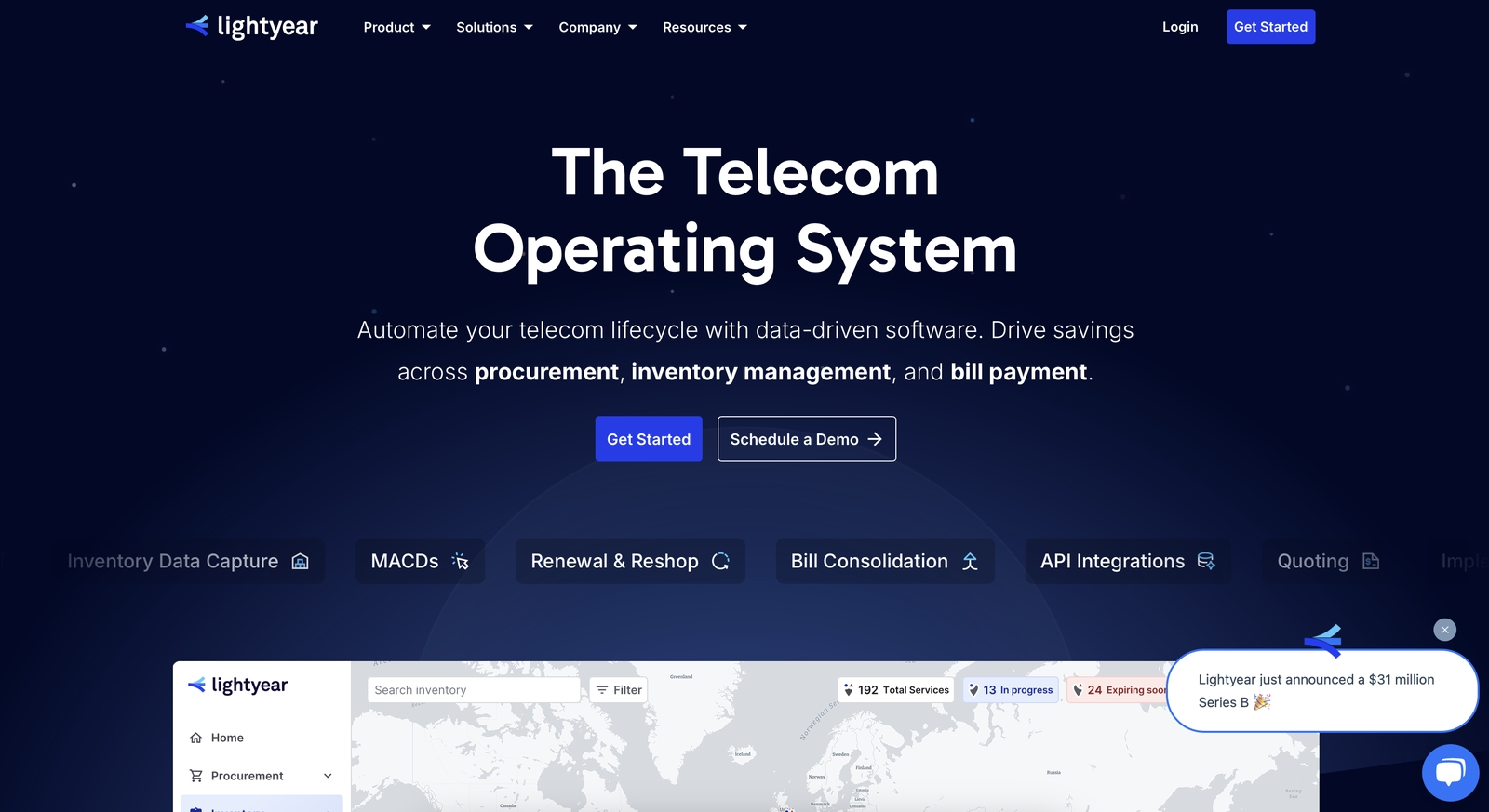
Whether you're deploying Wireless Ethernet for building-to-building connectivity or scaling your office WiFi, managing the procurement and lifecycle of these services can be complex. By automating network service procurement, inventory management, and bill consolidation, Lightyear takes the pain out of telecom infrastructure management.
The hundreds of enterprises who trust Lightyear achieve 70%+ time savings and 20%+ cost savings on their network services. Schedule a demo or get started with our questionnaire today.
Frequently Asked Questions about Wireless Ethernet vs WiFi
Can Wireless Ethernet replace my primary internet connection?
Yes, it's a common use case. Many businesses use a Wireless Ethernet link as their primary internet service, especially where fiber isn't available. It provides a reliable, high-speed connection directly to an internet service provider's point of presence.
Which technology is more expensive to implement?
Wireless Ethernet typically has a higher upfront cost due to specialized antennas and professional installation. However, it can be more cost-effective than laying fiber. WiFi has a lower entry cost per access point but can become expensive when covering large, dense areas.
How significantly does weather impact Wireless Ethernet?
While heavy rain can cause "rain fade," modern systems are engineered to handle it. Professional installations account for local weather by using appropriate frequencies and ensuring a strong signal margin, making outages rare except in extreme conditions.
Can I use both technologies on the same network?
Absolutely. In fact, it's the most common enterprise setup. A Wireless Ethernet link can act as the network backbone connecting two buildings, while WiFi provides local connectivity for devices within each building.
Let us show you the product and discuss specifics on how it might be helpful.
Schedule a Demo





Revolutionize Your Telecom Experience
Learn how you can get one step closer to optimal business efficiency for all your telecom services.