Wireshark vs CHARLES: Network Analysis Tools Comparison
Wireshark vs. Charles explained. One is a network protocol analyzer, the other is an HTTP proxy. Find out which tool your IT team needs.


When it comes to analyzing network traffic, IT and operations teams often turn to two well-known tools: Wireshark and CHARLES. Though both are used to inspect data packets, they are designed for fundamentally different purposes and are not interchangeable.
Wireshark is a powerful, low-level network protocol analyzer that captures and displays the entire stream of traffic on a network. CHARLES, on the other hand, is a web proxy that focuses specifically on HTTP/S traffic, making it a go-to for web and mobile developers debugging their applications.
Understanding their distinct functions is key to choosing the right tool for the job. This comparison will break down their core differences to help you decide which one best suits your team's needs.
What is Wireshark?
Often called the gold standard for network analysis, Wireshark is a free and open-source packet analyzer. It functions like a microscope for your network, capturing data packets in real time and presenting them in a human-readable format. This allows IT professionals to see exactly what is happening on their network at a very granular level, making it an indispensable tool for troubleshooting, analysis, and security audits.
- Comprehensive Protocol Support: It understands hundreds of communication protocols, from common ones like TCP and HTTP to more obscure or proprietary ones. This makes it incredibly versatile for diagnosing a wide range of network issues.
- Live Capture and Offline Analysis: You can capture live data directly from a network connection or import saved capture files for later analysis. This flexibility is useful for both real-time monitoring and post-incident forensics.
- Deep Packet Inspection: Wireshark allows you to drill down into individual packets to examine every field and piece of data. This level of detail is essential for diagnosing complex network problems and identifying security threats.
What is Charles Proxy?
Charles Proxy is an application that acts as a middleman between your device and the internet. It's specifically designed to monitor all the HTTP and HTTPS traffic between a web browser or mobile application and its server. This gives developers a clear view of the data being sent and received, making it a favorite for debugging web and mobile applications.
Its power lies in its ability to not just observe but also interact with the traffic:
- SSL Proxying: Charles can decrypt and display HTTPS traffic, allowing developers to inspect secure communication between an app and a server. This is essential for debugging APIs and ensuring data is being handled correctly.
- Request and Response Editing: It allows users to intercept and modify requests and responses on the fly. This is useful for testing how an application handles different server responses, errors, or data formats without changing backend code.
- Bandwidth Throttling: Developers can simulate various network conditions, such as slow 3G or unreliable connections. This helps test an application's performance and user experience under less-than-ideal network speeds.
Wireshark vs Charles: Key Differences
While both tools inspect data, their approaches and capabilities diverge significantly. Here’s a breakdown of the main distinctions.
1. Scope of Traffic Analysis
Wireshark captures everything. It listens to a network interface and records all packets that pass through, regardless of the protocol or application generating them.
CHARLES, however, is more focused. It only sees the HTTP and HTTPS traffic that you specifically configure to run through its proxy server.
2. Primary Function
The core purpose of Wireshark is passive observation and deep analysis. It’s designed to help you understand what happened on the network, not to change it.
In contrast, CHARLES is built for active intervention. Its main strength is allowing developers to intercept and modify HTTP/S requests and responses to test application behavior.
3. Level of Operation
Think of Wireshark as operating at a very low level, showing you the raw data packets as they travel across the network wires.
CHARLES operates at a much higher application level. It presents information in the context of web requests, making it far more intuitive for debugging web and mobile apps.
Use Cases for Wireshark
Because of its ability to see all network traffic, Wireshark is the go-to tool for a wide range of network diagnostics and security tasks. It excels in scenarios where you need a complete, unfiltered view of network activity. Common applications include:
- Troubleshooting Performance Issues: IT teams use it to pinpoint the root cause of network slowdowns or packet loss by analyzing traffic patterns between servers and clients.
- Security Forensics: When a security incident occurs, analysts can examine captured traffic for signs of malware, data exfiltration, or unauthorized activity.
- VoIP Analysis: It's invaluable for diagnosing problems with real-time applications like VoIP, helping to identify issues like jitter or dropped calls.
Use Cases for Charles Proxy
Charles Proxy is the preferred tool for application development and debugging. Web and mobile developers use it to inspect and manipulate the communication between their application and its backend servers.
For example, it's used to validate API requests and responses, ensuring data is formatted correctly. Developers can also modify live traffic to test how their app handles specific server errors or unexpected data payloads without altering the backend code.
Its ability to simulate slow or unreliable network connections also helps teams build more resilient applications that perform well for all users, regardless of their connection quality.
Choosing the Right Tool for Your Enterprise
Deciding between Wireshark and Charles depends entirely on the problem you need to solve and which team is solving it. It’s not a question of which tool is superior, but which is the right fit for the task at hand. For most enterprises, the answer isn't one or the other, but rather knowing when to use each.
- For network infrastructure issues: If your IT or network operations team is diagnosing poor network performance, connectivity failures, or suspicious activity on the corporate network, Wireshark is the correct tool. Its ability to capture all packet data is essential for these low-level infrastructure problems.
- For application-level debugging: If your web or mobile development team needs to inspect API calls, test how an app handles server errors, or validate data being sent and received, Charles Proxy is the purpose-built solution. It focuses only on the relevant HTTP/S traffic.
- For different teams: Simply put, you equip your network engineers with Wireshark and your application developers with Charles. Each tool is designed around the specific workflows and challenges faced by these distinct roles within your organization.
Final Thoughts on Network Monitoring Tools
Ultimately, both Wireshark and Charles Proxy are valuable assets, but they address different problems for different teams. Wireshark offers a complete, low-level view of all network traffic, making it the standard for network engineers diagnosing infrastructure performance.
Charles Proxy provides a focused, application-level view of HTTP/S traffic, which is precisely what developers require for debugging web and mobile applications.
For enterprise decision-makers, the takeaway is clear: equip your teams with the tool designed for their specific function. Proper diagnostics are one part of a healthy network; managing the underlying telecom services that form your infrastructure is the other critical piece of the puzzle.
Need Help Managing Your Network? Lightyear Can Help
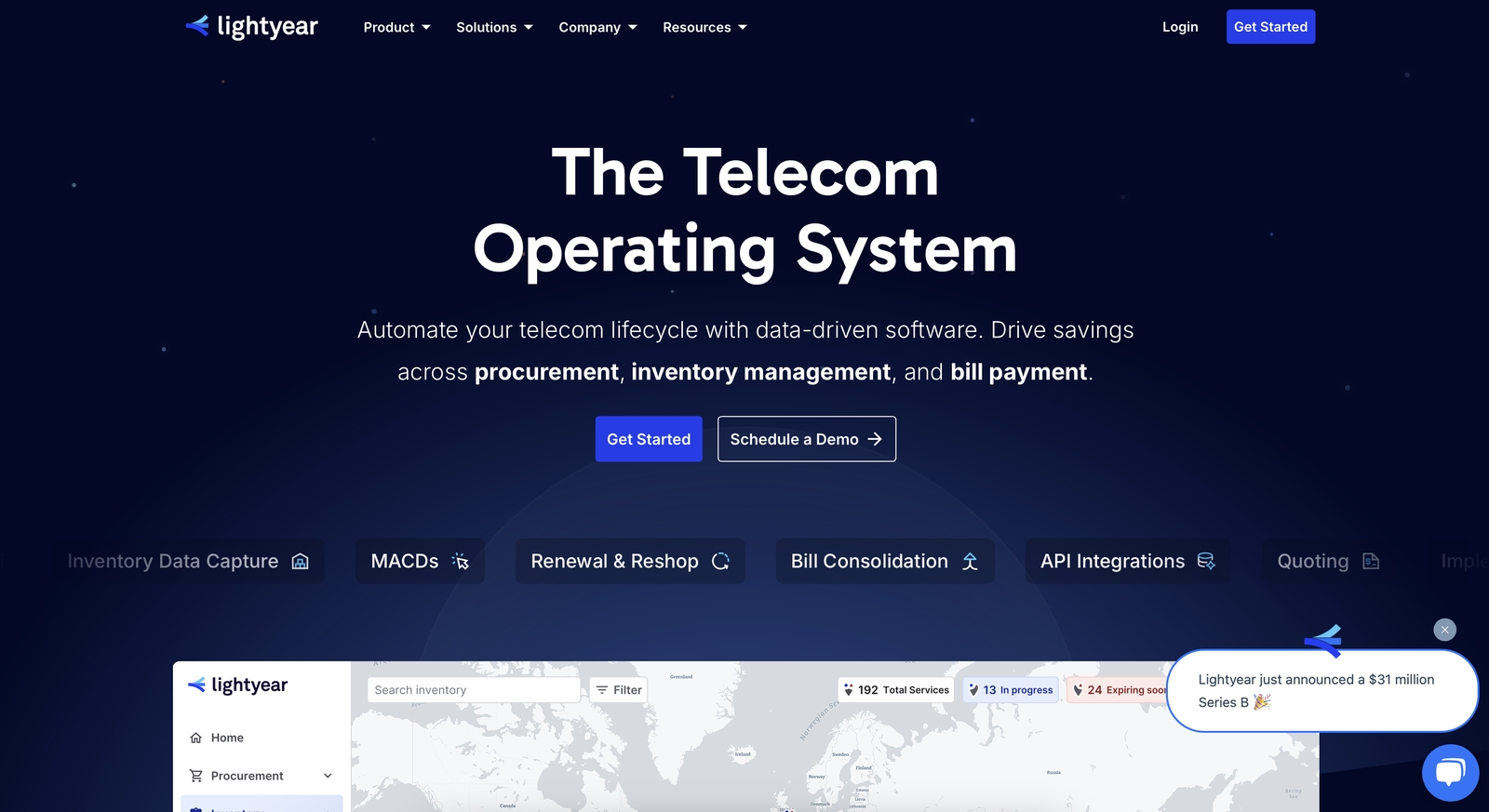
While tools like Wireshark and CHARLES help you analyze network traffic, Lightyear helps you manage the underlying infrastructure itself. Proper network diagnostics are one part of the equation; managing the services that form your network is the other.
By automating network service procurement, inventory management, and bill consolidation, Lightyear takes the pain out of telecom infrastructure management. The hundreds of enterprises who trust Lightyear achieve 70%+ time savings and 20%+ cost savings on their network services.
Schedule a demo or get started with our questionnaire today.
Frequently Asked Questions about Wireshark vs CHARLES
Is Charles Proxy free like Wireshark?
No, Charles Proxy is a commercial product requiring a paid license for full functionality, though it offers a free trial. Wireshark is completely free and open-source, supported by a global community of developers.
Which tool is easier for a beginner to learn?
Charles Proxy is generally easier for beginners, particularly web developers, as it focuses on familiar HTTP/S requests. Wireshark's depth and breadth of protocol analysis present a steeper learning curve for those without a strong networking background.
Are there security risks to using these tools?
Yes, both require caution. Charles's SSL proxying involves installing a root certificate, which can be a security risk if not handled properly. Wireshark needs elevated system permissions to capture traffic, which should be restricted to authorized personnel.
Let us show you the product and discuss specifics on how it might be helpful.
Schedule a Demo




Revolutionize Your Telecom Experience
Learn how you can get one step closer to optimal business efficiency for all your telecom services.