Wireshark vs CHARLES Proxy: Tool Comparison Guide
Wireshark vs. Charles Proxy? Understand which tool fits your needs. Compare network packet analysis (Wireshark) vs. HTTP debugging (Charles).


For IT and network teams needing to inspect network traffic, Wireshark and Charles Proxy are two of the most common tools for the job. While both provide visibility into data packets, they are designed for very different purposes and users.
Wireshark is a powerful network protocol analyzer that captures raw data packets across a network, making it ideal for deep protocol-level troubleshooting and security analysis. Charles Proxy operates as an HTTP proxy, focusing specifically on web traffic (HTTP/HTTPS) to help developers debug and inspect requests and responses from applications.
What is Wireshark?
Wireshark is a free and open-source network protocol analyzer used for network troubleshooting, analysis, and software development. Think of it as a microscope for your network, allowing you to capture and inspect the data packets traveling across your connections in real-time.
It operates by capturing raw data directly from a network interface (like Ethernet or Wi-Fi) and presenting it in a human-readable format. This detailed view helps network administrators diagnose problems, examine security issues, and understand how different protocols are interacting on their network.
- Comprehensive Protocol Support: It can dissect hundreds of protocols, from common ones like TCP and HTTP to more specialized ones used in industrial or telecommunication systems.
- Live and Offline Analysis: You can capture live network traffic or save captures to a file for later, in-depth analysis.
- Powerful Filtering: It includes a rich display filter language that lets you zero in on the specific traffic you're interested in, making it easier to find the needle in the haystack.
- Cross-Platform Functionality: Wireshark is available for major operating systems, including Windows, macOS, and various Linux distributions.
What is CHARLES Proxy?
Charles Proxy is a web debugging proxy application designed primarily for developers. It works by sitting between an application and the internet, allowing it to intercept, inspect, and even modify all HTTP and HTTPS traffic. This gives developers a clear view of the requests and responses being sent between a client (like a web browser or mobile app) and a server.
Unlike Wireshark, which captures all network packets, Charles focuses specifically on web traffic. This makes it an essential tool for debugging APIs, analyzing application performance, and testing how an app handles different server responses.
- SSL Proxying: Charles can decrypt and display HTTPS traffic in plain text, which is vital for inspecting secure API calls.
- Bandwidth Throttling: It can simulate slower internet connections, helping developers test their application's performance on poor networks.
- Request and Response Editing: Developers can alter requests before they reach the server or modify responses before they reach the application to test edge cases and error handling.
- Cross-Platform Support: It is available for Windows, macOS, and Linux.
Key Differences Between Wireshark and CHARLES Proxy
While both tools look at data traffic, they do so from very different perspectives and with different goals in mind. The main distinctions come down to what they capture, what you can do with that data, and who they're built for.
1. Scope of Data Capture
Wireshark operates at the network level, capturing all raw data packets from a network interface. It provides a complete picture of all activity, from DNS requests to TCP handshakes, regardless of the application generating it.
Charles, in contrast, focuses exclusively on application-level HTTP and HTTPS traffic. It only sees data from applications or devices that you specifically configure to route their web traffic through it.
2. Core Functionality
The primary function of Wireshark is passive observation and analysis. You use it to see exactly what’s happening on the network, but you cannot change the traffic as it flows.
Charles is designed for active intervention. Its main strength is the ability to intercept, inspect, and even modify HTTP and HTTPS requests and responses on the fly, which is critical for debugging applications.
3. Intended User
These functional differences point to very different primary users. Wireshark is the standard tool for network engineers and security professionals who need to diagnose network-wide issues or investigate suspicious activity.
Charles is built for web and mobile application developers who need to test and debug how their app communicates with APIs and web servers.
4. Setup and Configuration
Getting started with each tool also differs. Wireshark simply needs to be told which network interface to monitor, such as your Wi-Fi or Ethernet card, and it begins capturing all traffic on that interface.
Setting up Charles requires an extra step: you must configure your client application—like a browser or a mobile device—to use Charles as its proxy server. This directs the traffic through the tool for inspection.
Use Cases for Wireshark
Because Wireshark provides a granular view of all network activity, it is the go-to tool for several critical diagnostic and analytical tasks. It helps teams move from guessing about a problem to seeing exactly what is happening on the wire.
Network Performance Troubleshooting
When applications are slow or users can't connect, Wireshark helps pinpoint the cause. By analyzing packet captures, IT teams can identify issues like high latency, excessive packet loss, or misconfigured network devices that are creating bottlenecks.
Security Auditing
For security professionals, Wireshark is essential for detecting unusual network behavior. It can be used to identify malware communicating with external servers, spot unauthorized port scanning, or analyze the details of a potential security breach by examining suspicious data packets.
Protocol Analysis and Learning
It is also a powerful tool for development and education. Engineers can use it to debug custom network protocols, while network administrators can use it to get a deep understanding of how standard protocols like TCP, DNS, or DHCP operate in their environment.
Use Cases for CHARLES Proxy
Charles Proxy is the go-to tool for developers who need to control and inspect web traffic during the development process. Its use cases are centered on building and testing applications.
- API Debugging: Developers use Charles to view the exact data exchanged between their application and a server. This is invaluable for troubleshooting issues with API calls, especially since it can decrypt and display secure HTTPS traffic.
- Simulating Network Conditions: The tool can throttle bandwidth to mimic slow or unreliable internet connections. This helps developers test and optimize application performance for users on networks like 3G or public Wi-Fi.
- Testing Error Handling: By actively modifying requests and responses, developers can test how their application handles unexpected server errors or data formats. This allows them to build more resilient software without altering the backend server.
Pros and Cons of Wireshark and CHARLES Proxy
To help you decide which tool fits your needs, let's break down the specific advantages and disadvantages of each.
Wireshark
- Pros: Its greatest strength is its comprehensive, raw data capture across all protocols, providing unparalleled network visibility. As a free, open-source tool, it is highly accessible. Its powerful filtering capabilities are essential for navigating the vast amount of data it collects.
- Cons: The sheer volume of information can be overwhelming, creating a steep learning curve. It is a passive analysis tool, meaning you cannot modify traffic, which limits its use for interactive testing. Decrypting encrypted traffic can also be a complex process.
CHARLES Proxy
- Pros: It is purpose-built for web and mobile developers, with an intuitive interface for debugging HTTP/HTTPS traffic. The ability to modify requests and responses is a key advantage for testing application behavior and error handling. It also simplifies the process of decrypting secure web traffic.
- Cons: Charles is a commercial, paid product. Its scope is narrow, as it only captures web traffic that is explicitly configured to pass through it, missing other network activity. This required client-side configuration adds an extra setup step for each device you want to monitor.
Making the Right Choice for Your Enterprise
Choosing between Wireshark and Charles Proxy comes down to your specific role and the problem you need to solve. They are built for different tasks and different teams.
For network engineers and security analysts, Wireshark is the standard. It captures everything happening on the network, making it indispensable for troubleshooting connectivity problems, analyzing protocol behavior, or investigating security threats at a granular level.
For web and mobile application developers, Charles Proxy is the purpose-built tool. It focuses exclusively on HTTP/S traffic and allows developers to actively modify requests and responses, which is critical for debugging APIs and testing how an app handles various server-side scenarios.
In many enterprises, the choice isn't one or the other, as these tools often coexist to support different departments. Your network operations center will depend on Wireshark for infrastructure monitoring, while your software development teams will use Charles in their daily workflows. The right choice is the one that fits the specific job.
Need Help Managing Your Network? Lightyear Can Help
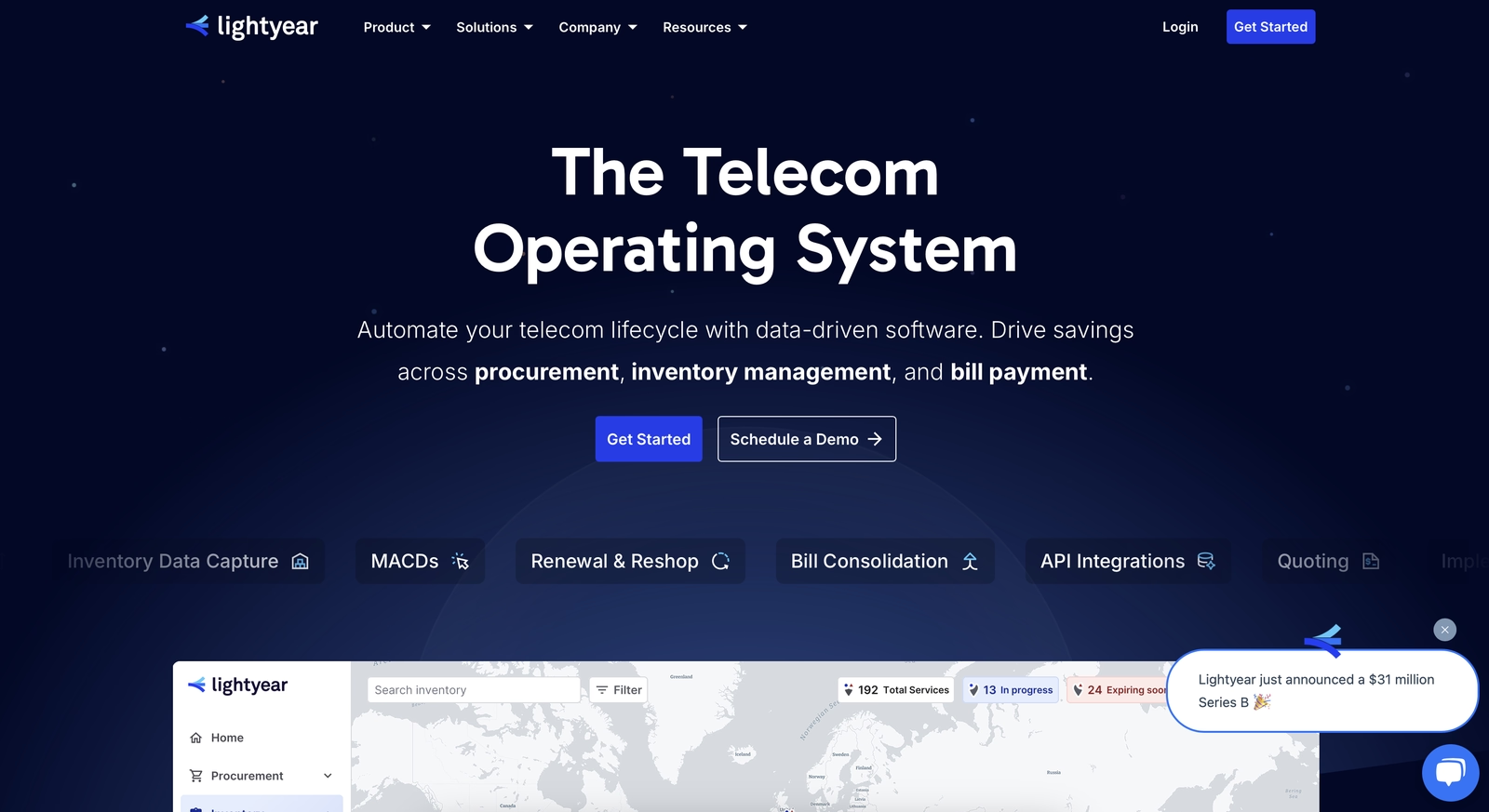
While tools like Wireshark and Charles Proxy help you analyze network traffic, managing the underlying telecom services that carry it is another complex task. Lightyear automates network service procurement, inventory, and billing to simplify your infrastructure management.
Enterprises that use Lightyear save over 70% in time and 20% in costs on their network services. Schedule a demo or get started with our questionnaire today.
Frequently Asked Questions about Wireshark vs CHARLES Proxy
Can Wireshark and Charles Proxy be used together?
Yes, they serve complementary roles. A developer might use Charles to debug an application's API calls, while a network engineer uses Wireshark to investigate why those calls are slow or failing on the underlying network.
Which tool is better for mobile debugging?
Charles Proxy is generally better for mobile debugging. It's designed to easily intercept and inspect HTTP/S traffic from mobile devices, which is the primary need for most app developers. Wireshark can capture mobile traffic, but the setup is more complex.
Do I need administrator privileges to run these tools?
You typically need administrator or root privileges to run Wireshark, as it must capture traffic directly from network interfaces. Charles Proxy, however, generally does not require admin rights for its basic proxy functions.
Can Wireshark decrypt HTTPS traffic like Charles?
While Wireshark can decrypt HTTPS traffic, it requires you to have the server's private SSL keys, which is often difficult to obtain. Charles is built for this and simplifies the process by using its own root certificate during setup.
Let us show you the product and discuss specifics on how it might be helpful.
Schedule a Demo




Revolutionize Your Telecom Experience
Learn how you can get one step closer to optimal business efficiency for all your telecom services.