Wireshark's Role in Enterprise Network Security
Wireshark vs. Network Security: Learn how the popular packet analyzer fits into your enterprise's broader security strategy. A clear guide for IT leaders.


When managing an enterprise network, it's helpful to distinguish between specific tools and the broader strategies they support. A common point of discussion is the relationship between Wireshark and the overall practice of network security.
To clarify from the start, these two are not competitors. Wireshark is a specialized tool that serves a vital function within the comprehensive discipline of network security.
This article will explain the distinct roles of each. We will cover what network security involves as a practice and how a tool like Wireshark provides the detailed visibility needed to implement and maintain it effectively.
What is Wireshark?
Wireshark is a widely used, open-source network protocol analyzer. It functions like a microscope for your network, allowing you to see exactly what is happening with your data traffic at a very detailed level. It captures data packets moving across a network and presents them in a readable format for analysis.
Here’s a breakdown of its core functions:
- Packet Capture: It intercepts and logs traffic from various network connections, including Ethernet, Wi-Fi, and Bluetooth, in real time.
- Protocol Analysis: It understands hundreds of communication protocols, decoding captured data to show what applications and services are communicating.
- Data Filtering: You can apply powerful filters to narrow down the vast amount of captured data, helping you isolate specific conversations or problems quickly.
- Offline Analysis: Besides capturing live traffic, Wireshark can also open and analyze packet capture files from other tools, making it a versatile diagnostic instrument.
What is Network Security?
Network security refers to the broad set of policies and practices put in place to prevent and monitor unauthorized access, misuse, or modification of a computer network and its resources. Rather than being a single product, it's a comprehensive strategy that combines multiple layers of defense at the edge and within the network. The primary objective is to protect the usability, reliability, integrity, and safety of the network and data.
It generally encompasses several key areas:
- Access Control: This determines who can access the network and what they are authorized to do once connected, often through user authentication and role-based permissions.
- Threat Protection: This involves deploying hardware and software like firewalls and intrusion detection systems to identify and block malicious activity.
- Data Security: This focuses on protecting data itself, both when it's stored and when it's moving across the network, often through encryption.
- Monitoring and Response: This is the practice of continuously observing network traffic for anomalies and having an established plan to address security incidents.
Comparing Wireshark and Network Security
The simplest way to understand their relationship is by looking at their core differences in scope, function, and application.
1. Scope: A Single Tool vs. A Broad Strategy
Wireshark is a specific software application with a focused purpose: analyzing network packets. It is one piece of equipment in a much larger toolbox.
Network security, on the other hand, is the entire strategy. It encompasses multiple technologies (like firewalls and antivirus), policies, and procedures designed to protect the whole network infrastructure.
2. Function: Diagnostic vs. Protective
Wireshark is a diagnostic tool. It provides visibility into network traffic to help you understand what has happened or is currently happening, but it does not actively block threats.
In contrast, network security systems are fundamentally protective. They are designed to enforce rules, block malicious activity, and prevent unauthorized access from occurring in the first place.
3. Application: Investigation vs. Continuous Defense
You would typically use Wireshark to investigate a specific event, like a performance slowdown or a suspected security incident. It’s used for deep, focused analysis.
Network security is an always-on discipline. It involves constant monitoring and active defense to safeguard network integrity around the clock.
Benefits of Using Wireshark
While Wireshark doesn't actively defend your network, its diagnostic capabilities offer significant advantages for network management and security analysis. It provides the granular visibility needed to keep your infrastructure running smoothly and securely.
- Pinpoint Performance Issues: When applications are slow or connectivity is unreliable, Wireshark helps you identify the exact cause. By analyzing packet data, you can find bottlenecks, latency sources, or misconfigured devices that are impacting performance.
- Investigate Security Incidents: After a security alert, Wireshark is crucial for forensic analysis. It allows your team to examine suspicious traffic to understand how an attacker may have gained access and what they did on the network.
- Validate Network Configurations: It helps verify that network changes, like new firewall rules or Quality of Service (QoS) policies, are working as intended. You can see exactly how traffic is being routed and prioritized.
- Identify Unauthorized Applications: Wireshark can reveal applications using network bandwidth that are not approved, helping enforce IT policies and reduce security risks from shadow IT.
Advantages of Network Security
While Wireshark excels at investigation, a comprehensive network security strategy provides foundational, ongoing protection for your business. The benefits are broad, directly impacting your operations, compliance, and reputation.
- Proactive Threat Prevention: A strong security posture actively blocks malicious attacks like malware and phishing attempts, preventing them from disrupting operations or compromising systems in the first place.
- Data Protection: It safeguards sensitive corporate and customer data against unauthorized access or theft, ensuring its confidentiality and integrity.
- Regulatory Compliance: Implementing robust security controls helps your organization meet critical compliance requirements, such as HIPAA or PCI DSS, avoiding potential fines and legal trouble.
- Business Continuity: By preventing security-related downtime, it ensures your network remains available and reliable, protecting revenue and productivity.
Choosing Between Wireshark and Network Security
The decision isn't about selecting one over the other, as the two are not competitors. It's about understanding how a specialized tool fits within your broader security framework to address different needs.
1. For Foundational Protection: Network Security
A comprehensive network security strategy is the mandatory starting point. It provides the continuous, proactive defense needed to protect your business assets, data, and operations from threats.
This is your always-on framework of firewalls, access controls, and threat detection systems.
2. For Specific Investigation: Wireshark
Wireshark is the tool you use for focused, diagnostic tasks. It is not for continuous defense but for deep analysis when a specific issue arises.
Use it to troubleshoot performance slowdowns, conduct forensic analysis after a security alert, or verify that network rules are working correctly.
3. For a Complete Approach: Both Together
The most effective approach integrates both. Your network security systems identify and block threats, while Wireshark provides the deep visibility needed to analyze those events.
For example, your firewall might block suspicious traffic, and you would use Wireshark to examine the captured packets to understand the attack method and strengthen your defenses.
Final Thoughts on Wireshark vs Network Security
Ultimately, the discussion isn't about choosing Wireshark over network security, as they serve different but complementary purposes.
Network security is the comprehensive strategy you implement to protect your infrastructure with firewalls and access controls. Wireshark is the specialized tool you use to investigate specific issues, like performance problems or security alerts, by analyzing packet data.
A well-managed network relies on both: a strong security foundation for continuous defense and a powerful diagnostic tool for detailed analysis when needed. Using them together provides both protection and visibility.
Need Help Managing Your Network? Lightyear Can Help
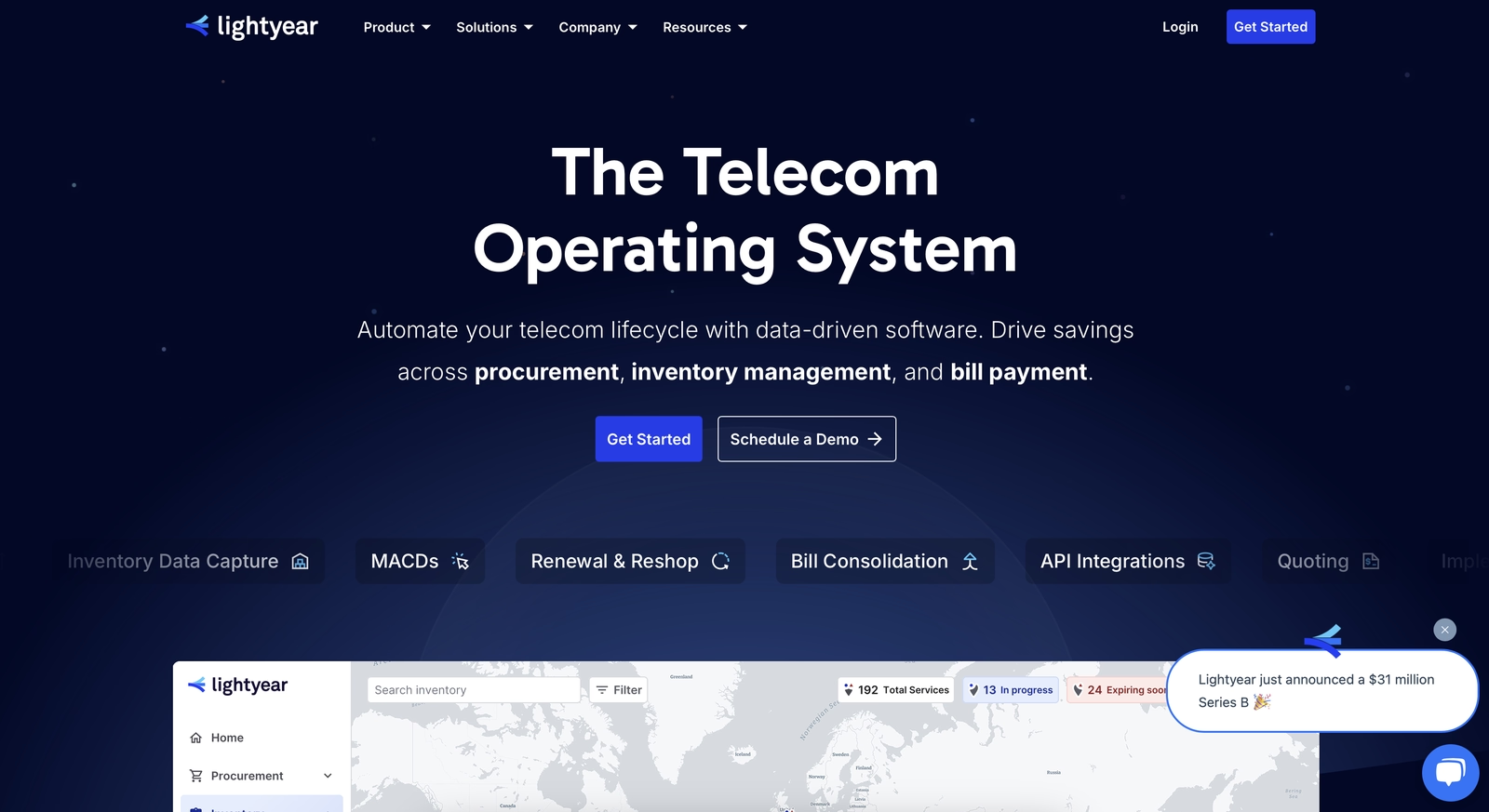
While tools like Wireshark provide deep packet visibility, managing the underlying network services is just as critical for a strong security posture. Lightyear helps by automating network procurement and creating a complete inventory of your telecom services, giving you a clear system-of-record.
By taking the manual work out of infrastructure management, enterprises using Lightyear save over 70% in time and 20% in costs. Schedule a demo or get started with our questionnaire today.
Frequently Asked Questions about Wireshark vs Network Security
Is Wireshark a free alternative to a network security solution?
No. While Wireshark is free, open-source software for analysis, it doesn't provide protection. Network security solutions, which actively defend your network, involve costs for software and hardware. They serve entirely different, non-interchangeable functions.
Can Wireshark automate threat detection?
Not directly. Wireshark is a manual tool for deep packet inspection. While scripts can automate captures, it lacks the real-time alerting and automated blocking capabilities of dedicated network security systems like an Intrusion Detection System (IDS) or firewall.
How do these tools work together in a real scenario?
A security tool like an IDS might flag a suspicious connection. You would then use Wireshark to capture and analyze packets from that connection to understand the threat's nature and origin, helping you refine your security rules.
Let us show you the product and discuss specifics on how it might be helpful.
Schedule a Demo





Revolutionize Your Telecom Experience
Learn how you can get one step closer to optimal business efficiency for all your telecom services.