Zayo vs Granite: Which ISP Is Better?
Choosing an internet service provider? We compare Zayo's fiber-optic network against Granite's broad range of managed voice and data services.


Zayo and Granite are two prominent internet service providers, each with distinct offerings for business connectivity. Making the right choice between them depends entirely on your specific network requirements and business goals.
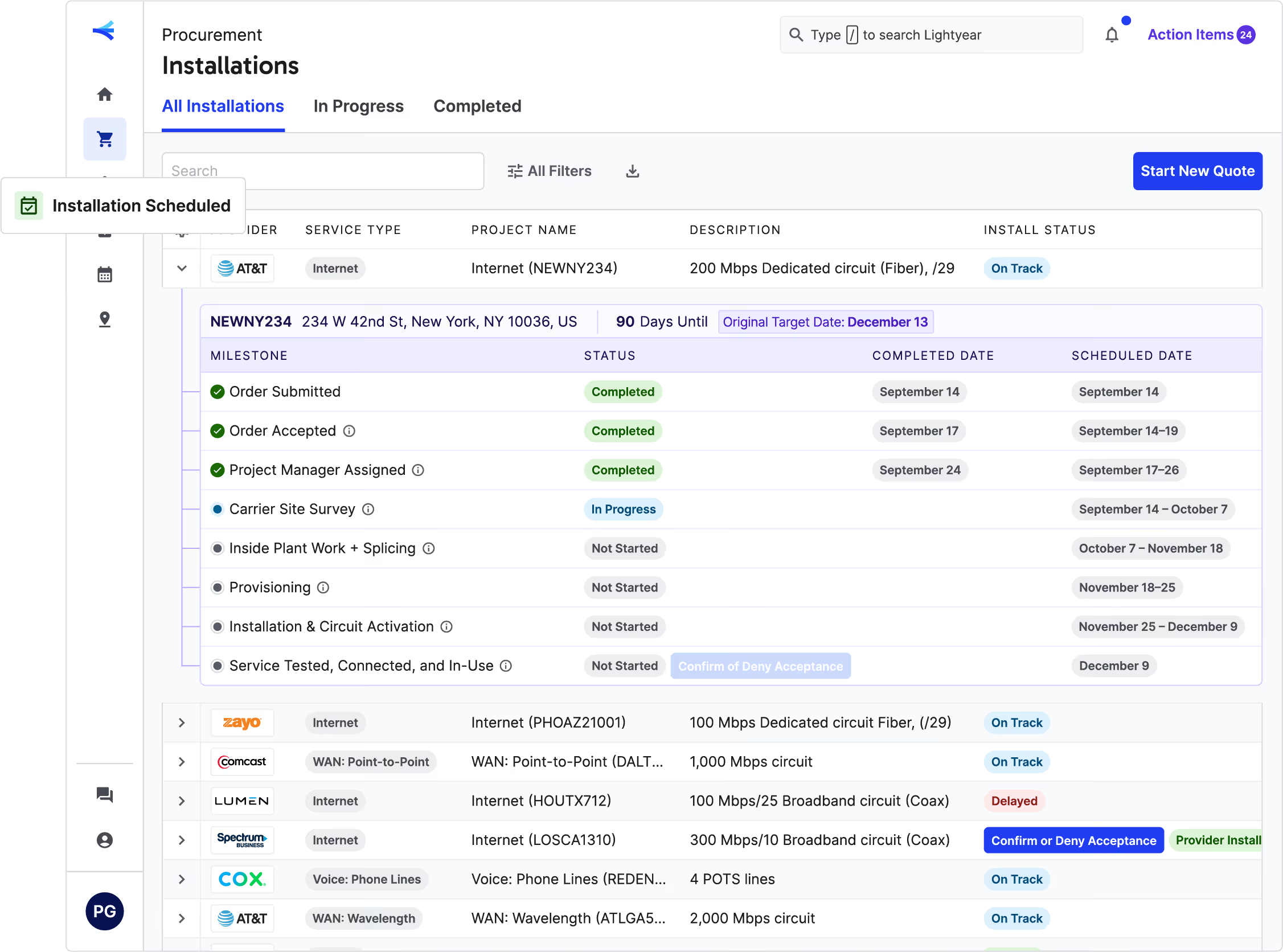
To help you decide, we're comparing them using Lightyear's proprietary data from over 70,000 real-world ISP quotes. This information gives us a clear view of aggregated benchmarks on everything from pricing and installation timelines to delivery points.
Keep reading for our detailed comparison of Zayo and Granite. If you're ready to explore provider options for your business, you can begin our questionnaire to receive real-time quotes.
Overview of Zayo
Founded in 2007, Zayo is a provider of fiber infrastructure based in Boulder, Colorado. The company operates in 35 countries with a team of around 3,500 employees.
Zayo's global network connects over 1,700 data centers and spans more than 148,000 route miles. A key part of their approach is simplifying network management through a self-service, Network-as-a-Service (NaaS) experience that gives businesses more automation.
Overview of Granite
Granite Telecommunications was founded in 2002 and is based in Quincy, Massachusetts. The company has a team of around 2,200 employees and operates in the United States and Canada.
They service over 700,000 business locations and, while not a Fortune 500 company, count over 85 Fortune 100 companies as customers. Granite supports a wide range of clients, from small businesses to large enterprises and government agencies.
A key part of their approach is developing new communication tools through an innovation hub called Granite Labs. They also provide a platform, Granite360, to help customers manage their telecom services.
ISP Products
Dedicated Internet (DIA)
Zayo provides its Dedicated Internet Access (DIA) directly over its own Tier-1 fiber network, offering speeds from 100 Mbps up to 100 Gbps. While their 89-day installation timeline is slightly longer than the 77-day industry average, Lightyear data shows their pricing for 1Gbps circuits is about 2% below the market average. Zayo's service level objectives for availability begin at 99.9%.
Granite acts as an aggregator with its AccessExpress service, sourcing DIA from various underlying carriers. This means speeds vary by location, though their on-net DIA includes a 99.99% uptime SLA. Granite’s 72-day installation average is faster than the market average, but our data shows their pricing is 8-21% higher.
The core difference is that Zayo is a direct network provider, whereas Granite is a managed service aggregator. This distinction extends to their add-ons; Zayo offers network-level services like DDoS protection and cloud connects, while Granite focuses on managed options like SASE and wireless backup.
Please keep in mind that these are aggregate figures. Timing and pricing can vary significantly based on the region and your specific DIA configuration.
For an exact comparison of Zayo, Granite, and other top ISPs for your desired area, please fill out our questionnaire, which uses the most comprehensive data set in the industry to generate real-time quotes.
DIA Pricing, Delivery and Install Days Compared
The data in this table comes from Lightyear’s aggregated ISP quotes collected in 2024 and 2025 YTD.
- Install Days: how long it typically takes to deliver service.
- 100Mb Price vs Avg / 1Gb Price vs Avg: shows whether this ISP is cheaper or more expensive than the market average.
- Delivery Point: “Suite” means the ISP delivers service all the way to the company’s server room; “MPOE” means the circuit stops at the building’s minimum point of entry (typically the building's utility basement) and the tenant must handle the inside wiring.
Wireless
Zayo and Granite have fundamentally different approaches to wireless. Zayo does not offer wireless services like LTE or 5G directly to businesses; instead, their role is providing the fiber backhaul and connectivity that wireless carriers use to run their networks.
Granite, in contrast, specializes in managed wireless solutions for businesses across the US and Canada. As a multi-carrier aggregator, they provide fixed wireless access, multi-carrier SIMs, and managed cellular failover options by sourcing the best available LTE or 5G service for a specific location. Because they work with various underlying providers, service level agreements are dependent on the chosen carrier.
Security
Zayo’s security products focus on protecting the network connection itself. Their DDoS Protection service offers network-based monitoring and mitigation, proactively detecting and scrubbing malicious traffic at the edge of their network before it can impact your service.
Granite approaches security as a managed service integrated with its connectivity solutions. They offer a Secure Access Service Edge (SASE) platform that includes SD-WAN and Zero Trust components, allowing for centralized security policy orchestration across your network.
This distinction aligns with their primary roles. Zayo provides security that is built into its network infrastructure to defend the connection, while Granite delivers a managed security layer on top of the network to secure the data traveling over it.
Broadband
Granite provides Broadband Internet as a managed aggregation service, sourcing connectivity from various carriers across the US and Canada. This allows them to offer speeds up to 5 Gbps over fiber, coax, or fixed wireless, with availability depending on the location.
Lightyear data shows Granite’s broadband installation averages 41 days, compared to the 28-day market average. Their pricing is also approximately 29% higher than the market average for similar services.
Zayo offers business broadband as well, though it is a less common part of their product mix than DIA. Due to limited quoting history for their broadband service, we’re not able to provide benchmark pricing or installation timelines at this time. To find the latest pricing for Zayo or other providers in your area, you can get a new quote through Lightyear.
Ethernet
Zayo provides Ethernet services like EPL, EVPL, and ELAN directly over its own high-capacity optical network. These are Layer-2 services available across North America and Europe where Zayo has an on-net or near-net presence, giving them end-to-end control over the connection.
Granite, in contrast, offers Dedicated and Carrier Ethernet by aggregating services from various underlying carriers. They manage the service for you, with ordering and visibility handled through their Granite360 platform. Their coverage spans the US and Canada, but availability is dependent on their partners' networks in a given location.
The fundamental difference is in their delivery models. Zayo is the network operator, which is a strong fit for businesses that need high-performance connectivity directly from the source. Granite acts as a managed service provider, simplifying procurement and management for businesses that need to connect multiple locations using a variety of different carriers.
POTS Replacement
Granite offers a dedicated POTS replacement solution called Granite EPIK. It is designed specifically for life-safety and specialty analog lines, such as fire alarms, elevators, and fax machines.
The service is compliant with NFPA 72 standards for life-safety applications and includes options for LTE failover and battery backup to maintain service during an outage.
Zayo, in contrast, does not provide a first-party POTS replacement product. Their portfolio is centered on IP-based services like SIP trunking, which is a modern solution for voice but does not directly replace the analog connections required for many specialty systems.
Other Key Features Compared
Geographic Coverage
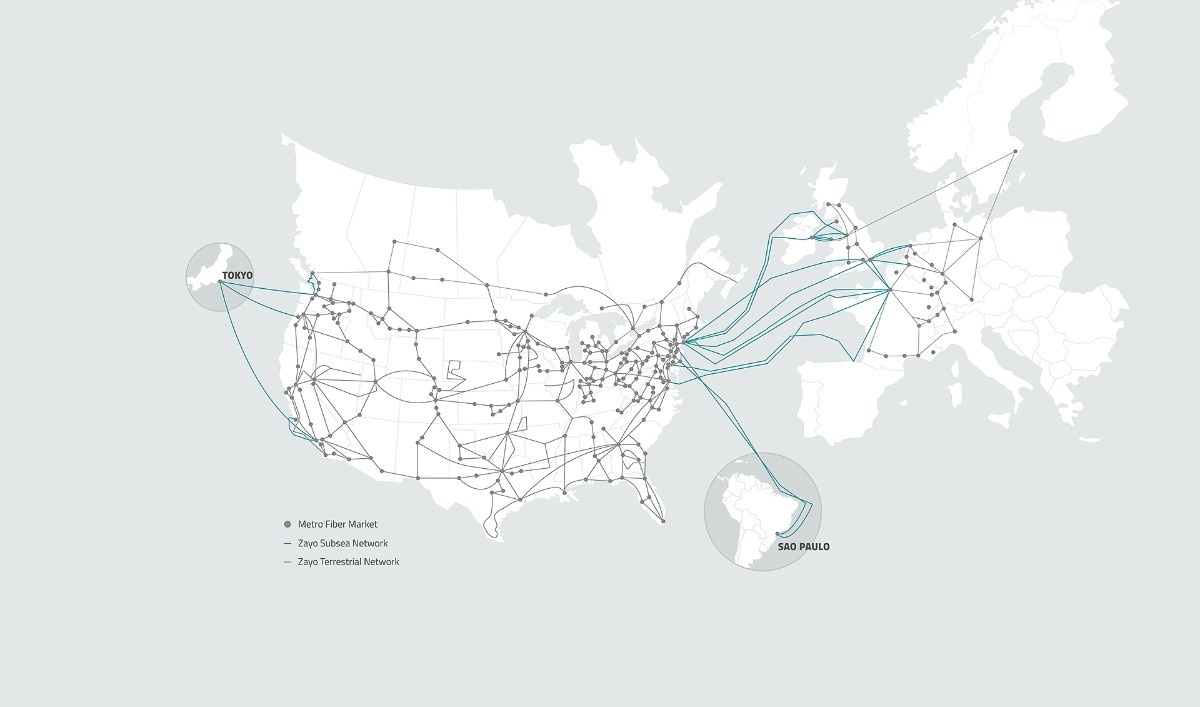
Zayo has a wide reach, with a network that operates in 35 countries. Their coverage is mainly concentrated in North America and Western Europe, connecting major business and data center hubs.
Granite’s coverage is concentrated in the United States and Canada.
While they don’t have a single public coverage map, their AccessExpress service can confirm availability for your specific business locations.
SLA
Zayo’s service level objectives for availability begin at 99.9%. This is their baseline guarantee for how often their network will be online and operational for your business.
Granite, for its on-net DIA, offers a slightly higher 99.99% uptime SLA. While the difference seems small on paper, it can be significant for reliability.
In practical terms, 99.9% uptime allows for up to 8.77 hours of potential downtime per year. In contrast, 99.99% uptime reduces that potential downtime to just under 53 minutes per year.
Transport Types Available
Zayo delivers service over its own 144,000-mile fiber network, offering speeds from 100 Mbps up to 100 Gbps. This direct-to-fiber approach is ideal for businesses with heavy data demands.
As an aggregator, Granite’s speeds and transport types vary because they resell services from local carriers. This model provides flexibility for general business use, like video conferencing or cloud applications.
Essentially, Zayo is built for high-capacity needs, while Granite offers adaptable connectivity for standard operations across many locations.
Customer Support
Zayo provides customer support directly for its own network. They also offer a self-service portal, which gives you hands-on control over your services.
Granite acts as your single point of contact for support. If there's an issue, they work with the underlying carrier on your behalf, which is helpful when managing multiple providers.
Your choice depends on what you prefer: direct access to the network operator with Zayo, or a managed support team with Granite.
Final Verdict: Zayo or Granite?
The choice between Zayo and Granite comes down to a fundamental preference: do you want to work directly with a network owner or with a managed service aggregator? Each model offers distinct advantages depending on your business structure and technical needs.
Zayo is an excellent fit for businesses that require high-capacity fiber connectivity and have the IT resources to manage their network directly. Companies located in major metropolitan areas that prioritize raw performance and network control will find Zayo's infrastructure compelling.
Granite is the stronger choice for organizations with numerous locations across the US and Canada that need to simplify their telecom management. If you value a single point of contact for support and billing across multiple underlying carriers, Granite’s aggregation model is very effective.
To make it even simpler, here’s a side-by-side look at how Zayo and Granite stack up on the key points:
Choose the Right ISP Today With Lightyear
Choosing the right ISP comes down to your specific business needs. Whether you prioritize direct network control like Zayo or managed simplicity like Granite, the key is making an informed decision with clear data. Our platform was built to provide exactly that. We help you find the right fit by:
- Automating ISP Procurement: Compare benchmarked quotes from well-matched providers side-by-side.
- Offering Transparent Negotiation: We proactively negotiate quotes that are above market rates, so you don't overpay.
- Centralizing All Services: See all your options for DIA, broadband, and wireless in one place.
To simplify your telecom procurement and find the right provider, schedule a demo with our team.
Let us show you the product and discuss specifics on how it might be helpful.
Schedule a Demo





Revolutionize Your Telecom Experience
Learn how you can get one step closer to optimal business efficiency for all your telecom services.