Zero Touch Provisioning: How to Automate Device Deployment
Zero Touch Provisioning automates device setup and powers SD-WAN efficiency—learn how it works and what IT teams need before rollout.


If you’ve ever spent a weekend in a server room loading configurations onto switches by hand, you’ll appreciate what Zero Touch Provisioning does.
Power on a new device anywhere in your network, and within minutes, it configures itself, connects to your management system, and comes online ready to use. No technician on site. No command line. No setup errors waiting to bite you later.
That’s the idea behind Zero Touch Provisioning (ZTP). For enterprise IT teams deploying hundreds or thousands of network devices, this automation turns a tedious, error‑prone process into a streamlined workflow. As networks expand and skilled technicians become increasingly scarce, ZTP becomes essential.
What Is Zero Touch Provisioning?
Zero-touch provisioning is a process that lets network devices automatically configure themselves the moment they’re powered on. It eliminates manual setup entirely by pulling configurations from a central server.
Here’s what actually happens behind the scenes:
- The device starts in factory‑default mode.
- It requests an IP address from DHCP and learns where to find its provisioning server.
- It downloads its configuration file via TFTP, HTTP, or the cloud.
- It verifies, applies, and registers with your management system.
That device is now part of your network: secure, identified, and consistent with every other node you manage.
At Lightyear, we care about explaining technical concepts clearly and accurately, because simplicity drives adoption. ZTP isn’t a black box. It’s a straightforward automation loop that removes friction from deployment.
Why Teams Are Moving to ZTP
Every IT director has lived through the pain of manual configuration: shipping hardware to each office, coordinating installers, and checking for human typos weeks later.
ZTP changes that dynamic. Configurations are prepared once and pushed everywhere. A single centralized update replaces hundreds of manual keystrokes.
The results:
- Speed: Devices can be ready within hours instead of days.
- Consistency: Every device receives the same validated setup.
- Reliability: Central management reduces human error.
- Security: Authenticated templates enforce uniform control.
Automation like this helps your engineering team focus on projects that move the business forward instead of repetitive provisioning.
Zero Touch Provisioning in SD‑WAN
If you’ve deployed SD‑WAN, you’ve already brushed up against the use case where ZTP shines. Before automation, new edge boxes meant long shipping lead times, manual setup, and coordination between multiple vendors. Now, engineers load a pre‑built configuration template, ship the hardware to the site, and field staff only need to plug in power and internet.
The device handles the rest. It reaches the controller, authenticates, and pulls down its configuration automatically.
That’s the efficiency ZTP brings, and it parallels how we approach enterprise telecom at Lightyear: taking complex, multi‑party work and standardizing it through data‑driven automation.
Here’s how our platform applies that same principle:
- Procurement: Digitize RFP creation and provider selection with real‑time pricing data.
- Vendor coordination: Eliminate fragmented communication across carriers.
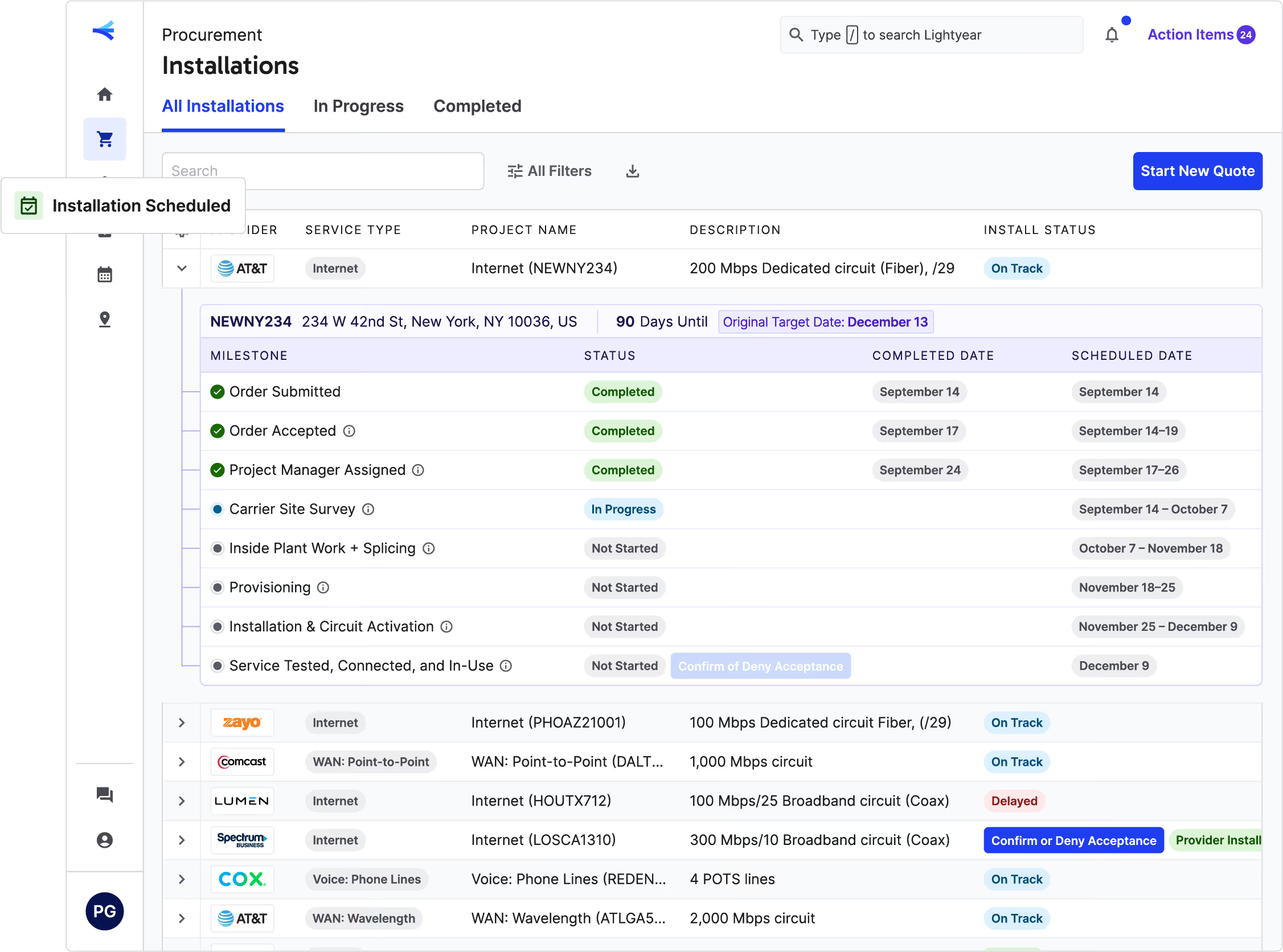
- Implementation: Track site installs and milestones automatically, cutting deployment cycles from months down to weeks.
ZTP automates device setup. Lightyear automates everything leading to that moment.
ZTP vs. Plug and Play: What’s the Difference?
You’ll often hear “PnP” mentioned alongside ZTP. They sound similar, but they’re not quite the same.
Plug and Play (PnP) automates the basics. The device still needs someone to log in, approve it, or assign a template through a portal.
Zero Touch Provisioning (ZTP) removes those last touches entirely. A device connects, authenticates, pulls its configuration, and joins the network on its own.
PnP can make sense for smaller environments where hands‑on control feels safer. ZTP is designed for enterprises that value uniformity across large, distributed deployments where manual steps aren’t realistic.
Benefits of ZTP
Networks using ZTP see compounding gains across time and geography:
- Faster rollout: New hardware operational in hours, not days
- Operational consistency: No configuration drift across hundreds of sites
- Security assurance: Devices only load trusted templates and images
- Cost control: Less travel, staging, and outage mitigation
- Visibility: Every device auto‑registers into centralized management
Those savings parallel what Lightyear customers experience with telecom automation, typically over 70% time saved and 20% cost reduction once workflows move to software control.
Common Challenges When Implementing ZTP
Automation only works if your foundation supports it. In our experience, enterprises encounter a few recurring hurdles when introducing ZTP.
1. Network and Connectivity Readiness
Devices can’t reach provisioning servers without solid network paths. Verify DHCP scopes, DNS entries, and firewall rules ahead of rollout.
2. Security and Authentication
Unverified configurations create real risk. Require certificate‑based authentication and enforce trusted-signature checks before any config is accepted.
3. Firmware Compatibility
Different firmware builds can cause failed installs. Standardize firmware by device type and keep inventory controls tight.
4. Vendor Interoperability
Each manufacturer implements ZTP slightly differently. Test multi‑vendor environments in the lab before deploying at scale.
5. Configuration Testing
Automation runs fast, which means mistakes multiply fast, too. Pilot every configuration in a sandbox before deploying it network-wide.
Once these pieces are locked in, ZTP becomes a predictable part of your operating rhythm, not an experiment.
How Organizations Use Zero Touch Provisioning
Zero Touch Provisioning is becoming standard practice for large and distributed networks. It’s a practical way to cut manual work and keep configurations consistent across every site.
- Retail: New stores receive pre-configured routers. Staff plug them in, and the devices connect automatically with the correct policies and VLANs.
- Finance: Branch offices apply the same security and compliance settings across hundreds of locations, reducing setup errors and audit risk.
- Manufacturing: Facilities bring new lines or plants online faster with standardized templates for routers and switches.
- Healthcare: Clinics and labs connect securely to central systems without sending network engineers on site.
Each example shows how ZTP removes repetitive setup steps and brings new locations online with predictable results — the same efficiency Lightyear delivers through its network automation platform.
Zero Touch Provisioning and the Future of Automation
ZTP is part of a natural evolution in networking. Software‑defined architectures introduced centralized control; Zero Touch Provisioning extended that automation to the device layer; and intent‑based networking will build on both, applying AI to dynamically adjust policies in real time.
AI in network management is already showing measurable gains in uptime and efficiency. ZTP lays the groundwork for that future, and it’s where autonomous network operations begin.
Automate from Procurement to Provisioning with Lightyear
If you’re ready to reduce install times, eliminate vendor chaos, and gain full visibility into your network lifecycle, we can help.
Schedule a demo today or get started with our questionnaire today to see how Lightyear replaces manual coordination with automation from end to end.
Let us show you the product and discuss specifics on how it might be helpful.
Schedule a Demo





Revolutionize Your Telecom Experience
Learn how you can get one step closer to optimal business efficiency for all your telecom services.