Why Automated Telecom Procurement Should Be Enterprise Default
Automated telecom procurement gives enterprises faster quotes, accurate pricing benchmarks, and streamlined vendor management across all network sites.


In many organizations, procurement in telecommunications is still stuck in a time warp. Processes that worked 20 years ago are still the norm.
Meanwhile, networks have only gotten more complex, more distributed, and more essential to daily operations. Relying on inconsistent pricing, email chains, and guesswork makes things inefficient and risky.
Automated telecom procurement changes the equation entirely. It’s faster, smarter, and more reliable. For modern enterprises, it should be the default.
The current telecom procurement process is stuck in the past
Most enterprise telecom procurement still operates like it's 1999. IT and procurement teams rely on a patchwork of spreadsheets, email chains, and PDF quotes to source critical network services. This manual approach creates multiple pain points:
- Inconsistent vendor outreach: Teams typically know only a subset of available providers, missing potential options that could offer better service or pricing
- Long quote turnaround times: Waiting days or weeks for basic pricing information, as sales reps prioritize other opportunities
- Poor documentation: Critical service details scattered across emails, contracts, and verbal communications
- Siloed approval workflows: Stakeholders across IT, finance, and operations struggle with visibility into procurement status
The consequences pile up like a list. Lengthy delays in service delivery, limited provider competition, unpredictable pricing, and excessive time spent on administrative tasks rather than strategic decision-making.
Even when the right provider is finally selected, weeks of inefficiency mean lost opportunity costs, delayed rollouts, and lower agility in responding to business needs.
What enterprises actually need from telecom procurement
The best procurement functions don’t just chase the lowest bid. They align sourcing decisions with broader business needs.
That means:
- Full provider coverage so you know exactly which carriers can deliver the right connectivity (DIA, broadband, WAN, voice) in every location.
- Real-time pricing benchmarks to ensure every quote matches fair market rates for its service type and geography.
- Service availability clarity, so you know which sites are ready to turn up and which require construction.
- Centralized contract management to track SLAs, installation timelines, and renewals in one place.
When procurement is run as a strategic discipline rather than a back-office task, it drives network reliability, improves application performance, and reduces operational risk.
What automation unlocks in telecom procurement
Automation replaces slow, manual routines with fast, consistent workflows that deliver better outcomes.
Instead of emailing vendors one by one, procurement teams can:
- Build and send digital RFPs to all qualified service providers in minutes.
- Get quotes back in hours, not weeks, thanks to automated follow-ups and system integrations.
- Benchmark pricing instantly against proprietary market data to secure cost-effective rates.
- Move approvals faster with real-time status tracking across departments.
This shift frees teams to focus on optimizing contracts and planning future network strategy, instead of chasing down late responses.
Why automation improves vendor relationships
Automation also changes the way enterprises interact with their telecom providers.
By standardizing requests, RFQs, and documentation, procurement teams make it easier for vendors to respond quickly and accurately. This eliminates the miscommunication that often comes with ad-hoc emails or incomplete service details.
Faster, more transparent workflows benefit both sides.
Vendors can allocate resources more effectively, respond with precise pricing, and plan installations with fewer delays.
Procurement teams gain consistent, comparable data that makes evaluation faster and fairer.
Over time, this creates stronger vendor partnerships. When carriers know they’re competing on a level playing field and that procurement decisions are backed by unbiased data analytics, they’re more likely to offer their best rates and service quality from the outset.
What telecom use cases benefit from automation?
The bigger your network footprint, the more moving parts you’re trying to manage. Multiple technologies, dozens of vendors, and contracts scattered across regions make it hard to move quickly without mistakes.
Automation, such as with Lightyear, solves for both speed and consistency, especially in scenarios like these:
Multi-site connectivity rollouts
Rolling out SD-WAN to 50 retail stores? On top of ordering circuits, teams also need to coordinate timelines, qualify local providers, and ensure SLAs are met at every site.
Lightyear automates the sourcing logic, so you can launch on schedule without juggling endless spreadsheets.
Data center upgrades
Upgrading DIA capacity or adding redundancy requires fast, competitive bids. Our platform benchmarks vendors against market rates, issues RFPs automatically, and tracks contract compliance from day one.
Post-acquisition integration
When two companies merge, duplicate services and conflicting vendor contracts are almost a given. With centralized inventory, Lightyear makes it easy to spot redundancies and renegotiate from a position of data-backed strength.
Disruption response
After a fiber cut or outage, every minute counts. Automated procurement accelerates failover sourcing and vendor coordination, minimizing downtime and the operational costs that come with it. Sometimes that’s the difference between a minor hiccup and a multi-hour outage.
Lightyear makes telecom procurement fast and easy
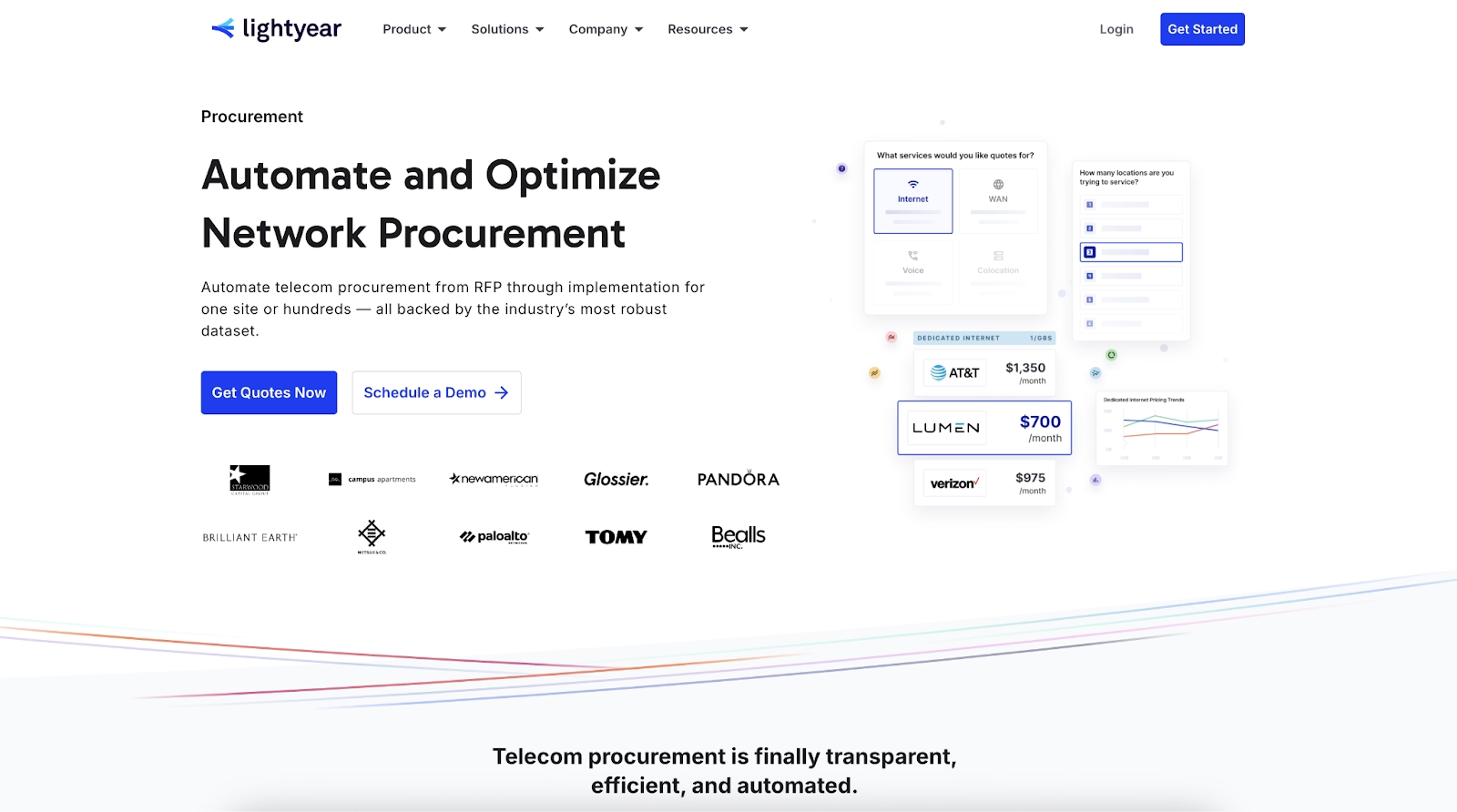
If you’re looking to try automating telecom procurement, Lightyear gives you everything you need in one platform—automated RFPs, the industry’s most extensive provider coverage, and real-time pricing benchmarks—so you can source services faster and more confidently.
Here’s what our automated telecom procurement platform includes:
- Guided configuration for any network service
Using Lightyear's guided network configuration questionnaire, you can create detailed requests for the Internet, WAN, colocation, or voice in minutes.
For recurring needs, you can templatize your configurations, allowing your team to spin up standardized RFPs for multiple locations at once without starting from scratch.
- Comprehensive vendor reach
Lightyear integrates with over 1,000 telecom providers, giving you the broadest possible bidding pool.
Our platform identifies which carriers have network presence at each location, so you only send requests to vendors that can deliver the required service, reducing wasted outreach and accelerating response times.
- Proprietary pricing data and vendor benchmarks
Every quote you receive is measured against the industry’s most current and robust dataset, covering thousands of deals across service types and regions. This pricing intelligence lets you verify whether bids are competitive and negotiate from a position of strength, backed by real market data.
Because Lightyear’s data spans multiple geographies and service types, it’s equally useful for single-site purchases and global rollouts.
Unlike traditional telecom brokers who are tied to a subset of carriers, Lightyear delivers unbiased, data-backed recommendations that fit your procurement strategy.
- Implementation tracking and escalation support
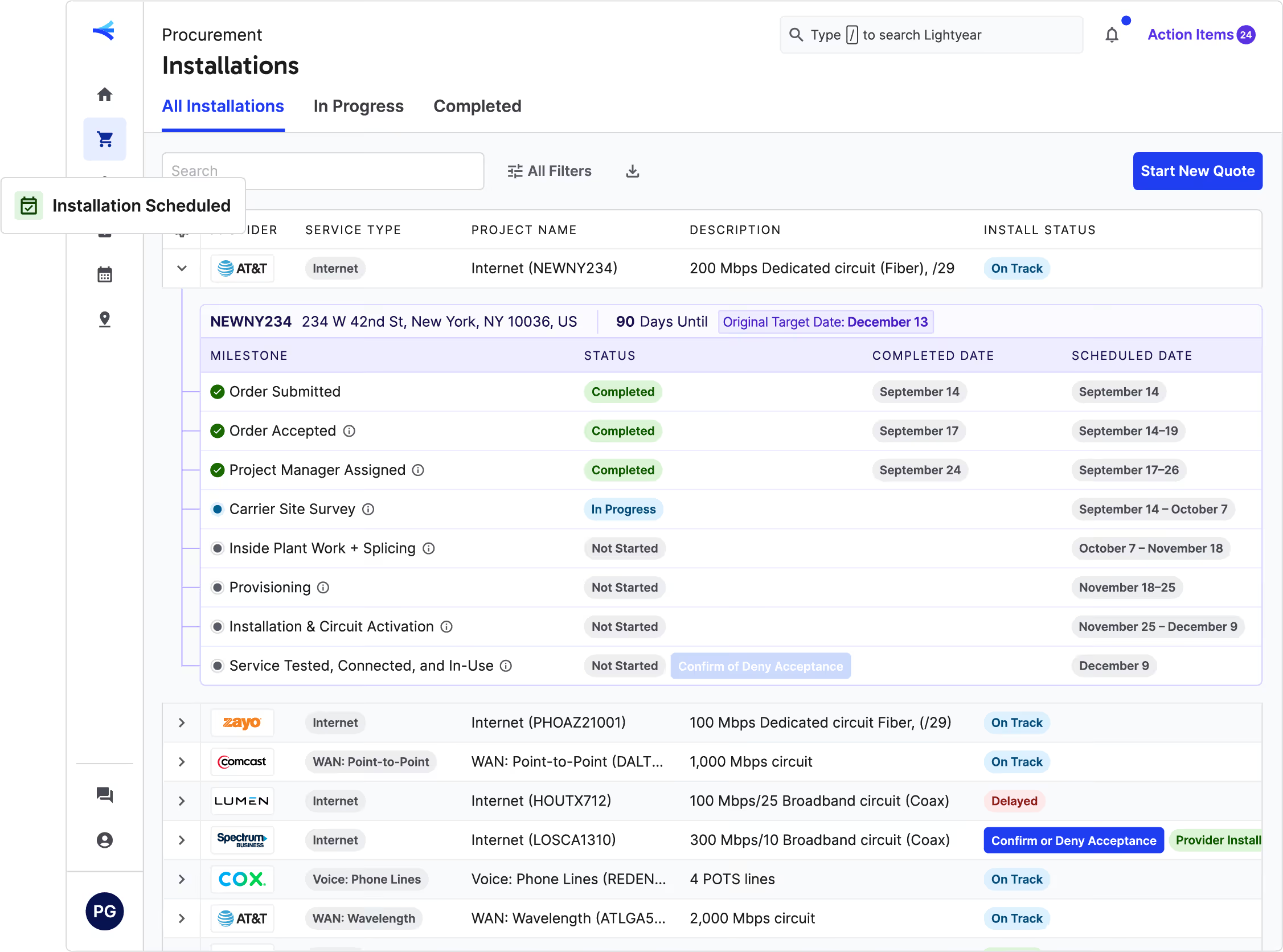
Once a vendor is selected, Lightyear’s implementation tracker monitors all installation milestones. If delays or issues arise, the platform’s escalation paths and operations team intervene directly with providers to keep projects on schedule. This process ensures installations meet agreed SLAs and timelines.
Lightyear helps you manage the rest of the telecom lifecycle too
Winning the procurement process is only step one—keeping your network organized and cost-efficient is just as important.
After installation, Lightyear’s Network Inventory Manager serves as your digital system of record for all network services—tracking circuits, contracts, renewal dates, and service details in one place.
Lightyear also offers Bill Consolidation, which centralizes and audits your telecom invoices to simplify payment, identify billing errors, and uncover cost savings opportunities.
Real results from automated procurement
Case study 1: Roadrunner Freight (Logistics)
We’ve seen firsthand how much inefficiency can hide in legacy procurement. When Roadrunner came to us, their network sourcing was slow and expensive.
By running their RFPs through Lightyear, they cut 80%+ off analog phone line costs, saved 30%+ on Internet/WAN, and unlocked $300K in savings on a Disaster Recovery as a Service project. That’s real money back into their business.
Case study 2: Everon (Life Safety Provider)
Post-acquisition integrations can get messy. When Everon was separating from its parent company, they needed complete clarity on what services they had, where, and under which contracts.
With our Network Inventory Manager, they built a 100% accurate digital inventory and cut the time to resolve inventory gaps, billing errors, and new circuit procurement by over 80%. That’s the kind of visibility I want every customer to have from day one.
Case study 3: Westfall Technik (Manufacturing)
Westfall wanted both cost savings and control. By consolidating procurement, billing, and inventory management on our platform, they achieved a 10× ROI, saw zero service outages from billing issues, and reduced UCaaS spend by 40%+.
For us, this is the perfect example of how better systems can turn telecom from a headache into a strategic advantage
Case study 4: Elauwit Connection (ISP)
Managing services across 20,000+ units is no small feat. Elauwit used Lightyear to centralize procurement and lifecycle operations, delivering 25%+ cost savings and 60%+ time savings on quoting, installs, and management. That extra capacity let their team focus on scaling—not chasing down vendors.
The future of telecom procurement is automated
As networks grow in scale and complexity, manual procurement becomes a liability. The enterprises leading in cost efficiency, uptime, and agility are those that:
- Use benchmarking and forecasting to drive cost control.
- Avoid operational and supply chain disruptions through proactive sourcing.
- Make stronger, faster procurement decisions powered by real-time market intelligence.
Lightyear equips your team with the tools to act faster, buy smarter, and stay ahead of your vendors.
See how Lightyear automates telecom procurement from end to end. Schedule a demo today or get started with our questionnaire.
Let us show you the product and discuss specifics on how it might be helpful.
Schedule a Demo





Revolutionize Your Telecom Experience
Learn how you can get one step closer to optimal business efficiency for all your telecom services.