Managing a Cross Connect in Networking: How Lightyear Helps
Cross connects power cloud, SaaS, and DR. See how to manage costs and avoid downtime with Lightyear’s automation.


Cross connects are the lifelines of your colocation strategy: direct links to clouds, carriers, and partners. But for most enterprises, managing them means chasing paperwork, reconciling invoices, and guessing at half-documented endpoints. It’s messy, it’s slow, and it leaves your network exposed to hidden costs and outages. Lightyear gives enterprises a smarter way forward: automated procurement, clean inventory, and complete visibility.
Lightyear exists to fix that. As the modern telecom operating system, Lightyear automates procurement, inventory, and billing across WAN, colocation, and cross connects. Instead of juggling spreadsheets and vendor portals, you get a single system of record that keeps your network clean, cost-effective, and reliable.
What is a Cross Connect?
A cross connect is a physical cable that creates a direct, point-to-point connection between two separate hardware units or termination points within the same data center. Think of it as a private highway between your equipment and a service provider's infrastructure, bypassing the congested public internet entirely.
Inside a colocation data center, cross connects typically link your rack or cage to various service providers like ISPs, network providers, or cloud providers. They can also connect different pieces of your own equipment within the facility.
The physical interconnection happens in a secure, controlled part of the data center called the meet-me room (MMR). Inside the MMR, trays and conduits house the cross connect cables that link different customer cages and suites. This setup allows for a rich interconnection environment, a core reason why businesses use colocation facilities.
Why Cross Connects Beat Public Internet Connections
Cross connects provide several advantages over routing traffic through public networks:
- Reduced latency: Direct connections eliminate multiple network hops
- Improved security: Traffic stays within the private data center environment
- Better reliability: Dedicated paths aren't subject to public internet congestion
- Predictable performance: Consistent bandwidth and minimal jitter for real-time applications
- Cost control: Stable pricing versus variable egress fees from cloud providers
Types of Cross Connects
Cross connect cables come in several varieties, each optimized for different distances and performance requirements.
1 - Fiber Optic Cross Connects
Fiber optic cables represent the high-performance option for cross connections, using light pulses to transmit data at extraordinary speeds.
Single-mode fiber uses a narrow glass core and laser light sources to achieve the highest bandwidth over the longest distances. It's the premium choice for high-speed connections requiring future-proof capacity, commonly supporting 10G, 40G, 100G, and beyond.
Multi-mode fiber uses a larger core diameter and LED light sources, making it more cost-effective for shorter runs within a data center. While limited to about 500 meters for 10G speeds, it provides excellent performance for most colocation scenarios.
Both fiber types excel in the data center environment because they're immune to electromagnetic interference and can handle massive bandwidth requirements that modern applications demand.
2 - Copper Ethernet Cross Connects
CAT ethernet cables offer a reliable, cost-effective solution for shorter cross connect runs, particularly for management interfaces and lower-bandwidth applications.
- CAT5e cables provide 1 Gigabit speeds and remain common for basic connectivity needs.
- CAT6 and CAT6A cables support up to 10 Gigabit speeds, with CAT6A maintaining that performance over longer distances (up to 328 feet).
3 - Coaxial Cross Connects
Coax is durable and inexpensive, but limited in bandwidth. It’s occasionally used for short distance connections in a data center environment, though fiber has largely replaced it for high-performance needs.
4 - Virtual and Cloud Exchange Connections
Modern data centers increasingly offer virtual cross connects through cloud exchange platforms. These software-defined interconnections provide the benefits of direct connections without requiring physical cable installations.
Services like AWS Direct Connect and Microsoft ExpressRoute allow you to establish private connections to major cloud providers through the data center's cloud exchange fabric. You get dedicated bandwidth and private routing, but with the flexibility to change providers or adjust capacity through a web portal.
Why Enterprises Rely on Cross Connects
Cross connects are the backbone of colocation networking because they deliver what enterprises value most: speed, security, and predictability. By bypassing the public internet, they create private, low-latency paths that keep real-time applications, SaaS platforms, and data replication running smoothly.
Security teams rely on them because sensitive traffic never leaves the controlled environment of the data center, simplifying compliance. Finance teams value them for the stability of flat monthly charges compared with variable cloud egress fees.
Deployment scenarios reinforce just how central cross connects have become. Cloud on-ramps to AWS, Azure, or GCP ensure hybrid strategies have dedicated bandwidth. Direct connections to partners and vendors inside the same facility cut out third-party networks. Internet exchange on-ramps optimize routing efficiency, while site-to-site and disaster recovery links maintain continuity between offices and data centers.
Taken together, these use cases show why cross connects are not just convenient—they are essential infrastructure for enterprise IT.
What to Watch Out for With Cross Connects
The benefits are clear, but cross connects also come with costs and management challenges that need attention. Pricing includes both one-time installation fees and recurring monthly charges. Fiber commands higher rates than copper, and metro-tier facilities charge premiums over regional data centers. Even short runs can get expensive when they require multiple patches across meet-me rooms.
Operational risk is the bigger issue. Too often, LOAs, CFAs, and patch panel details live in scattered emails or outdated spreadsheets. Moves, adds, and changes demand coordination between providers and facility staff, slowing down projects and introducing human error. Without centralized oversight, “zombie” charges for unused cross connects can quietly drain budgets.
The solution is to manage cross connects with the same rigor as any other critical service. Keep a clean system of record. Apply consistent naming standards. Log every change. Align connectivity with disaster recovery planning. Enterprises that take these steps avoid unnecessary spend and downtime—and keep their interconnections working as the strategic assets they were meant to be.
Cross Connect Management in Lightyear
Lightyear is the modern telecom operating system that automates procurement, inventory, and billing for enterprise networks. Cross connects are part of that lifecycle.
Procurement platform
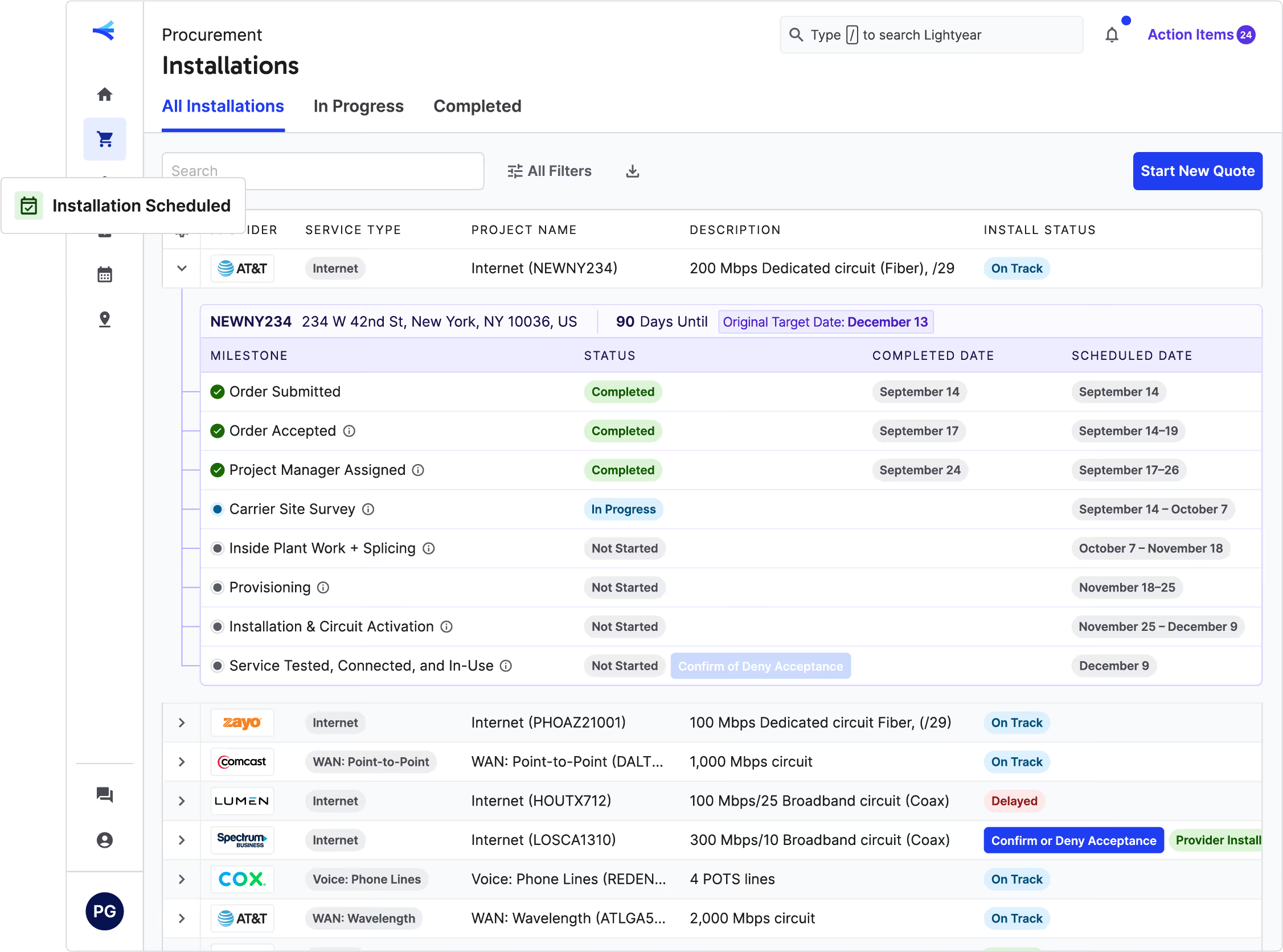
Lightyear’s procurement module automates RFP creation for cross connect services, pulling quotes from multiple data center and service providers at once. Built-in market intelligence ensures you get competitive pricing and favorable SLA terms without the manual back-and-forth.
Network inventory manager
The inventory module acts as a single system of record for every cross connect. It tracks patch panel locations, cable types, connector specs, circuit IDs, contract terms, renewal dates, and associated costs, eliminating the scattered spreadsheets and missing details that create operational blind spots.
Lifecycle automation
Routine workflows like MACD ticketing, contract renewals, and service optimizations are handled automatically. When a contract nears expiration, Lightyear can rebid services across providers to maintain pricing leverage and prevent zombie charges.
Reporting and analytics
Lightyear provides utilization and cost reporting across all locations. Data can be exported for budgeting or integrated directly into other enterprise systems via API, giving IT and finance teams a unified view of connectivity performance and spend.
Stop Managing Cross Connects in Spreadsheets with Lightyear
Cross connects are critical infrastructure that deserve better than ad-hoc management approaches. With proper visibility and automation, they become valuable assets that improve performance and reduce costs rather than operational headaches.
Lightyear reports that customers see over 70% time savings and 20% cost reductions by automating their telecom lifecycle. Our platform handles everything from initial procurement through ongoing optimization, giving you the visibility and control needed to make strategic decisions about your network infrastructure.
Get a cross connect inventory audit with Lightyear and see how much time and money you can save.
Frequently Asked Questions
What's the difference between a cross connect and an interconnection?
A cross connect is the physical cable making a direct connection between two endpoints within a single data center. Interconnection is the broader concept of connecting networks or systems, which might involve cross connects, virtual connections, or other methods.
Is a cross connect the same as a direct connection to the cloud?
Not exactly. A cross connect links you to a provider inside the data center. A direct connection (like AWS Direct Connect) is a specific service that uses a cross connect to link your private network to a cloud provider.
Should I choose single-mode or multi-mode fiber?
Single-mode fiber offers higher bandwidth and future-proofing but costs more. Multi-mode fiber provides excellent performance for typical data center distances at lower cost.
How do I avoid paying for unused cross connects?
Maintain accurate inventory records and conduct regular audits to identify connections that are no longer needed. Implement change management processes that disconnect services when equipment is decommissioned.
Let us show you the product and discuss specifics on how it might be helpful.
Schedule a Demo





Revolutionize Your Telecom Experience
Learn how you can get one step closer to optimal business efficiency for all your telecom services.