Point-to-Point Fiber: A Simple Guide to Faster, Easier Setup
Point-to-point fiber delivers private, high-performance links between sites. Learn benefits, costs, and how Lightyear simplifies procurement.


Point-to-point fiber delivers secure, high-speed connections between two sites. It’s the simplest way to create a private digital express lane, and the kind of connectivity enterprises rely on when performance and reliability can’t be left to chance.
The challenge isn’t understanding what it does. It’s navigating a telecom industry that still runs on opaque pricing, inconsistent support, and slow-moving service providers. That’s where Lightyear comes in. We’ve built the operating system that automates procurement and lifecycle management for point-to-point fiber optic networks and every other WAN service, cutting weeks of manual effort down to hours.
What is point-to-point fiber?
A point-to-point connection is exactly what it sounds like: a direct connection between two nodes, delivered over fiber optic cables. Think of it as a closed circuit where your data transmission flows exclusively between two endpoints.
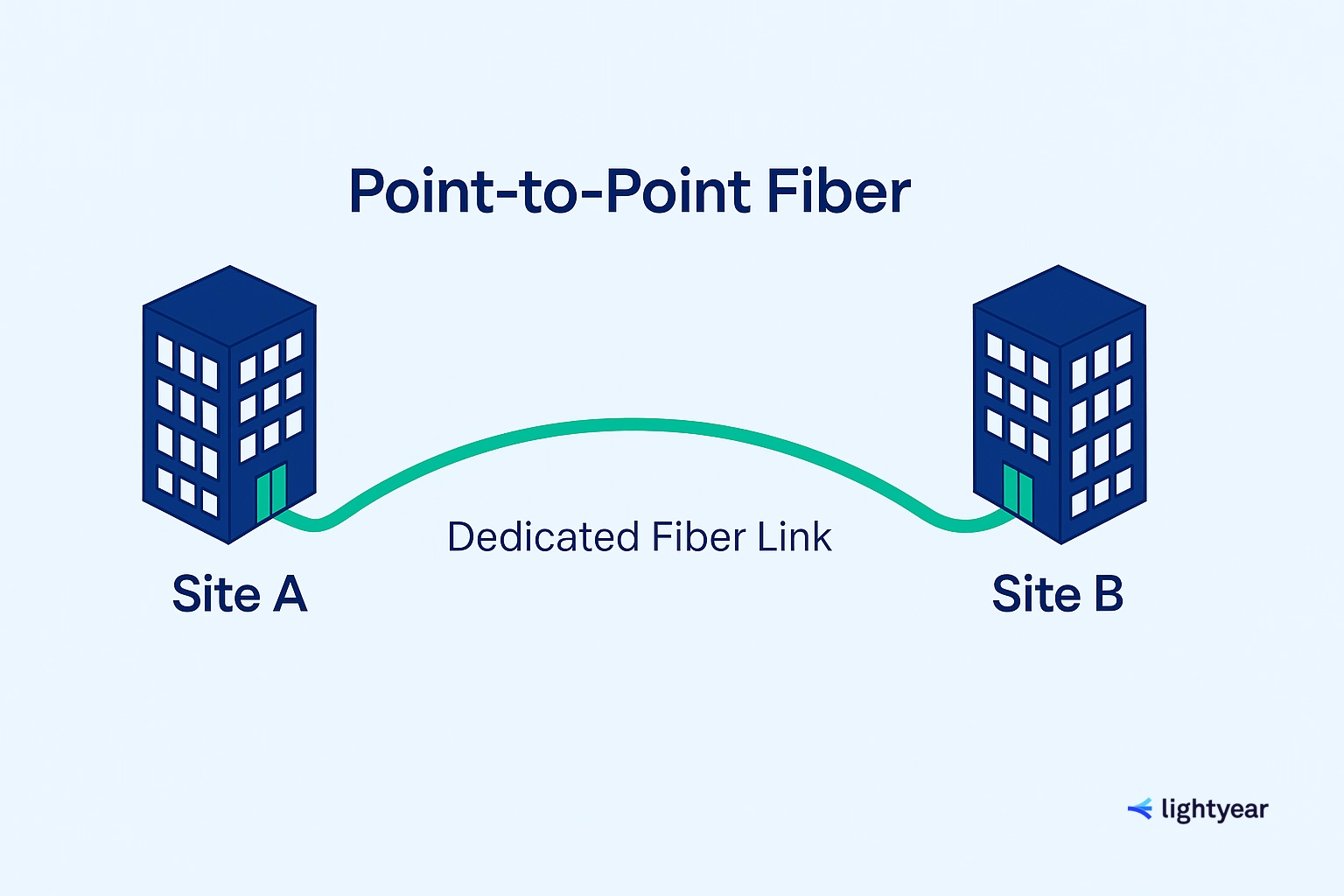
Unlike a passive optical network (PON), which uses splitters to serve multiple end users from one strand of optical fiber, a point-to-point fiber optic link gives you a dedicated path.
The benefits are clear: dedicated bandwidth, symmetrical speeds for uploads and download speeds, and consistently low latency.
Because your internet connection never touches the public broadband network, there’s no risk of unpredictable congestion or exposure to outside threats. Many internet service providers back these circuits with strict SLAs that guarantee uptime and performance.
Typical uses include linking headquarters to a data center, connecting disaster recovery sites, or enabling real-time replication between workstations. Industries with strict compliance requirements often choose point-to-point fiber optic service for its isolation from public internet access.
Comparing P2P fiber to other WAN options
Point-to-point fiber is a powerful tool, but it isn’t the only way to extend enterprise connectivity across long-distance sites. Here’s how it compares to alternatives:
P2P vs. MPLS
MPLS is a multipoint option, built for connecting dozens of offices in an any-to-any topology. It’s often used to prioritize applications like VoIP, but comes with less transparency and higher costs.
For a single direct connection, MPLS is overkill—point-to-point fiber optic service is more cost-effective and easier to manage.
P2P vs. Dark Fiber
Dark fiber offers nearly unlimited capacity and a truly future-proof fiber connection, but requires your team to provide and manage the ONTs, routers, and networking gear. That’s a high barrier for most enterprises. A managed point-to-point fiber optic network delivers a ready-to-use ethernet handoff without the CapEx.
P2P vs. Wavelengths
Wavelengths use DWDM technology to send multiple signals across the same optical fiber, achieving higher bandwidth—often 10 gigabit, 40 gigabit, or even 100 gigabit speeds. For extreme data center interconnect use cases, they can be more scalable than standard P2P.
For most enterprises, however, a point-to-point fiber optic link balances performance and cost.
| Connectivity Type | Best For | Pros | Cons |
| P2P Leased Line | Simple site-to-site connectivity | Secure, reliable, easy to manage | Scaling multi-site can be costly |
| Wavelength | High-capacity data transfers | Up to 100 Gbps, scalable | Higher price, limited availability |
| Dark Fiber | Total control, long-term scaling | Full infrastructure control | High CapEx, requires expertise |
| MPLS | Multi-site enterprise connectivity | Low CapEx, provider-managed | Less control, shared infrastructure |
Ethernet over Fiber
Point-to-point fiber services are delivered as Ethernet over fiber. The provider manages long-distance data transmission across its fiber optic network, then delivers a clean Ethernet handoff at your site, making integration with routers, firewalls, and workstations straightforward.
How much does P2P fiber cost?
If you’ve ever bought connectivity from an ISP, you know how murky pricing can be. Two different carriers may quote you wildly different rates for the same gigabit fiber connection, and it’s not always clear why.
The main cost drivers are distance, bandwidth, and local fiber availability.
The longer the route, the more expensive the build. Higher bandwidth means higher port costs. If your building is already on-net, great, you avoid costly construction. If not, one-time installation fees can skyrocket.
Lightyear’s proprietary pricing dataset shows that a 1 Gbps point-to-point circuit typically ranges between $950 and $2,000 per month. Without that benchmark, enterprises often overpay. With it, you can make smarter, cost-effective procurement decisions.
How Lightyear makes P2P setup faster and smarter
Benchmarking P2P fiber pricing is only the first step.
The real challenge is everything that follows—tracking down ISPs, waiting weeks for quotes, and juggling contracts across multiple vendors. Aggregators promise to simplify this, but in reality they add costs and hide critical details.
Lightyear takes a different approach. We built a software platform designed for IT and network teams at multi-site enterprises.
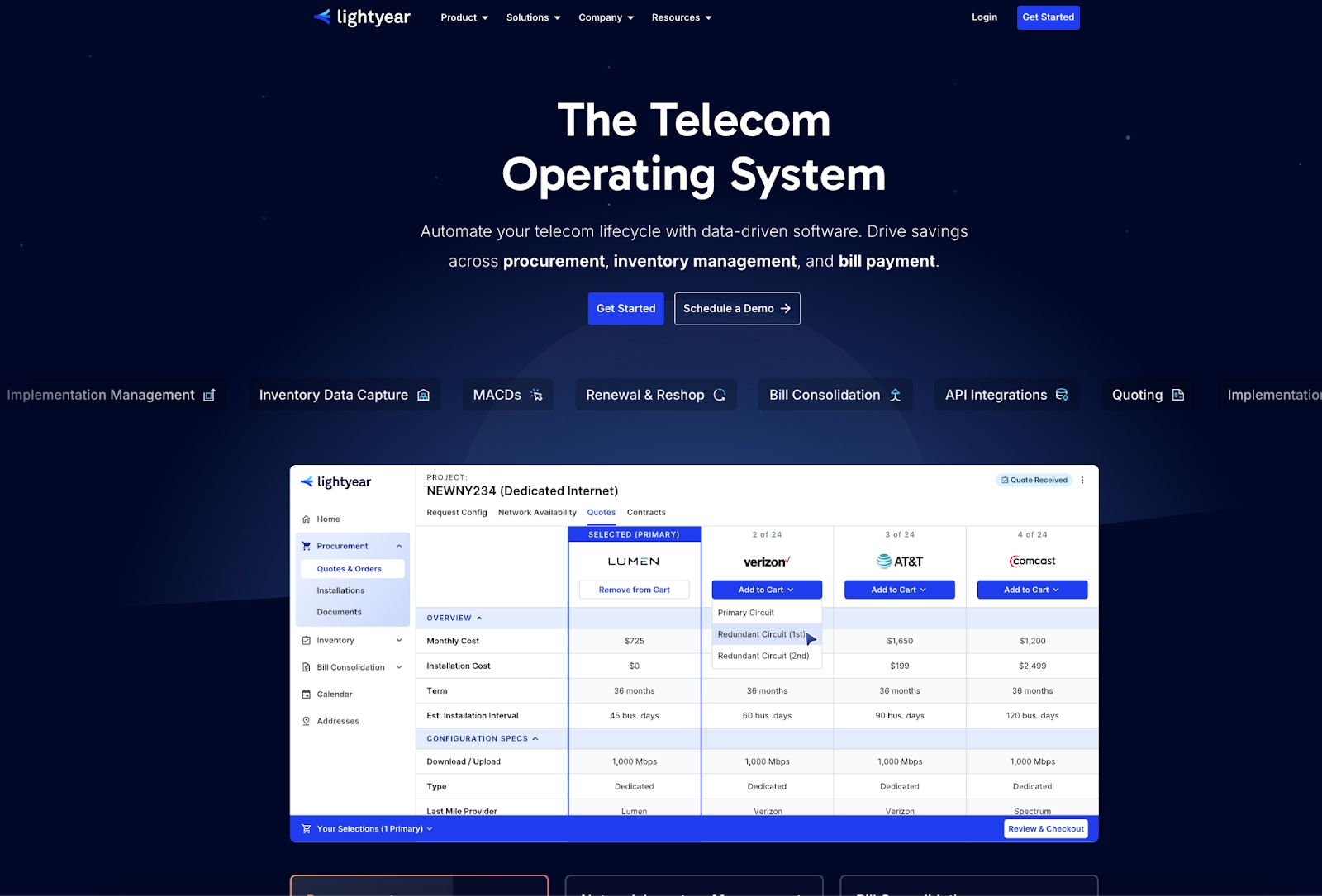
Instead of chasing providers one by one, you define your requirements in a guided workflow and instantly see apples-to-apples quotes from more than 1,200 carriers. Each quote is benchmarked against thousands of recent deals in our proprietary dataset, so you know you’re getting a fair market rate.
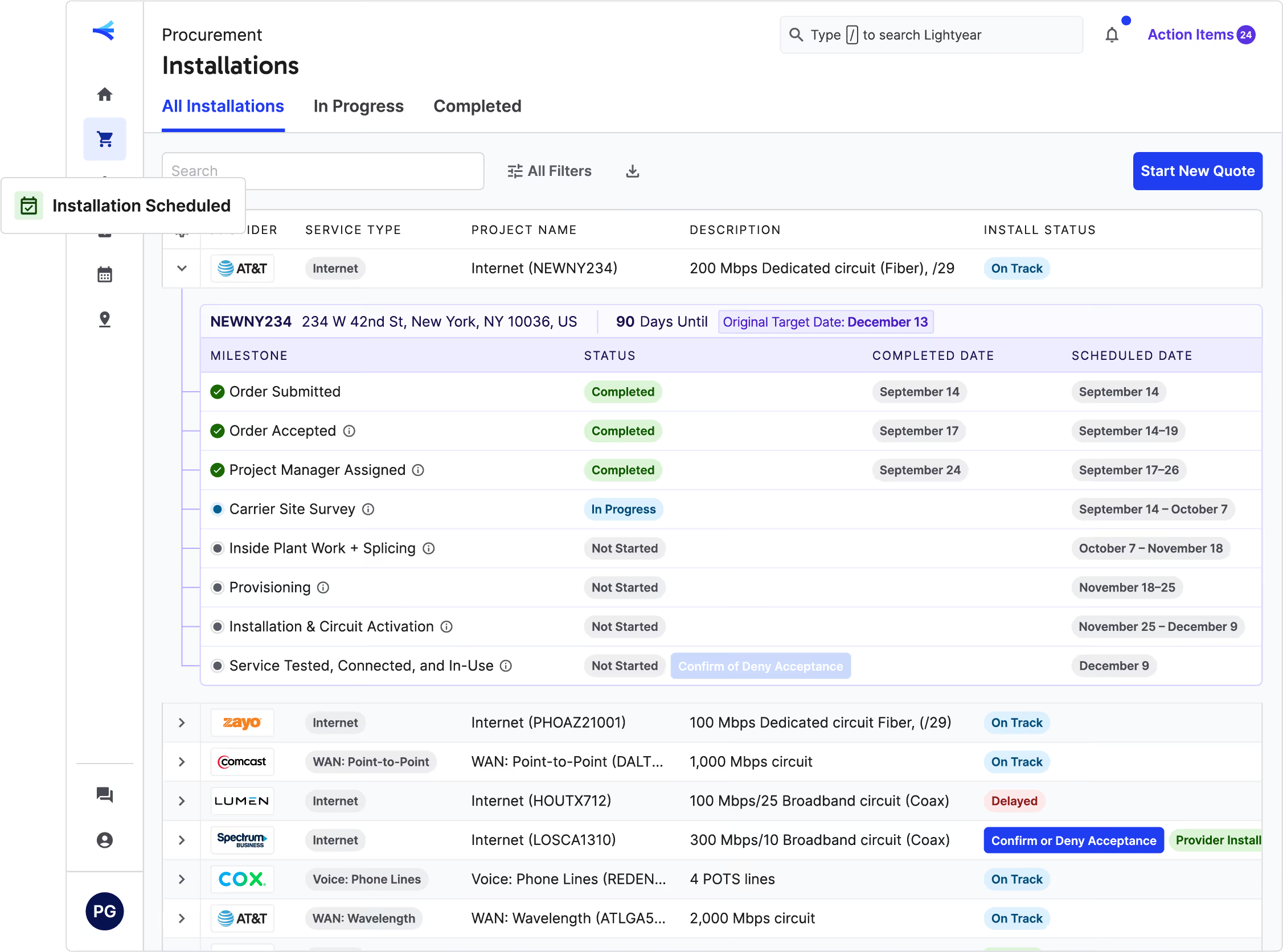
Once you’ve chosen a provider, Lightyear doesn’t disappear—we manage installs, contracts, and support tickets in a single dashboard. That means less time buried in spreadsheets and emails, and more time focused on running your network. With Lightyear, you get the simplicity aggregators advertise, but without the markups or lack of transparency.
What you get with Lightyear:
- Automated RFP creation and guided procurement workflows
- Fast, apples-to-apples quotes from hundreds of carriers worldwide
- Market-validated pricing powered by the largest telecom dataset
- Centralized lifecycle management: installs, contracts, MACDs, and renewals
- Network Inventory Manager to track 30+ data points per service
- Bill Consolidation for a single, accurate enterprise telecom invoice
Ultimately, we provide transparent software to design, procure, and manage your fiber internet lifecycle better than any aggregator, carrier, or reseller could.
Wrapping up: When point-to-point fiber is the best fit
P2P fiber isn’t for every use case, but when you need high bandwidth and low latency between exactly two sites, nothing else compares.
For example:
- Enterprises deploy it to connect primary offices to data centers, enable disaster recovery with real-time replication, and ensure secure internet access for sensitive workloads.
- Media companies use it for moving massive video files, hospitals for transferring patient data, and financial institutions for trading systems that can’t tolerate lag.
If dedicated, guaranteed connectivity is non-negotiable, a point-to-point fiber optic network is the right choice.
That said, P2P is only one of several enterprise WAN options—and knowing when to choose it over MPLS, dark fiber, or wavelengths can be tricky.
Lightyear’s guided workflows and market intelligence help IT leaders evaluate all of these services side by side, so you don’t have to come into the process already knowing exactly what you want.
Our platform makes it simple to match your requirements—whether that’s bandwidth, latency, or topology—to the right connectivity type and provider, with transparent pricing and full lifecycle management.
Choose the right connectivity with Lightyear
The technology is simple, but the industry’s buying process is not. Too many enterprises still waste months wrangling with opaque ISPs, paying higher bandwidth rates than they should. That’s why we built Lightyear.
Our mission is to give IT leaders control over their networks. We combine real-time pricing intelligence with automated workflows so you can buy point-to-point fiber, or any fiber connection, with confidence.
Schedule a demo or get started with our questionnaire today.
Let us show you the product and discuss specifics on how it might be helpful.
Schedule a Demo





Revolutionize Your Telecom Experience
Learn how you can get one step closer to optimal business efficiency for all your telecom services.