How to Streamline Data Center Interconnect (DCI) Procurement
A practical guide to connecting data centers faster. Learn how automation simplifies DCI procurement, reduces cost, and gives teams full visibility.

%20Procurement.avif)
Most IT leaders have felt the same frustration: you need to connect two data centers, but the process drags on for months of vendor calls, mismatched quotes, and endless follow‑ups. The technology has advanced. The procurement process hasn’t.
That’s why we built Lightyear. In the same way cloud changed infrastructure, automation is changing telecom. The goal is simple: help IT and finance teams design, procure, and manage connectivity in a matter of hours instead of weeks, without losing control or transparency.
Let’s break down how that works.
What Is a Data Center Interconnect (DCI)?
A Data Center Interconnect (DCI) links two or more data centers so they operate as one ecosystem. It moves data between sites securely and at high speed using fiber and modern network protocols like MPLS or wavelength services.
DCI enables the backbone of modern infrastructure:
- Data Replication and Backup: Real-time synchronization of critical data across multiple sites ensures business continuity and disaster recovery.
- Load Balancing: Distributes workloads across data centers to maintain performance during peak demand.
- Hybrid Cloud Connectivity: Creates secure pathways between on-premises infrastructure and cloud services.
- Disaster Recovery: Protects against localized outages and system failures through geographic redundancy.
DCI technologies include MPLS networks, wavelength services using Dense Wavelength Division Multiplexing (DWDM), Ethernet Private Lines, and SD-WAN overlays. Each balances performance, scalability, and cost differently.
How Data Centers Connect
Each connection model carries tradeoffs between cost, capacity, and control.
Point-to-Point Fiber Connections
Point-to-point fiber creates dedicated pathways between two data centers, delivering symmetric bandwidth and predictable performance. These connections eliminate the variability of shared networks, making them ideal for applications requiring consistent latency and guaranteed throughput.
Wavelength Services and DWDM
Wavelength services use DWDM to transmit multiple high‑capacity signals over a single fiber strand. This enables extremely high bandwidth connections, making it valuable for data‑intensive applications.
MPLS Networks
Multiprotocol Label Switching (MPLS) provides private, predictable connectivity between multiple data centers. It uses label‑based routing to steer traffic along predetermined paths, which keeps latency consistent and supports strict Quality of Service (QoS) for critical workloads like voice or replication. Many enterprises still rely on MPLS for its reliability and security, often pairing it with SD‑WAN or dark fiber to balance performance and cost.
Ethernet Private Lines
Ethernet Private Lines (EPL) deliver Layer 2 connectivity between data centers using familiar Ethernet protocols. This simplifies integration with existing infrastructure while providing dedicated bandwidth and predictable performance.
Most enterprises blend two or three of these options depending on site size, latency tolerance, and geography.
Where Traditional Procurement Fails
Every IT team knows this story. You write an RFP, send it to a list of carriers, wait weeks for quotes, then try to compare documents that line up in none of the same ways. Provider A quotes per Gbps. Provider B quotes per port. SLAs are vague, install dates slip, and pricing data is impossible to verify.
The deeper issue is that procurement hasn’t caught up to the pace of digital infrastructure. Manual processes guarantee delays, missed savings, and limited visibility once services go live.
That’s where automation steps in:
- Information Gaps: Vendors hold pricing and availability data that customers can’t access.
- Manual Coordination: Tracking multiple vendors and quotes consumes valuable IT time.
- Limited Market Visibility: Without benchmarks, it’s impossible to know if quotes are fair.
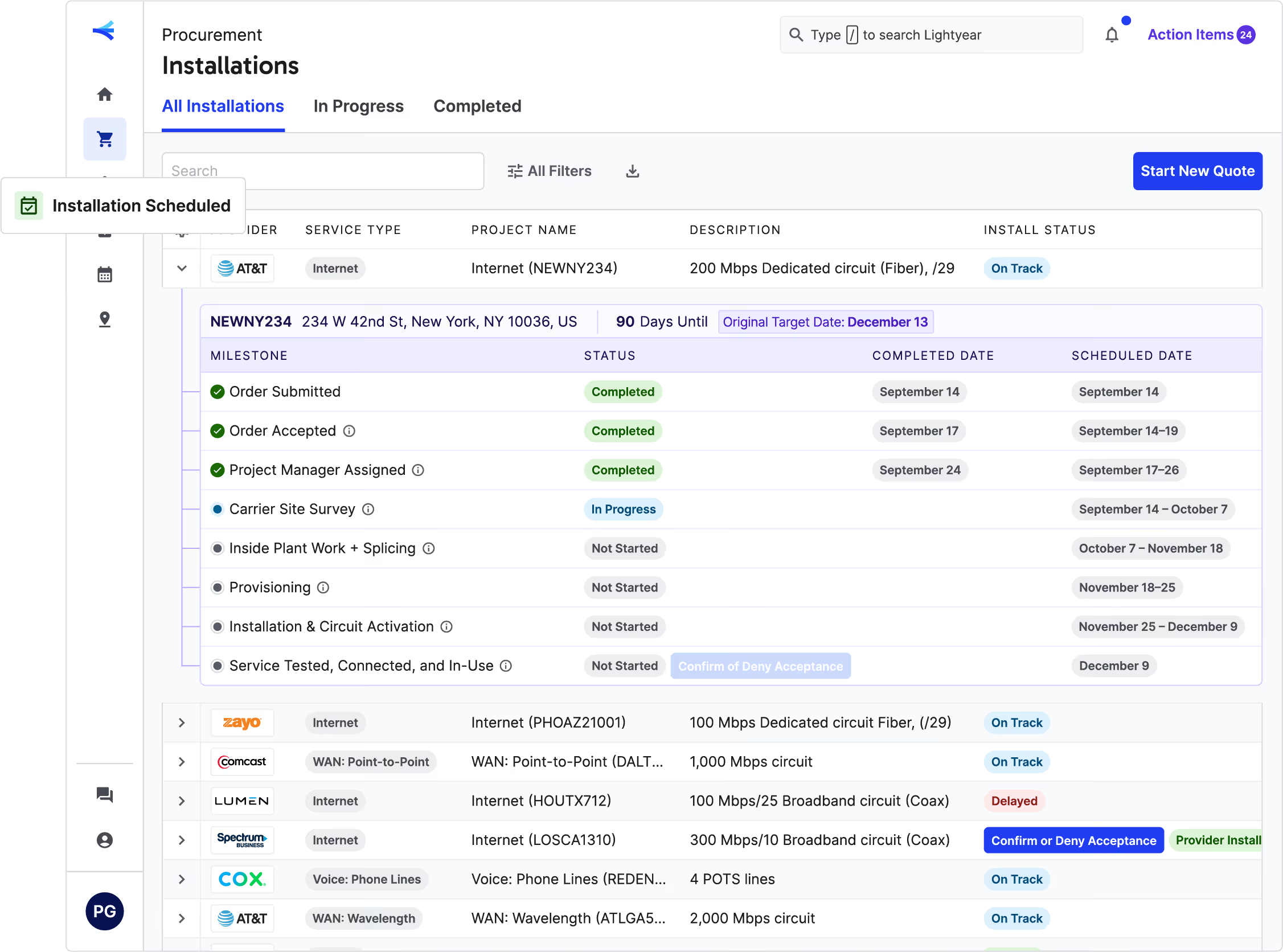
- Implementation Delays: Disconnected procurement and installation workflows cause project slippage.
These inefficiencies multiply when you need to connect multiple data centers or refresh existing services.
Managing DCI Beyond Procurement
Procurement is only step one. The real operational impact of DCI automation appears in how you manage those services day‑to‑day. Visibility, tracking, and proactive maintenance determine whether network performance improves or stalls over time.
Centralized Tracking
Every DCI circuit lives in a single system of record. The Network Inventory Manager captures over 30 attributes per service (circuit IDs, IPs, bandwidth, contract terms, costs, and renewal dates) and links each to the originating provider. IT and finance teams gain instant access to verified information that used to live in spreadsheets or carrier portals. That data’s searchable, exportable, and fully integrated for audits or MACD workflows.
Automated Renewals
The platform continuously monitors contract terms and renewal windows. When a renewal approaches, Lightyear automatically benchmarks current pricing against live market data to identify savings opportunities. Teams receive alerts and can launch re‑bids directly from within the platform, ensuring you never roll into an auto‑renewal or pay above‑market rates again.
SLA Oversight
Active DCI links are monitored for performance against contracted SLAs. The system tracks latency, packet loss, and availability trends to flag issues early. If a provider underperforms, escalation tickets are generated automatically with full contract data attached: saving countless hours of reconciliation and dispute management. Together, these tools give enterprises an always‑accurate, always‑up‑to‑date view of their interconnect network health.
The Business Impact of Automation
In the Aecon case study, automation didn’t just reduce administrative overhead—it reshaped how the technology team operates. Aecon’s IT organization gained the ability to deploy connectivity to new job sites in days, not weeks, while finance teams moved from reactive cost tracking to predictive forecasting.
These outcomes highlight the wider business case for automation:
- Better Vendor Leverage: Market‑validated pricing data helped Aecon negotiate rates that cut spend by more than $700,000 annually.
- Improved Forecasting: Centralized visibility into every circuit and contract enabled accurate budgeting for future site expansions.
- Reduced Risk: Automated renewals eliminated lapsed services and surprise rate hikes from auto‑renewing contracts.
- Operational Agility: Real‑time procurement and network insight allowed new projects to get connectivity faster, keeping field operations on schedule.
For enterprises operating across multiple data centers or geographies, these same automation gains translate directly into cost control, uptime, and velocity.
Take the Complexity Out of DCI with Lightyear
Multi-site networks, hybrid architectures, and global operations add complexity. Here’s how the ideal platform handles it through intelligent automation and broad provider coverage.
- Multi-Site Design: Standardize configurations while adapting to local needs.
- Global Provider Network: Access 1,200+ carriers, including regional specialists.
- Unified Billing: Bill Consolidation merges all invoices into one, with real-time auditing and cost tracking.
Modern DCI demands automation, data intelligence, and vendor transparency. Lightyear unites procurement, inventory, and billing in one system of record so you can focus on running your network, not managing it.
Automate your next DCI procurement with Lightyear. Get started with our questionnaire.
Let us show you the product and discuss specifics on how it might be helpful.
Schedule a Demo





Revolutionize Your Telecom Experience
Learn how you can get one step closer to optimal business efficiency for all your telecom services.