Leased Line Internet Connections Explained: The Enterprise Guide
Learn what a leased line internet connection is and how Lightyear simplifies procurement, pricing, and scalability for enterprise-grade connectivity.


Every IT leader knows the frustration of broadband slowdowns during peak hours. Video calls stutter, cloud apps lag, and file uploads crawl. For a household, that’s an inconvenience. For an enterprise running business-critical workloads, it’s a direct hit to productivity and revenue. That’s where a leased line internet connection becomes essential.
Unlike standard broadband connections, a leased line gives your business a private, uncontended, symmetrical internet connection backed by dedicated bandwidth, consistent uptime, and formal service level agreements (SLAs). The result is high-speed, reliable connectivity designed for scalability, not best-effort service.
If your organization needs high-performance, always-on connectivity, a dedicated leased line delivers the assurance of a reliable internet link built for modern business needs.
What Is a Leased Line Internet Connection?
If you’re wondering, “what are leased lines,” and how they differ from other types of connections, the answer comes down to performance and control. A leased line is a dedicated fixed-bandwidth internet service rented from a telecom or internet service provider (ISP). It links your site directly to the internet or another location using fiber optic cables. Unlike shared broadband services, a leased line connection is uncontended — all bandwidth is reserved exclusively for your business.
Key characteristics of a leased line:
- Symmetrical speeds: Upload and download speeds are identical, keeping performance consistent for every user.
- Dedicated bandwidth: No slowdowns during peak usage — you always get the speed you pay for.
- SLA-backed performance: Providers guarantee uptime, line speed, and repair response times to minimize disruptions.
- Private connection: Traffic never traverses the public internet, improving both security and reliability.
You may also hear leased line services referred to as Dedicated Internet Access (DIA), Ethernet Private Line (EPL/EVPL), or point-to-point connectivity. No matter the term, the idea is the same — a private, guaranteed, low-latency connection that delivers predictable performance for enterprise workloads.
Leading providers tailor options to your bandwidth needs, uptime targets, and location so your internet leased line delivers consistent results across every site.
How a Leased Line Works
A leased line functions as a private, high-speed data path between your business and its internet service provider. A leased line or leased circuit uses fiber optic cables to transmit data as pulses of light, creating a secure and dedicated internet connection that isn’t shared with anyone else.
- Layer 2 connectivity: Provides a flat, point-to-point Ethernet link between two endpoints for predictable performance.
- Symmetry: Upload and download speeds are provisioned equally, ensuring consistent line speed in both directions.
- Bearer capacity: Circuits are often quoted as line speed/bearer (for example, 100/1,000 Mbps). The bearer defines the maximum potential capacity, making upgrades simple without new construction.
This architecture makes a leased circuit ideal for VoIP, video conferencing, cloud-based services, and large-scale data transfer. Real-time applications such as collaboration and CRM platforms benefit from low latency, high-speed connectivity, and reliable internet performance.
If your organization depends on a dedicated internet connection for day-to-day operations, a leased line delivers reliable connectivity, minimal downtime, and enterprise-grade scalability that broadband can’t match.
For larger deployments, Lightyear’s platform helps you compare providers, costs, and build timelines to simplify the process of designing and implementing your fiber network. See how dedicated circuits support modern enterprise infrastructure in our data center connectivity guide.
Benefits of a Leased Line Internet Connection
Guaranteed Bandwidth and Uptime
Leased lines deliver consistent, high-quality connectivity backed by strict service level agreements (SLAs). Typical guarantees include 99.9 percent uptime or higher and defined repair windows, often within four hours. This reliability minimizes downtime and keeps teams productive. Many service providers also include proactive monitoring and customer support to maintain predictable performance.
Symmetrical Upload and Download Speeds
Most broadband connections favor downloads, leaving uploads slower and inconsistent. A leased line gives you symmetrical speeds, ensuring smooth performance for cloud services, VoIP, data transfer, and remote collaboration. Whether uploading large files or running virtual meetings, equal upload and download throughput keep operations seamless.
Security and Reliability
Traffic on a leased line never touches the public internet. This private connection bypasses congestion and reduces exposure to cyber risks while maintaining low latency and consistent throughput. For enterprises managing sensitive workloads, dedicated bandwidth means predictable, secure performance — even during peak usage.
High Performance for Demanding Workloads
From DRaaS and real-time analytics to cloud-based applications and video conferencing, leased lines ensure the high-speed internet performance required for business-critical operations. If your teams depend on uninterrupted workflows, a dedicated leased line guarantees high-performance connectivity that standard broadband can’t match.
Scalability
Bandwidth upgrades are straightforward: typically from 10 Mbps to 10 Gbps, allowing you to scale capacity as your organization grows. Fibre leased lines also future-proof your network by supporting higher line speeds and scalable options as bandwidth demands evolve.
Types of Leased Lines and Related Options
Enterprises can choose from several leased line configurations depending on performance, coverage, and scalability requirements. Each option varies in control, cost, and complexity:
- Point-to-Point Leased Lines (P2P): Direct, private Ethernet links between two sites — ideal for secure, high-speed data connectivity.
- Ethernet Private Line (EPL/EVPL): Flexible, Layer 2 data connectivity that supports both point-to-point and point-to-multipoint topologies.
- Wavelength Services: Ultra-fast circuits using DWDM technology for organizations with large-scale data transfer requirements.
- Dark Fiber: Unused fiber strands that you light yourself — offering maximum control and performance flexibility.
- MPLS versus Leased Line: MPLS networks connect multiple sites with managed QoS, while leased lines provide raw, uncontended bandwidth for businesses that need direct control.
Leading leased line providers offer guidance on which model best aligns with your business needs — from ultra-fast fiber connectivity to scalable point-to-point networks across multiple locations.
Leased Line vs Broadband
Here’s how leased lines and broadband compare side by side:
Ultimately, the difference between leased lines and broadband comes down to reliability. For small offices, business broadband may be sufficient. But if your internet access supports cloud services, real-time collaboration, or VoIP, the reliability of a leased line quickly outweighs its higher monthly fee.
A leased line provides dedicated bandwidth that won’t fluctuate during peak usage, ensuring every connection and video call performs at full speed when it matters most.
Costs and Considerations
Leased line pricing depends on several key factors. Bandwidth is the most visible — higher line speeds cost more. Distance also influences price, since longer circuits often require new construction or additional infrastructure.
A leased circuit typically costs more upfront than a shared broadband connection, but the reliability, dedicated bandwidth, and performance more than justify the investment. New builds can trigger excess construction charges, and Type 1 vs. Type 2 connections affect both diversity and monthly fees.
Typical pricing for Dedicated Internet Access (DIA) leased lines ranges from $300 to $1,000+ per month, scaling higher for multi-gigabit fiber circuits. Contracts usually run 36–60 months, with installation windows between 30 and 120 days, depending on the leased line provider and local permitting.
To avoid unexpected costs or downtime, confirm total costs upfront — including bearer upgrades, early termination clauses, and any required hardware such as routers. Understanding leased-circuit pricing helps keep budgets predictable and delivery reliable.
Challenges in Procuring a Leased Line
Procuring leased line services is rarely straightforward. Pricing can be opaque, SLAs vary by service provider, and bearer speeds often differ across regions. Hidden Type 2 access may also limit network diversity without clear disclosure.
Lead times are another challenge. Installations can take months, delaying projects that depend on a fast, reliable internet connection. Without automation, your team ends up managing RFPs, quotes, and comparisons in spreadsheets, slowing every phase of network design and implementation.
If your business relies on low-latency internet leased line for uptime and performance, these manual workflows introduce unnecessary risk. Clear visibility, automation, and transparent pricing are essential to modernizing leased line procurement.
Use Cases Where Leased Lines Shine
Leased lines support a wide range of enterprise use cases where performance and reliability can’t be compromised:
- Multi-site enterprises that need secure, high-speed connectivity between offices or data centers.
- Cloud-reliant organizations using SaaS and UCaaS platforms that depend on consistent, low-latency connectivity.
- Finance and healthcare providers that require compliance-grade uptime and data protection.
- E-commerce and media companies managing always-on applications for customers with zero tolerance for disruptions.
- IT and operations teams that need scalable, predictable bandwidth for growing workloads.
If your organization depends on a dedicated connection for real-time collaboration, secure file sharing, or cloud-based workloads, a leased line ensures high-speed connectivity that keeps business moving, even during peak usage.
Leased Line Procurement Made Easy with Lightyear
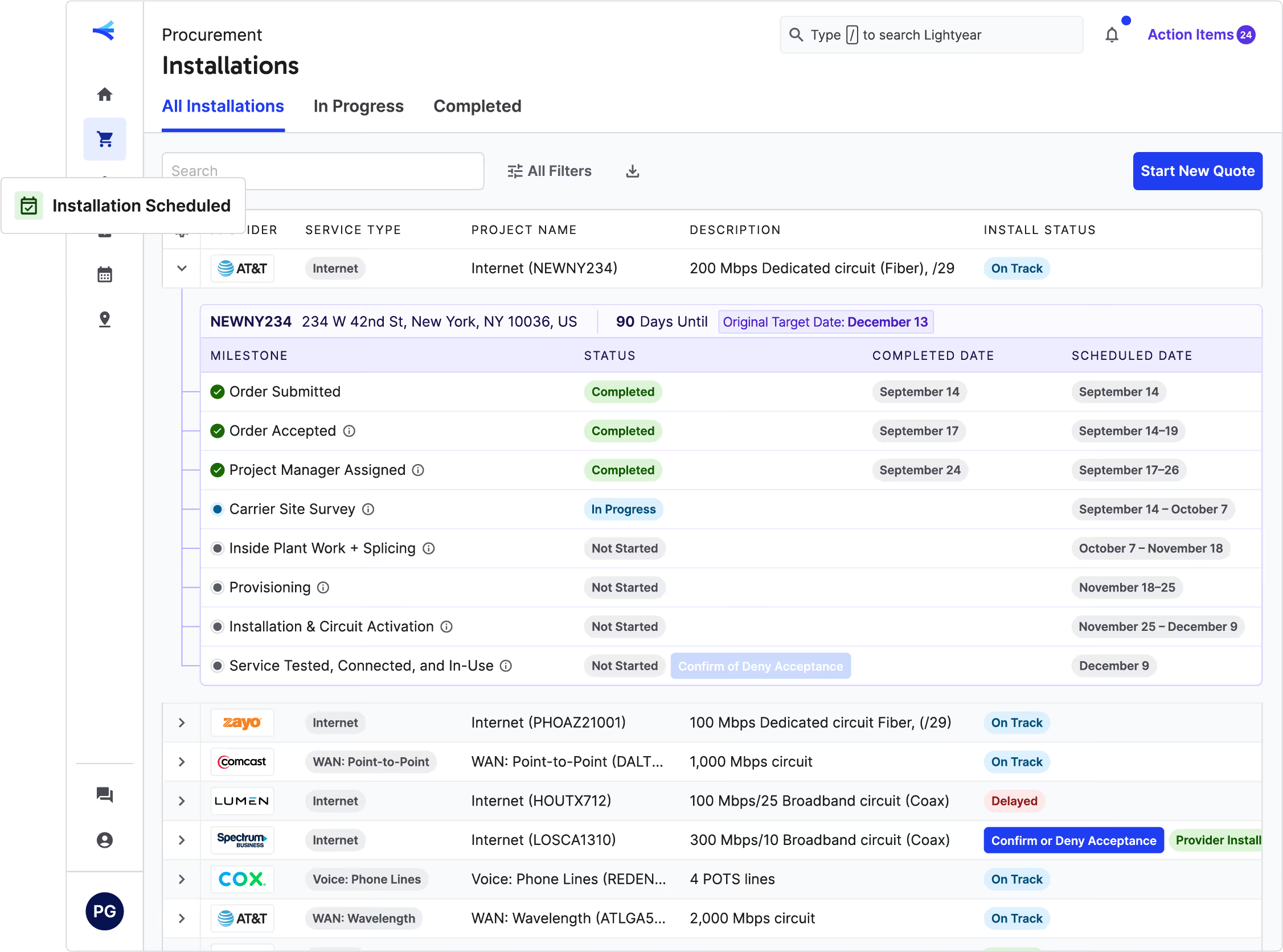
A leased line internet connection offers the reliability enterprises need, but the manual procurement process often adds complexity. Lightyear automates that process for leased line services with real-time pricing, transparent provider comparisons, and end-to-end visibility throughout every stage of implementation.
Our platform eliminates manual quotes, opaque outreach, and spreadsheet reconciliation. Customers see up to 70% faster procurement and 20% cost savings by automating their telecom lifecycle — from quote to contract.
With Lightyear, a dedicated internet connection that once took months to source becomes a clear, data-driven decision made in hours. You gain reliable connectivity, predictable pricing, and enterprise-grade support.
Learn more about automated procurement or start with our questionnaire to see how Lightyear simplifies network design, cost analysis, and customer support for high-performance connectivity.
FAQs on Leased Line Internet Connections
1. What’s the difference between leased lines and broadband for business?
Leased lines are uncontended, symmetrical, and backed by service level agreements (SLAs). Broadband is shared, variable, and often lacks uptime guarantees or defined performance standards.
2. How much does a leased line internet connection cost?
Pricing typically ranges from $300 to $1,000+ per month for Dedicated Internet Access (DIA), depending on bandwidth, circuit distance, and competition among leased line providers.
3. How long does it take to install a leased line?
Install times vary between 30 and 120 days, depending on site readiness, local permitting, and whether new fiber construction is required. Understanding how leased lines work helps set expectations for timelines and coordination with your ISP.
4. Can leased lines scale with my business?
Yes — most fiber leased lines are provisioned with bearer capacity (for example, 100/1000 Mbps). This allows fast, cost-effective bandwidth upgrades that scale with evolving business needs.
5. How does Lightyear simplify leased line procurement?
Lightyear automates RFP creation, integrates with more than 1,000 carriers, and compares SLAs side by side in real time. You can manage every contract from a single platform, delivering a reliable, dedicated connection with full visibility and support.
Let us show you the product and discuss specifics on how it might be helpful.
Schedule a Demo




Revolutionize Your Telecom Experience
Learn how you can get one step closer to optimal business efficiency for all your telecom services.