What Is a Network Services Aggregator? Pros, Cons & More
Network services aggregators promise simplicity but add costs and risks. Compare models and see how Lightyear offers a smarter, transparent alternative.


Picture this: your CFO just asked you to cut telecom costs by 15% while maintaining service quality across 50 locations. You’re staring at a spreadsheet with 12 different carriers, 27 contracts, and invoices arriving at different times each month. It’s messy, and the industry has long relied on one “shortcut” to this mess: the network services aggregator.
Aggregators promise to simplify enterprise connectivity, but anyone who has dealt with them knows the convenience comes with hidden costs. At Lightyear, we believe enterprises deserve transparency and automation—not markups and middlemen. Let’s break down what an aggregator is, why the model exists, and how a software-first approach changes the equation.
What is a network services aggregator?
A network services aggregator is a company that bundles multiple carriers’ telecom and connectivity services into a single contract, invoice, and support channel. Instead of managing a dozen internet service providers, you hand everything to the aggregator, who resells services from different network operators.
On paper, this arrangement looks attractive. Aggregators market themselves as offering global reach, simplified billing, and one support team for all of your internet connections.
But in practice, you sign with the aggregator, not the service providers, which means you pay a markup and give up transparency about who is actually carrying your traffic.
There are two main types of aggregators:
- Pure resellers: Companies like Granite, Nitel, and Spectrotel resell full carrier services, including last-mile broadband, IP addresses, and network routing without owning their own infrastructure.
- Type-2 carriers: Firms like GTT and Lumen lease last-mile fiber, but operate their own backbone and routing to appear more like network operators.
Both claim to streamline procurement, but both introduce a new middle layer between you and the underlying connectivity services. For more background on how these services work, see carrier aggregation and mobile virtual network operators.
Pros and cons of aggregator procurement
Benefits of working with network aggregators
The upside of aggregation services is real:
- A single point of contact for contracts, billing, and support across all your sites.
- A way to streamline procurement, replacing dozens of RFPs with one.
- Access to broad geographic coverage, which matters if you’re connecting international data centers or branch offices.
Drawbacks of the aggregation model
But every CIO knows the fine print:
- Pricing premiums: Aggregators often mark up services by 25–30% compared to direct carrier contracts.
- Reduced transparency: You rarely know which carriers are behind your network services, or how they’re routing traffic.
- Slower resolution: When outages or cybersecurity incidents occur, you call the aggregator, who then calls the carrier. That extra hop means longer downtime.
- Routing risks: Some aggregators backhaul diverse last-mile circuits to a single aggregation point, turning “diversity” into a hidden single point of failure.
How aggregators compare to other procurement channels
Direct-to-provider procurement
Going direct with a network service provider means full visibility, the lowest pricing, and faster issue resolution. The trade-off: juggling dozens of contracts, renewals, and portals.
There's another caveat: if a site is outside a carrier’s owned network, they may deliver it by partnering with another provider. On your bill this often shows up as a higher rate or a ‘third-party’ line item, even though you’re still contracting with the main carrier.
Telecom agent model
Telecom agents source quotes and advise on network infrastructure. You sign directly with the carriers, avoiding aggregator markups. The downside: commission-driven incentives and inconsistent post-sale support.
Network aggregator model
Network aggregators bundle services for simplicity, one bill, one support team. But they add costs, limit transparency, and extend repair times.
Why Lightyear is a better alternative
Traditional telecom procurement leaves enterprises stuck choosing between cost-effectiveness and convenience. Go direct, and you’re drowning in dozens of contracts and portals. Go through an aggregator, and you’re paying a 25–30% premium while losing visibility into who’s really carrying your traffic.
Lightyear is a telecom procurement and lifecycle management platform built for IT, finance, and operations teams at multi-site enterprises. Our goal is to bring transparency and automation to a process that has long been dominated by manual spreadsheets and middlemen.
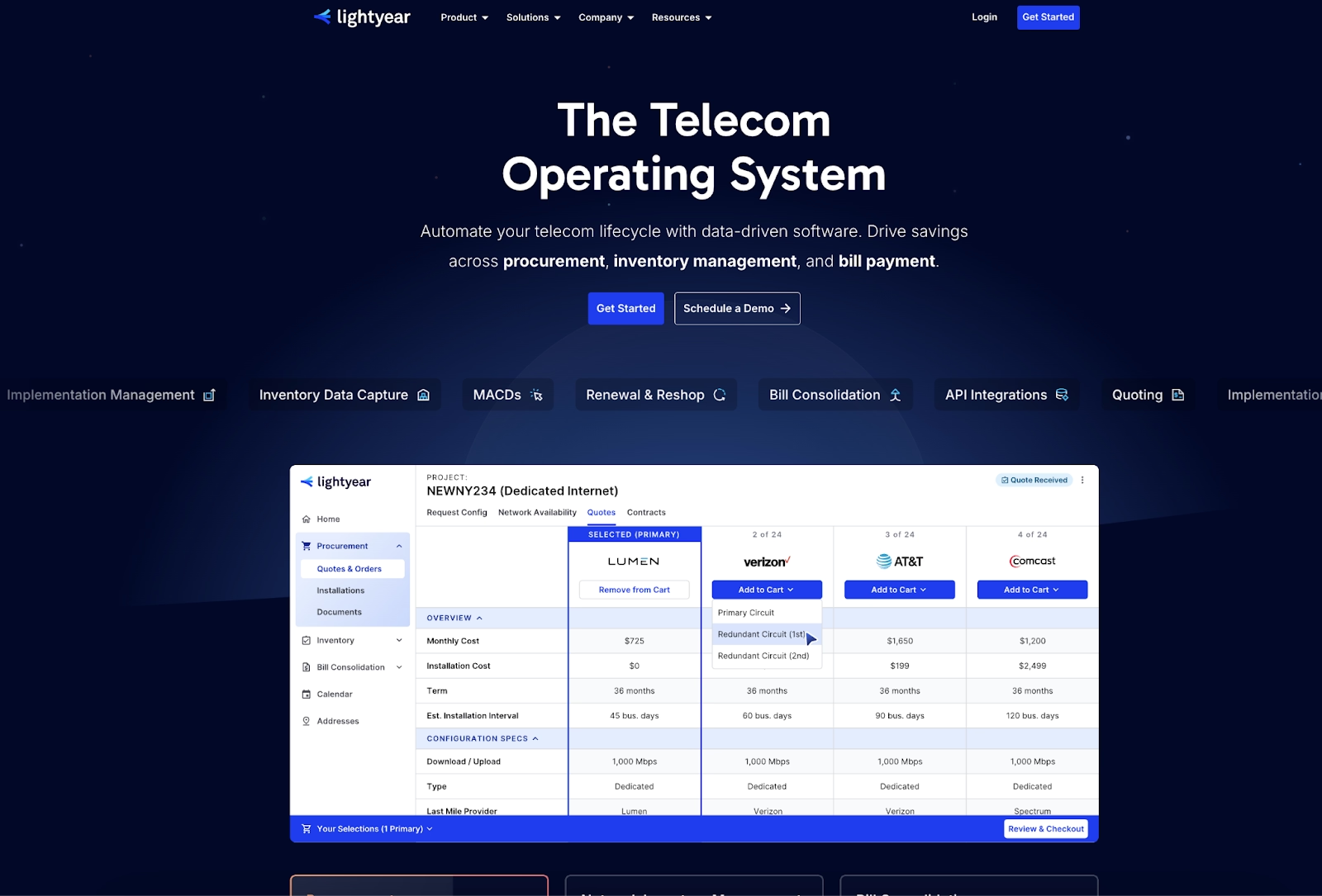
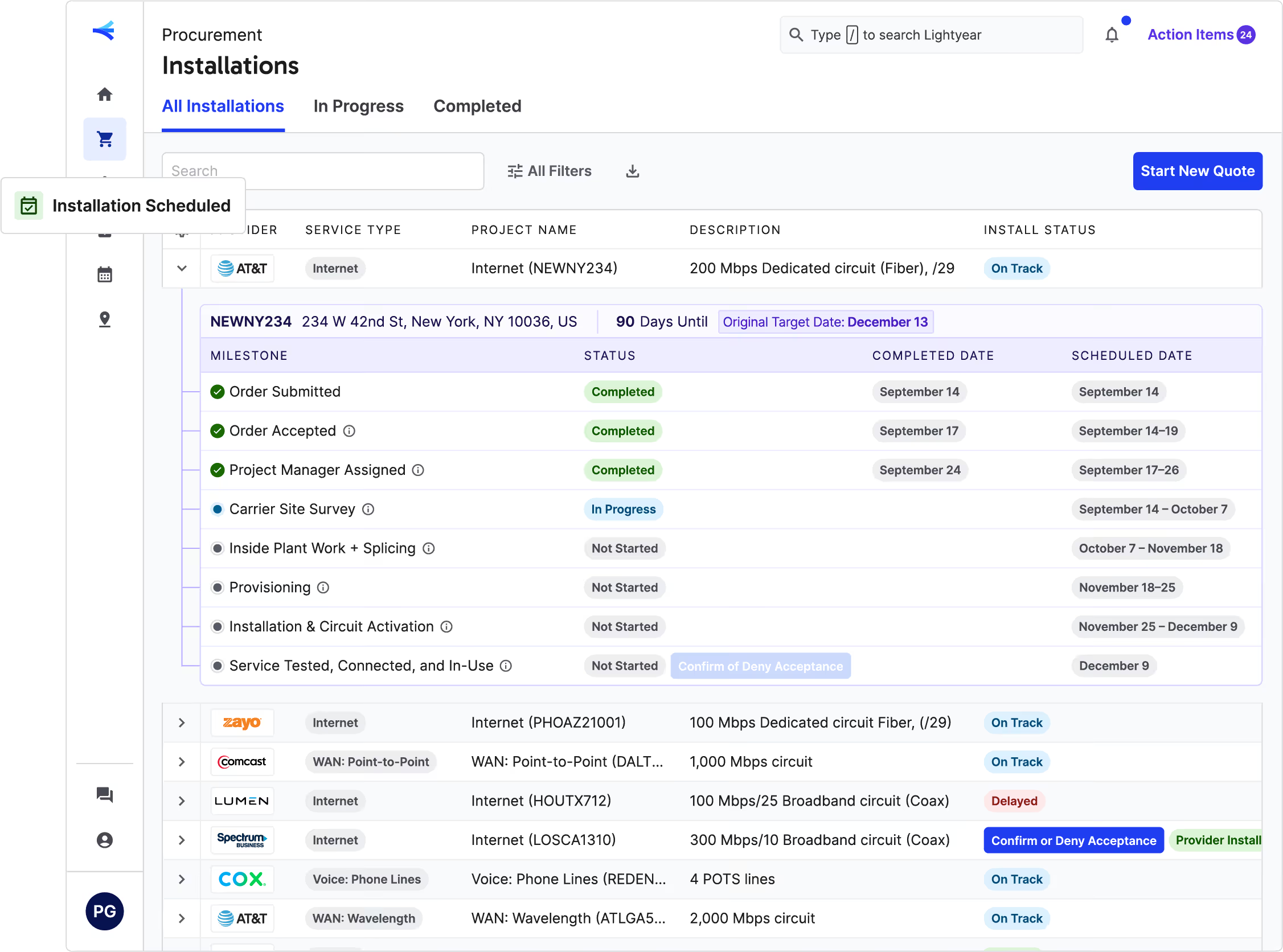
With Lightyear, you define your network requirements through a guided workflow and instantly see apples-to-apples quotes from over 1,200 global carriers. Every bid is benchmarked against thousands of recent deals in our proprietary pricing dataset, ensuring you pay fair market rates—not inflated reseller prices. From procurement to installation, contract renewals, and billing, everything is centralized in a single dashboard.
We work with enterprises across industries like retail, logistics, healthcare, and manufacturing—companies managing dozens or hundreds of sites that can’t afford the inefficiency of outdated procurement models.
Whether rolling out SD-WAN, consolidating post-acquisition services, or upgrading data center capacity, Lightyear helps teams buy smarter and move faster.
Procurement models compared
Upgrade from aggregators to Lightyear today
Network services aggregators might seem appealing for simplicity’s sake, but their cost and complications are undeniable. Lightyear offers a modern, AI-powered, data-first alternative that optimizes network performance while keeping costs transparent.
Lightyear provides you with a highly transparent digital telecom aggregation platform to consolidate the procurement and management of broadband, Ethernet, IoT, and data center interconnects across a sprawling footprint without added markups and hidden costs.
Cisco’s latest white paper made it clear: traditional aggregation services often create more problems than they solve, from downtime to opaque contracts. Lightyear takes a different path, partnering directly with network service providers to give enterprises a single pane of glass for real-time visibility, proactive network management, and cost-effective operations.
Ready to replace outdated aggregation models with a smarter approach? Schedule a demo or get started with our questionnaire.
Let us show you the product and discuss specifics on how it might be helpful.
Schedule a Demo





Revolutionize Your Telecom Experience
Learn how you can get one step closer to optimal business efficiency for all your telecom services.